The Everlasting
61 pages • 2-hour read
Alix E. HarrowThe Everlasting
A modern alternative to SparkNotes and CliffsNotes, SuperSummary offers high-quality Study Guides with detailed chapter summaries and analysis of major themes, characters, and more.
Character Analysis
Content Warning: This section of the guide includes discussion of graphic violence, illness or death, child death, suicidal ideation, death by suicide, and sexual content.
Una Everlasting
Una Everlasting is the novel’s central protagonist and legendary hero, whose character is systematically deconstructed to explore the tragic human cost of nation-building myths. Initially presented as a larger-than-life figure from Dominion’s folklore, a “Virgin Saint” and “Drawn Blade” (5), she is revealed to be a complex, traumatized individual burdened by the violence she commits in the name of her queen. Una is a round and dynamic character whose development hinges on her struggle between an imposed destiny and a desire for personal peace, exploring The Personal Cost of Heroic Myths. The narrative peels back the layers of her legend to reveal the suffering woman beneath. Her physical appearance, particularly her bone-white hair and the disfiguring scar through her eye, is a physical record of her painful history, a stark contrast to the flawless hero of official state narratives. Her immense martial prowess, which allows her to defeat entire armies single-handedly, is portrayed as a curse that makes her a perfect instrument of state violence, a purpose she increasingly resists.
Una’s primary motivation is a deep, devotional love for Queen Yvanne, the woman who gave her a name and purpose when she was “no one” (5). This loyalty compels her to undertake quests and wage wars, but it also traps her in a cycle of bloodshed that erodes her soul. She is the queen’s weapon, but she grows weary of the carnage, confessing to Owen that for weeks, she has “butchered only animals” (47) in a desperate attempt to find peace. This internal conflict is the core of her character. She runs from her final quest to hide in the Queen’s Wood, seeking refuge in the one place she felt free as a child, yet she cannot escape the duty that has defined her. Her actions demonstrate a constant tension between her oath to the crown and her own moral compass, which is increasingly horrified by the atrocities committed for “the cost of peace” (74).
Her relationship with Owen is the catalyst for her change from a mythical legend to a true hero. Initially, she sees him as just another scribe sent to glorify her violence, one of the “carrion birds” (42) who follow in her bloody wake. However, as Owen reveals his knowledge of the future and his own complicated past, she begins to see him as an ally and, eventually, a partner. He is the first person to see the exhausted woman behind the legend of the Red Knight and to value her life over her heroic purpose. It is through her love for Owen and their children that she finally finds a cause worth fighting for that is entirely her own. Her final decision to reject her role in Vivian’s narrative, choosing to fight for a future with Owen rather than die for a fabricated past, marks the completion of her journey toward Personal Liberation Versus Imposed Destiny. She ultimately sheds the identity of Una Everlasting, a name and legend imposed upon her, to reclaim her own humanity.
Owen Mallory
As the first-person narrator and a protagonist, Owen embodies the novel’s exploration of narrative’s power to shape reality. A round and dynamic character, Owen begins his journey as a physically frail, insecure academic and war veteran who worships the legend of Una Everlasting. His initial motivation is to earn a place in Dominion, a nation he feels alienated from due to his “suspiciously Hinterlander undercurrent” (13) and his father’s political dissidence. He is a self-described “coward” (10) who seeks validation through patriotism, viewing Una’s story as the ultimate expression of heroic sacrifice for “crown and country” (21). His character arc is a journey from blind faith in national mythology to a critical understanding of its human cost, driven by his direct experience with the brutal reality behind the legend. This journey forces him to confront his own complicity in perpetuating a glorified vision of violence.
Owen’s role as the Scribe is central to the novel’s metafictional structure. He is not merely recording history; he is actively creating it under the direction of Vivian Rolfe. The magical book, The Death of Una Everlasting, becomes a literal instrument for The Power and Peril of Narrative Construction, with its blank pages filling as Owen translates, edits, and fabricates Una’s story to fit Vivian’s political needs. Initially, he embraces this role with patriotic zeal, believing he is serving a greater good. However, his relationship with the real Una shatters his idealized image. He witnesses her trauma, her weariness, and her profound humanity, and his objective as a historian shifts to a personal mission to save the woman he loves. This creates his primary conflict: his duty to Vivian and Dominion versus his loyalty to Una. He is forced to decide whether to let Una die as the legend dictates or intervene and derail the course of history.
Ultimately, Owen’s transformation is defined by his rejection of an imposed narrative in favor of self-determination and personal love. He evolves from a man who wanted to “serve it better on the page” (26) to one who chooses to burn the book and destroy the story he once revered. His love for Una compels him to abandon his patriotic ambitions and become a “traitor” (93) to Vivian’s Dominion. This choice is the culmination of his development from a passive observer and recorder of history to an active agent who defies fate to create a new, unwritten future with Una. By repeatedly choosing to save her, and finally by unwriting their story entirely, Owen completes his journey from a fearful follower to a brave co-author of his own destiny, finding liberation in writing the truth of his and Una’s story.
Vivian Rolfe/Yvanne
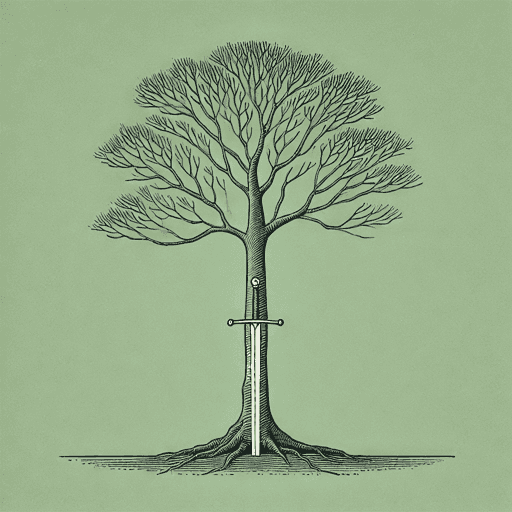
Vivian Rolfe, who also rules in the past as Queen Yvanne, is the novel’s primary antagonist. She manipulates the past to repeatedly rewrite Dominion’s history to create what she believes is the ideal empire. She is a round but largely static character; while her backstory reveals complex motivations, her core objective of achieving and maintaining absolute power remains unchanged across centuries. She operates from behind the scenes in the modern era and as an absolute monarch in the past. Vivian’s entire character is a testament to The Power and Peril of Narrative Construction; she wields history as her primary weapon, using the magical yew tree and the book it produces to create and refine a national mythology that legitimizes her eternal reign. She believes her actions, no matter how brutal, are justified as necessary sacrifices for the stability and glory of Dominion, a nation she literally builds from the ground up. She tells Owen, “In order to have a future worth fighting for, you must have a past worth remembering” (104), revealing her cynical understanding that national identity is a story to be controlled.
Vivian’s motivations are rooted in her own traumatic past as a powerless girl who was mistreated and discarded. This history fuels a relentless ambition to create a world where she is never powerless again. She tells Owen, “There were no precedents for what I wanted to become… So I made my own” (194). This ambition drives her to engineer every major event in Dominion’s history, from Una’s discovery to the First Crusade and the vilification of Sir Ancel. Her relationship with Una is deeply possessive yet complex. She sees Una as both her greatest creation and her daughter, a tool of immense power and a person for whom she feels a controlling love. This dynamic is central to the novel’s conflict, as Vivian repeatedly sacrifices Una’s happiness and life for the sake of the legend she needs to uphold her power. She is the ultimate “puppeteer” (296), and her tragedy is that in her quest for absolute control, she destroys the very person she claims to love.
Despite her immense power, Vivian’s character also reveals the inherent fragility of her constructed reality. She is constantly fighting to maintain her narrative, adapting it with each iteration to quash dissent and reinforce her authority. Her need to repeatedly send Owen back to “fix” the story shows that history, even when magically manipulated, is resistant to total control. The love between Una and Owen becomes an unpredictable variable she cannot fully manage, an expression of personal agency that threatens her entire system. In the end, Vivian represents the ultimate tyrant: one who believes so completely in her own narrative of the greater good that she fails to see the immense human suffering it causes.
Sir Ancel of Ulwin
Sir Ancel of Ulwin serves as a tragic figure and a key foil to Una Everlasting. Initially introduced as Una’s skilled rival for the title of Queen’s Champion, he evolves into her trusted friend and brother-in-arms. Ancel’s defining trait is his absolute, unquestioning loyalty to Queen Yvanne, a devotion that ultimately proves to be his undoing. He is a character whose role shifts dramatically across Vivian Rolfe’s narrative iterations, appearing as a noble hero in some versions and as the treacherous villain, “Ancel the Betrayer” (108), in others. He is a metaphorical embodiment of the way that individuals can be reshaped and vilified by dominant historical narratives to serve political ends.
Ancel’s tragedy lies in the weaponization of his greatest virtue. His unwavering love for the queen makes him the perfect tool for Vivian’s most cruel machinations. In the timelines where he is forced to betray Una, he does so not out of jealousy or ambition, but because the queen commands it, emphasizing the difference between him and Una. While Una claims agency and resists Vivian, Ancel continues to support her through many iterations of the past. However, his final act in the climactic confrontation at Cavallon Keep, where he defies the queen to toss the book to Owen, represents a moment of change and rebellion. In choosing to sacrifice himself to give Una and Owen a chance at freedom, Ancel finally asserts his own agency, breaking from the part he has been forced to play for centuries.
Owen’s Father
Owen’s father acts as a crucial moral counterpoint to the state-sponsored patriotism of Dominion. He is a static character, initially framed by Owen’s narration as a source of shame: a radical, a drunk, and a “fucking coward” (14). However, he is later revealed to be a man of deep principle, a war veteran who deserted after witnessing the brutality of Dominion’s colonial campaigns and who dedicates his life to anti-war activism. He represents an alternative form of honor, one rooted in opposing state violence rather than participating in it. His consistent dissent challenges the glorified narratives of heroism and national pride that Owen initially embraces, and his eventual imprisonment highlights the risks of speaking truth to power in Vivian Rolfe’s Dominion. Ultimately, his love for Owen, demonstrated by his decision to raise an orphaned enemy child as his own, provides a model of personal loyalty that supersedes national allegiance, a lesson Owen eventually learns for himself.
Professor Gilda Sawbridge
Professor Gilda Sawbridge functions as Owen’s academic mentor and the voice of intellectual integrity in a world built on historical lies. She is a static character, defined by her gruff demeanor, her sharp intellect, and her unwavering skepticism of official narratives. Sawbridge champions a history based on tangible evidence, repeatedly stating her belief that “words lied and bones didn’t” (52). She is the first to encourage Owen to think critically about the legends of Dominion and serves as a foil to Vivian Rolfe’s manipulative storytelling. Her persecution by the state, including her arrest and dismissal from Cantford, demonstrates the dangers inherent in challenging a regime’s control over its own history. Even when coerced into silence, she represents a persistent, unyielding force of truth that validates Owen’s ultimate rebellion against Vivian’s constructed reality.

Unlock analysis of every major character
Get a detailed breakdown of each character’s role, motivations, and development.
- Explore in-depth profiles for every important character
- Trace character arcs, turning points, and relationships
- Connect characters to key themes and plot points