The Explosion
The Explosion
A modern alternative to SparkNotes and CliffsNotes, SuperSummary offers high-quality Study Guides with detailed chapter summaries and analysis of major themes, characters, and more.
Poem Analysis
Analysis: “The Explosion”
“The Explosion” is not an occasional poem; Larkin did not write the poem to provide public commentary on a specific mining disaster. Such poems most often require explanatory footnotes to detail the specific disaster and, in turn, are often composed in anger or despair and usually turn into polemics concerning, in this case, mine safety, workers’ rights, or owners’ carelessness. Larkin was moved to write the poem after watching a BBC documentary on British mining catastrophes. Mining is a notoriously difficult and risky work and, even in the modern era with cutting-edge rescue techniques, mines are still susceptible to explosions and collapses that make rescue efforts difficult.
Larkin, however, is not interested in mining per se. He does not rail against mine owners, nor does he rally sympathy for the miners or agitate for safer conditions. The explosion that rocks the mine and kills the miners happens off-stage, or more specifically, below ground. “At noon, there came a tremor” (Line 13)—that’s it. That’s the mine explosion. We only get the momentary distraction of the cows in the pasture above the mine uncertain over what just shook the ground.
Because there is no specific mine disaster, there is no body count, no explanation or cause, no accountability, no backstories of the miners. Rather, the mine explosion is treated as a grand-scale example of the hammer-stroke intrusion of accidental death that is always inelegant, intrusive, and premature. Save for the scale, the experience of the mine explosion and the lessons the poem gleans from the experience can be applied as equally to any catastrophe from an airplane accident to a school shooting. Those days, Larkin intones, seem like every other day until the moment they are not.
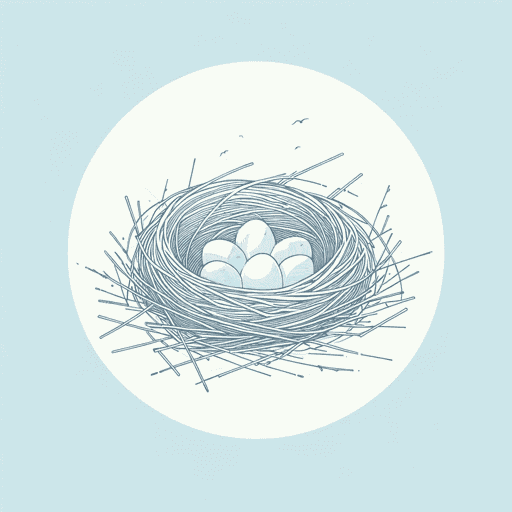
That quotidian feeling is established in the opening four stanzas. They narrate the miners heading off to another day of work. The poem recounts the easy joy of their camaraderie as well as the morning sun. Only the shadow that crosses the mine entrance suggests the possibility of something dark, something bad ahead. The miners have no thoughts of death—one chases a rabbit absently and returns with an unexpected find: a lark’s nest with eggs. The miners head off to their death laughing and jostling each other. With only hours left to live, “they passed in beards and moleskins / Fathers brothers nicknames laughter” (Lines 10-11).
The explosion at noon is given a single stanza; the moment of the explosion seems trivial above ground. The cows in a field above the mine stop grazing but only for “a second” (Line 14); the sun is muffled by the smoke coming from the mine entrance but clears up. Death is at once everything and nothing.
In the closing stanzas, the poem juxtaposes two different philosophies for handling the awareness of mortality. First, there is the religious answer. Larkin does not specify any religion, but the reassurances rehearsed in Stanza 6 reflect the familiar approach of Judeo-Christianity, which offers faith in something, call it a soul, that survives death.
The rhetoric, presumably of the minister, reassures the survivors that the men killed in the mine explosion are waiting to be reunited with them, that now they are far from this life of dangerous work, scant living conditions, and interminable routine. They are now “sitting in God’s house in comfort” (Line 17). There in the chapel during the funeral service, the survivors have a vision of the dead, bigger than life, their faces alight with grace, bright and serene. The dead come toward them, out of the energy and brilliance of the sun. It is a fetching philosophy that provides comfort for the bereaved and elevates the dead to the status of angelic heroes or heroic angels.
But that reassuring vision lasts “for a second” (Line 20). The promise of being reunited eventually, at some point, with the suddenly dead is at best cold comfort. Larkin offers in that curious closing line—not quite a stanza, not quite not a stanza—an alternative philosophy.
He reassures us that the lark’s nest, despite being manhandled by the miner on what proves to be his last day, is safe, the eggs unbroken, still awaiting the moment of birth, the release into life. The men die, yes, but the larks will be born. That is the reassurance of the natural world that will not know extinction, will never accept death as the last word. Nature regards any one death as ultimately insignificant amid the wider kinetics of the organic world itself. Life will win out.
Those then are the choices Larkin offers: individual transcendence through a benevolent God or the difficult comfort of nature’s continuity. If individual transcendence and the ancient promise of the afterlife seem a bit of a reach, the poet affirms life as a constant process in which “life” and “death,” chilling as opposites, become “living” and “dying,” the same thriving, animated, organic process.

Get in-depth, chapter-by-chapter summaries and analysis from our literary experts.
- Grasp challenging concepts with clear, comprehensive explanations
- Revisit key plot points and ideas without rereading the book
- Share impressive insights in classes and book clubs