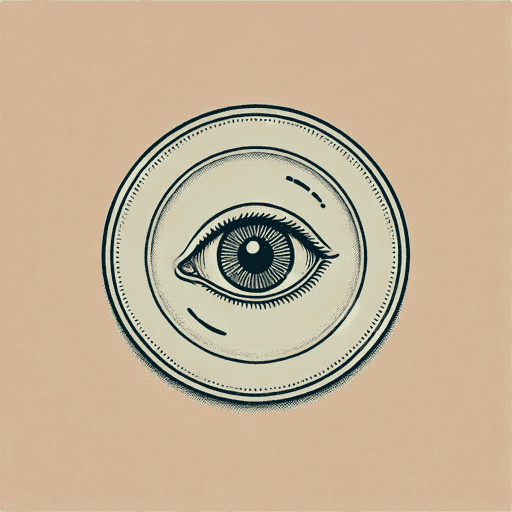
The Eyes Are the Best Part
63 pages • 2-hour read
Monika KimThe Eyes Are the Best Part
A modern alternative to SparkNotes and CliffsNotes, SuperSummary offers high-quality Study Guides with detailed chapter summaries and analysis of major themes, characters, and more.
Chapters 1-19Chapter Summaries & Analyses
Chapter 1 Summary
Content Warning: This section of the guide includes discussion of racism, gender discrimination, sexual harassment, illness, self-harm, graphic violence, death, and emotional abuse.
Ji-won is a teenage girl who lives in Los Angeles with her mother, Umma, and her little sister, Ji-hyun. As the novel opens, Umma has made fish for dinner, and the family gathers around the table. As her daughters watch in horror, Umma eats the fish’s eye, telling them that it’s the best part of the meal. Ji-won and Ji-hyun are disgusted by this and avoid eating the fish on their plates. While teasing her daughters about their reaction, Umma mentions her husband, Appa, who left the family two weeks before. Umma leaves the dinner trying to hide her emotions from her family, and Ji-won throws the remainder of the fish in the garbage.
Chapter 2 Summary
Ji-won reveals that her mother only began eating the eyes of fish in the previous couple of weeks after Ji-won’s father left. This confirms Ji-won’s suspicion that the stress has caused her mother to lose her mind.
Ji-won recalls the days after her father left, when she and Ji-hyun listened to their mother sobbing through the walls before sleep. The following day, Umma unexpectedly cooked a veritable feast for her daughters, with the main course being Appa’s favorite: braised beef short ribs. During the meal, they heard the sound of keys in their front door. Umma leaped to her feet to greet her husband, but the door didn’t open: A neighbor had mistakenly tried to open the wrong door. Umma sank to her knees in grief, as she thought it was her husband returning home. Her daughters helped Umma to her feet, and she asked them whether they thought she was unlucky. Ji-won and Ji-hyun said no, and Umma responded that fish eyes are good luck: If she eats them, then perhaps their father will return home. To her daughters’ revulsion, Umma ripped an eye out of the fish’s head on the table and swallowed it whole.
Chapter 3 Summary
Ji-won knows the real reason her father left: He met another woman. One night in bed, Ji-won overheard her parents fighting: Umma demanded to know whether Appa was leaving because of her or the girls, which he denied. Instead, he told her that he was leaving her for another woman. Umma’s howl rent the night.
Chapter 4 Summary
Even though it’s been two months since the night that Ji-won heard her parents fighting, Umma still waits by the entrance of the apartment at all hours, waiting for Appa to come home.
Ji-won thinks that her mother is used to this, as “she’s probably spent more of her life waiting than not” (19). As she was growing up in the 1970s in South Korea, Umma and her family nearly starved, each subsisting on a single bowl of porridge per day. When their next-door neighbor’s daughter died of starvation, Umma’s parents decided that they needed to look elsewhere for ways to make money. One night, they slipped away and left the children in the care of Umma’s eldest sibling, Ha-joon, who wasted the money they’d left for him. It was a frigid winter that year, and the children all became sick, shaking with fever in their small, uninsulated cabin.
Realizing their situation was becoming unmanageable, Ha-joon decided to take the children to follow in their parents’ footsteps and search for work. All the siblings agreed to go except for Umma, who refused to leave and insisted on waiting for their parents to return. To survive, Umma foraged for food, sometimes resorting to eating snow, bark, and rats. When her parents arrived back the following fall, they were shocked to find Umma surviving by herself. Eventually, they were able to find Ha-joon and the rest of the children and slowly started to piece the family back together.
Remembering this story, Ji-woon wonders whether the experience prepared her mother for her time spent waiting for Appa to return. Ji-won finds her mother strange and frustrating. When she initially heard this story from her mother, Ji-won wanted to shake her for being so foolish and naïve. However, she also understood that yelling at her mother would not be productive, and eventually, Ji-won’s feelings curdled from anger into sadness.
Chapter 5 Summary
One night, a few weeks after the start of school, Umma tries to drag her daughters into a conversation about an article she recently read. When they react with dismissal, Umma threatens them by saying that she might as well “go crawl in a hole and die” (23). Ji-hyun engages with her, and Umma tells them that she read an article about which men are the best to date (white men) and which are the worst (Korean men). When challenged, Umma says that these rankings make sense, as “Korean men are rude, stubborn, fickle, and hot-tempered” (25).
Ji-won argues that one bad experience with a Korean man is not enough to dismiss everyone from the entire country. Umma argues that white men are the best at dating since they treat women with more politeness than Korean men, another argument that Ji-won dismisses. Suddenly, Umma starts crying, accusing her daughters of not listening to her and saying she just wants the best for them in life. She also tells them that she wishes she’d never met their father and instead had married a kind white man. However, Ji-hyun tells her that if she’d never met Appa, then she and Ji-won wouldn’t exist, which stops the flow of Umma’s tears. Now calm, she tries to make her daughters promise to only date white men, which they refuse.
Chapter 6 Summary
That night, the family eats fish again. Ji-won has resolved that tonight, she’ll eat the fish’s eyes to please her mother and make her happier.
The night before, Appa called for the first time since he’d abandoned the family. He was coy and distant in his responses, and Ji-won could hear the sound of other people in the background. He hung up before talking to Umma, upsetting her, and she spent the rest of the day cleaning the house in a frenzy.
At dinner, Ji-won nervously drops the eye into her mouth. It’s surprisingly chewy, but despite her rising nausea, she’s able to keep it down by reminding herself that she’s doing this for Umma. She tries to convince Ji-hyun to eat an eye, but Ji-hyun refuses, telling Ji-won that she’s disgusting for going through with it. Delighted with Ji-won, Umma happily eats the fish’s other eye.
Chapter 7 Summary
Ji-won considers her father to be an intelligent, ambitious man held back by bad luck in life—his palja, as “fortune” is called in Korean. He grew up in one of the poorest villages in Busan in a family of farmers driven from their land during the Japanese occupation. Appa taught himself to read by digging through garbage bins for discarded newspapers. He managed to get accepted to the best school in the country, Seoul National University, but was unable to secure a good job after graduation. Eventually, Appa moved to California at the request of an old friend, who told him that living in America would open up opportunities.
After a year in California, Appa met Umma through the friend who had invited him to the United States. Six weeks later, they were married, and soon after, Appa purchased a failing dry cleaning business to support his new family.
One day, a friend of Appa’s named Min-ho invited him to invest in a new business venture. However, Min-ho had some deep gambling debts, so he stole Appa’s investment money and ran. Afterward, Jin-won noticed that her father was unsatisfied with life, often spending his time daydreaming and complaining about their struggles, particularly the fact that Ji-won was female. After two years, he was forced to sell the dry-cleaning business.
Chapter 8 Summary
The night that Ji-won eats the fish eye, she has a hard time falling asleep. In the morning, Ji-hyun tells her that she missed the bus for college. Instead, Ji-won drives to school, dropping Ji-hyun off at her work along the way.
Feeling exhausted, Ji-won sleeps through her first lecture. She waits in line for a coffee, where she meets a classmate from the previous lecture, who is wearing a T-shirt emblazoned with feminist slogans. She also overhears some fraternity brothers talking in a racist and misogynistic manner about Asian women; feeling uncomfortable, she leaves the coffee shop. The classmate with the feminist T-shirt introduces himself as Geoffrey and becomes angry when she tells him what she overheard, which Ji-won appreciates. Before he leaves, he tells her that he’ll look for her at their next class on Thursday.
Chapter 9 Summary
When Ji-won arrives home that night, she finds Ji-hyun anxiously pacing around their small bedroom. Ji-hyun asks whether Ji-won has also noticed their mother’s strange behavior, claiming that she’s heard Umma on the phone late into the night. She also tells Ji-won that she discovered Appa’s divorce paperwork, which he filed shortly after leaving.
At the dinner table, Ji-won observes her mother, noticing that she’s acting happier and more fulfilled than she has since Appa left. Ji-hyun pointedly asks Umma whether she’s been talking to anyone, but she denies it. That night, Ji-won tackles her little sister to try to force her to apologize, but she refuses.
Chapter 10 Summary
One week later, Umma sits her girls down and tells them the truth: She’s dating someone. She tells the girls that she met a man at her job at a Korean grocery store and that they’ve never met him before. She tells them that the man’s name is George, that he’s white, and that they’ll love him when they meet him. Ji-hyun asks whether Umma is happy, and when she responds that she is, Ji-hyun congratulates her on meeting George.
Chapter 11 Summary
Ji-won and Ji-hyun meet George on a Saturday afternoon. Before leaving the apartment, Ji-hyun and Umma fight over what Ji-hyun is planning to wear, as Umma insists on her daughter wearing a dress. Eventually, Umma wins, and both Ji-won and Ji-hyun wait in uncomfortably formal clothes for Umma to finish her outfit.
As they drive to meet George, Umma tells her daughters about him. Umma considers George to be lovely, simple, and humble. She tells her daughters that she felt alone before, but no longer, now that she’s found George.
Chapter 12 Summary
In the parking lot of the restaurant where they’re meeting George, Umma points out his truck, which has a Republican bumper sticker attached to the back. They’re led to a booth in the back, where George is waiting for them. To Ji-won, George looks unremarkable, like any middle-aged white man. George kisses Umma when they arrive, making the daughters uncomfortable. Ji-won can’t remember her father ever kissing her mother on the mouth like that.
George admonishes Umma for coming to the restaurant in the rain, worrying that she’ll catch a cold. He then mispronounces the girls’ names and reacts with controlled anger when this is pointed out. To Ji-won, George is clearly a man who isn’t used to being corrected. He tells Ji-won and Ji-hyun that he’ll call them both by nicknames, their initials; he isn’t good at pronouncing Korean despite his claimed fluency with the language.
George tries to speak to them in Korean, but they can’t understand his pronunciation. Since Umma’s English isn’t great, Ji-won and Ji-hyun are forced to translate the conversation between them. George also blatantly ogles the server when she comes to take their order, which Ji-won thinks is disgusting behavior. He then insists on ordering for everyone, telling the server to make sure that the food isn’t spicy, though Ji-won and Ji-hyun both enjoy spicy food. After an uncomfortable meal, George insists on paying, his wallet full to bursting with $100 bills, and Ji-won catches her mother staring at this money hungrily.
After the meal, they go for a walk, and George continues to mix up the daughters’ names. They stop for ice cream, and when Umma doesn’t want to sit on a wet bench, George forces her down; she falls into an icy puddle as he laughs at her. He pulls down Ji-won too, and as he does, he stares at her chest.
Chapter 13 Summary
Ji-won has a disturbing dream involving eyes watching her from the walls of her old home, now abandoned and destroyed. When she wakes, she thinks of the times when she and Ji-hyun saw their father happy, an unusual occurrence growing up. With a start, she realizes that the eyes she saw in her dream looked suspiciously similar to George’s eyes.
Chapter 14 Summary
One day, Geoffrey waves down Ji-won as she’s walking to class. Ji-won opens up about meeting George, and Geoffrey tells her that he understands, as his parents are divorced, and he’s dealt with multiple step-parents in the past. Ji-won feels surprised and happy that Geoffrey has come into her life so quickly but also feels reservations; her high school friends abandoned her after she graduated, and she remains hurt by this.
Geoffrey and Ji-won arrive at class, where Ji-won makes friends with a pretty classmate named Alexis. Geoffrey watches their interaction with suspicion. After class, Ji-won tells Geoffrey that he doesn’t need to worry about Alexis. Suddenly, Geoffrey snatches her phone and dials his number into it so that she will have it saved for the future.
Chapter 15 Summary
That night, George sleeps over at the house. Ji-hyun lies in her bed, fuming and occasionally punching her pillow. Both girls think that George is taking advantage of their mother, as he’s been over at their apartment every day since they met him a couple of weeks before. He often looks at Ji-won and Ji-hyun with open hunger, making them nervous. Eventually, Ji-won and Ji-hyun agree that they’ll team up to tell their mother how they feel about George. Ji-won remembers a moment she never told Ji-hyun about, in which her mother told Ji-won that she wanted to die. Thinking about this, Ji-won feels afraid.
Chapter 16 Summary
Later that night, Ji-hyun asks to switch sides of the bed with Ji-won. When they do, Ji-won realizes why: From her new position, she can hear George snoring through the wall. Ji-won falls asleep and dreams of entering her mother’s bedroom and yanking the sheets off, only to discover her mother has been replaced by a giant, wet eyeball.
Chapter 17 Summary
On the morning of Thanksgiving, George announces that the family will be eating Chinese for dinner instead of the traditional meal. Ji-won feels the evening is surreal, as this is their first holiday without their father, who often tried to emphasize the Americanness of the holidays they were celebrating.
They go out to a Chinese restaurant, where George reacts with anger when he spots a white server. Driving away furiously, George tells the family that they’ll never visit the restaurant again, as he doesn’t think it’s authentic enough for him. Ji-won believes that his reaction stems from his fetish for Asian women, as he seems to go to Asian restaurants to ogle the servers.
When they pull into the apartment building, Ji-won receives a text from her high school friend Jenny asking to have coffee tomorrow. Ji-won agrees to meet.
Chapter 18 Summary
The next morning, Ji-won feels nervous about meeting her high school friends, as the friendship didn’t end on the best of terms. Ji-won feels her friends—Jenny, Sarah, and Han-byeol—abandoned her to go to college at Berkeley. Ji-won was the only one whose grades weren’t good enough to attend. When the friends were informed of their college decisions, Ji-won was so deeply wounded by the fact that she didn’t get into Berkeley that she swiped Han-byeol’s most prized possession, a ring passed down to her from her grandmother, and dropped it into Sarah’s desk to frame her for the theft. The next day, the girls gathered with a panicked Han-byeol to help her search for the ring. At Ji-won’s urging, they searched Sarah’s room, where Han-byeol found her ring in the desk. Sarah frantically denied the theft, but her friends didn’t believe her.
Over the following months, Ji-won continued to sabotage her friends. After months of manipulation, her friends stopped speaking to each other. However, one day, Jenny figured out the truth about Ji-won’s actions. She told their other friends, and they all left to move into the dorm together, without Ji-won. A mere three weeks later, Appa left their family.
Chapter 19 Summary
With trepidation, Ji-won arrives at the coffee shop to meet her high school friends. Jenny, Sarah, and Han-byeol look mostly the same as they always have, except for being tanned and seeming happier.
Though Ji-won wants everyone to move on from what happened, her friends want to talk through her actions and their consequences on the group as a whole. They confront her over how much she hurt them, but Ji-won denies that anything is the matter and storms out of the coffee shop.
Chapters 1-19 Analysis
The opening section of The Eyes Are the Best Part develops several key symbols and images that remain meaningful throughout the text. For instance, the text employs specific settings to reinforce notions of containment and escape. The apartment serves as both sanctuary and prison, while the university represents potential freedom but also introduces new forms of confinement through social expectations and academic pressures.
However, eyes, particularly blue eyes, are the most prominent symbol these chapters introduce. Ji-won becomes obsessed with George’s blue eyes, frequently dreaming of them, staring at them when she feels safe enough, and ultimately projecting her fascination onto other men, killing those with blue eyes that remind her of George’s. The eyes’ significance comes primarily from whom they are attached to: not only white men but also typically men who have victimized or objectified Ji-won or other Asian American women in some way. In Ji-won’s dreams, eyes thus transform from perceived objects of sustenance (as introduced by her mother in the form of a cultural tradition) into instruments of surveillance, foreshadowing the novel’s exploration of perception and observation, particularly as they relate to the characters’ performance of race and gender. In fact, sustenance and surveillance become intertwined, with the novel frequently comparing George’s predatory sexual interest in Ji-won and Ji-hyun (expressed via leers) to hunger. This theme of Consumption as Power becomes increasingly important as Ji-won begins consuming eyes.
Indeed, George’s characterization is centrally concerned with his self-image as a man of power, which he creates and maintains for himself to the detriment of others. George refuses to even attempt to properly pronounce Korean names, giving himself linguistic power as the arbiter of “normality” in language, he displays his wealth ostentatiously, giving him economic power over Ji-won’s comparatively poorer family, and he controls Umma’s behavior, giving himself social power over her. This characterization identifies George’s refusal to cede any sort of control as the basis for many of his abusive actions; it is also what leads to his eventual demise at the hands of Ji-won. Thematically, it develops the novel’s interest in The False Promise of Assimilation, as he not only makes abusive demands of Umma and her daughters but fails to uphold his end of the “bargain”—e.g., by sharing his resources with them.
Umma’s reasons for becoming involved with George are tied to her characterization and, in particular, to her backstory. The novel frames two key events in her life as reflective of each other: Umma’s childhood experience of being abandoned by her parents and her current situation of being left by her husband. This parallel manifests through mirrored waiting behaviors and survival strategies—Umma’s previous abandonment has seemingly prepared a whole host of destructive coping mechanisms. The text reinforces this connection through its nonlinear structure, which employs temporal shifts between present events and Umma’s past in 1970s South Korea, establishing cycles of abandonment and waiting. Ultimately, the novel associates Umma’s behavior with gender norms that consign women to passivity, developing the theme of Gender Expectations and the Performance of Femininity and revealing how unhealthy such expectations can be: Umma’s response to her husband’s departure is to hope another man will rescue her, but the man she finds is (contrary to the claims of the article she cites) no better and likely worse.
Ji-won’s characterization comes largely from her narrative voice, yet the novel also raises questions about her reliability through several elements. Ji-won manipulates her friend group by selectively withholding and sharing information; this alone would cast doubt on her honesty, but it also closely mirrors what the narrator of a story might do. As a response to her sense of being abandoned, her behavior also raises questions about intergenerational trauma: Umma’s childhood trauma of abandonment and survival manifests in her adult behaviors, while Ji-won’s responses to abandonment echo her mother’s patterns but also take different, often highly violent, forms. Dreams, which function as a device for character development and foreshadowing, further point to Ji-won’s possible unreliability; her recurring dreams of eyes and abandoned spaces provide insight into a troubled psychological state. This unreliability creates ambiguity and tension between the events as presented and alternative interpretations.

Unlock all 63 pages of this Study Guide
Get in-depth, chapter-by-chapter summaries and analysis from our literary experts.
- Grasp challenging concepts with clear, comprehensive explanations
- Revisit key plot points and ideas without rereading the book
- Share impressive insights in classes and book clubs