The Feast of the Goat
71 pages • 2-hour read
Mario Vargas LlosaThe Feast of the Goat
A modern alternative to SparkNotes and CliffsNotes, SuperSummary offers high-quality Study Guides with detailed chapter summaries and analysis of major themes, characters, and more.
Chapters 19-22Chapter Summaries & Analyses
Chapter 19 Summary
The brothers Díaz, Luis Amiama, and Antonio de la Maza have more or less resigned themselves to Pupo’s abandonment; at Juan Tomás Díaz’s house, they discuss their next move. Juan Tomás suggests going into hiding, which enrages Antonio: “Cowards hide. Let’s finish the job, Juan Tomás. Put on your general’s uniform, give us some uniforms, and we’ll go to the Palace. And that’s where we’ll call for a popular uprising” (300). His companions are skeptical, though, and when the others return, they agree that Antonio’s plan is rash and probably suicidal. When Antonio proposes hanging the body in Independencia Park, they likewise oppose this plan, which further enrages him. When he sees the fear in Juan Tomás’s wife’s eyes, however, he calms himself and apologizes.
They decide to split up: Modesto and Luis go their separate ways while Turk, Antonio, and Juan Tomás stick together, seeking shelter at Robert Reid Cabral’s house at the suggestion of Dr. Santana. Unbeknownst to Agustín, his brother is part of the conspiracy on behalf of the United States. When the assassins arrive, Robert ushers them quickly into his house, introducing them to his pregnant wife and young son. Robert sets them up in a small, hot attic with almost no ventilation, but they hardly noticed the conditions. They focus on figuring out what has happened to Pupo.
When Dr. Santana goes out the following morning, he discovers no uprising. Instead, the military and SIM are tracking down the assassins. Antonio is “not surprised. He always knew that if the plot did not succeed, the regime’s response would be unimaginably brutal” (302). He worries even more because of his past: Back in Moca, the government has arrested his entire family. Antonio rebukes his colleagues for not storming the Palace, arguing that it would be better to die fighting at the Palace than remain trapped like rats. Dr. Santana rebukes Juan Tomás for involving him in a plot that “hadn’t even made provision for the conspirators’ escape” (303).
On the third day of hiding, they see a photo of Pupo embracing Ramfis at Trujillo’s funeral and realize that “there would be no civilian-military junta” (303). That night, Robert begs the conspirators to leave for the sake of his wife and children; the next evening, at dusk, they depart. They head to Restauración, close to the Haitian border, where Antonio has many contacts and from where they may escape the country. Turk heads out on his own, followed by Juan Tomás and Antonio, who leave together.
Juan Tomás and Antonio first try Antonio’s brother-in-law’s house, but the servant’s shocked expression persuades them to escape quickly, certain that he will call the police as soon as they leave. They hail a taxi on the Avenida; the driver recognizes them but he doesn’t say anything. They tell him to drive to San Martín, then to the colonial district, where Antonio thinks that an anti-Trujillista attorney he knows might help them. Instead, the attorney berates them for compromising him.
After returning to the cab, they ask the driver to take them to Independencia Park. The driver informs them that SIM agents are following; he doesn’t want to die and begs them to depart. They jump out near the park with their revolvers at the ready. Surrounded by SIM agents, they fire blindly and are shot down, but as the chapter ends, they are still alive.
Chapter 20 Summary
At the entrance to San Isidro Air base following his conversation with Trujillo, Pupo finds himself “trembling from head to toe, like the soldiers he had seen dying of malaria in Dajabón” (308). After settling down, he orders the officers on duty to fix the pipe, then orders a Jeep to take him home. His continuing unease results from the terror he has felt all day, following the cryptic phone call that led Pupo to wonder if Trujillo had discovered the conspiracy. The thought of Trujillo knowing struck terror into his heart: “Like so many officers, so many Dominicans, before Trujillo his valor and sense of honor disappeared, and he was overcome by a paralysis of his reason and his muscles, by servile obedience and reverence” (309). He concludes that if Trujillo had known, he would have placed Pupo under arrest.
American intelligence had also hatched a plan to force Trujillo to step down, fearing a Communist revolution in response to his excesses. The people involved wanted to ensure that the next government remained friendly to American free-market interests. Pupo doubted any plan that relied on Trujillo to give up leadership: “He’ll never let you take him alive. And you’ll never get him to resign. You have to kill him” (309). His servile terror or Trujillo motivated Pupo to argue, when first presented with Turk’s conspiracy, that Trujillo would have to be killed, not simply abducted and convinced to relinquish power.
Pupo was in a very good position, due in part to having married into the Trujillo family. He had no appetite for power but had grown tired of Trujillo’s constant intrusion and arrogance, the perceived price Pupo had to pay for joining the family. He agreed to join the conspiracy only under specific conditions. Once he became part of the conspiracy, he began to place trusted officers in key posts throughout the country—without explanation, even to them—in order to facilitate the takeover when the time came. After dinner that evening, while listening to the Dominican Voice with Mireya, Pupo hears “the screech of brakes and the frantic sound of a car’s horn” (312). General Espaillat has arrived; as soon as he sees Espaillat’s face, he knows Trujillo has been killed.
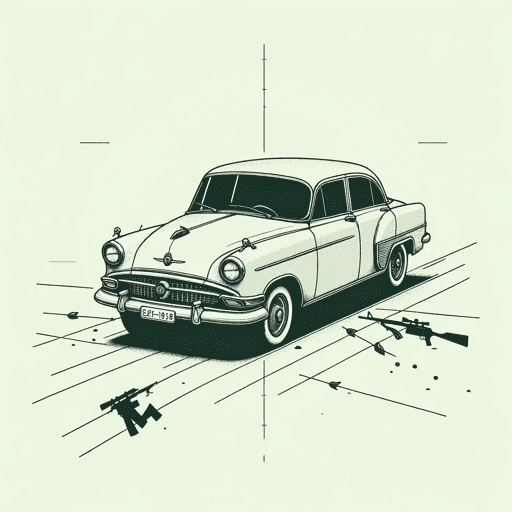
At that moment, Pupo knows that he needs to follow the plan, beginning by executing Espaillat, the former head of the SIM. He does not do this, instead leading Espaillat and his wife into the house. Pupo goes upstairs to change, informs Trujillo’s brother of the assassination attempt over the phone, and departs for the scene of the crime. When he sees the bullet-riddled Chevrolet, instead of detaining or executing the Trujillistas, he searches the scene alongside them. He then departs for the Fortress, knowing that he should get some kind of signal to Luis and Juan Tomás, but instead instructing the guards to let no one in.
At the Fortress, Pupo senses the power vacuum and recognizes the need to step in, take command, and reassure his officers that an opportunity for change has arrived. He knows precisely what he must say in his speech, to facilitate the transition to the civilian-military junta. Again, instead of doing what he should, he limits himself to providing information “in vague, broken, stammering terms” and telling the soldiers they must stand ready to strike (316).
For a moment, he breaks out of his stupor and tries to call an immediate meeting with President Balaguer, Abbes, and Trujillo’s brother, General Héctor, so he can arrest them. Balaguer declines, stating that his place is at the Palace and suggesting that the meeting take place there. Abbes agrees, but only after he hears from Trujillo’s driver, who was wounded but not killed (and after questioning Pedro). General Héctor agrees to come, but never shows up, and Pupo realizes that his plan has failed. He begins to flail, issuing contradictory and erratic orders, attempting to cover his tracks, knowing that he will soon be found out.
Pupo leaves for the meeting at the Palace, where nearly all of the Trujillo family has gathered. He discovers quickly that everyone knows more than he does and that a captured Pedro is being interrogated by Abbes. He sneaks away and tries to order the head of the General Staff to surround the clinic and place Pedro under guard. The head merely pauses, says good night, then hangs up the phone.
Abbes returns to provide further information, but he does not reveal that Pedro has implicated Pupo. Abbes argues that a Trujillo family member should assume the presidency, which everyone, including Balaguer, initially approves. Balaguer calmly suggests that they wait for Ramfis to arrive, consulting Ramfis “as the Chief’s oldest son, his spiritual, military, and political heir” (321). Trujillo’s wife, the Bountiful First Lady, agrees. Pupo feels furious that Balaguer remains composed while he is falling apart.
The hours that follow pass like a dream, and Pupo can only watch as his own power and position slip away. He supports Abbes’s proposal to detail Bishop Reilly immediately; Pupo argues that they should execute Reilly, as the Church is undoubtedly part of the plot. The Commander at the Air Force detention center refuses to execute Reilly on orders of Balaguer. Pupo leaves to try to “straighten out” Balaguer, but faints in the corridor on his way. Hours later, when he awakens and makes it to Balaguer’s office, he finds Balaguer giving Reilly his personal promise that nothing like this will happen again.
After Reilly leaves, Pupo explodes. Balaguer remains calm and explains that in this critical moment, Pupo should “set an example of calm for the country” (324). He explains that “killing a bishop would not have resolved your problems. It would have made them worse” (324). Pupo roars that he’s ordered the execution of Segundo Imbert and Papito Sánchez, and that he’ll execute anyone implicated in the plot. Balaguer nods, makes a cryptic remark, and departs.
Following the mass for Trujillo, who lies in state, Trujillo’s brother Petán takes Pupo to San Isidro, where Pupo is arrested for his complicity in the assassination. Pupo does not fight this; all of the detainees have denounced him. Pupo is asked to write down everything he knows, but Ramfis already has most of the story. Pupo obliges, lying only twice: omitting his brother from the conspiracy, and claiming that he had insisted on abducting, rather than killing, Trujillo.
Pupo is taken to Abbes’s secret torture facility and subjected to further questioning on the electric chair. Ramfis tries to find out if Balaguer helped the assassins. Pupo is unsure, but believes Balaguer did not. Between torture sessions, Pupo returns to a cell but isn’t allowed to sleep. They continue to ask him about Balaguer, but they don’t actually care about his answers: They already know what they need to know already. After months of torture, doctors tell Ramfis they can no longer continue to revive Pupo. Ramfis, denying Pupo a natural death, shoots him.
Chapter 21 Summary
After discovering that the SIM has taken his wife and children, Turk decides to turn himself in. Turned away by his wife’s cousin, he hails a cab; the driver recognizes him, tells Turk he’s also anti-Trujillista, and says that if they need to run, they’ll run together. Turk asks to go a church, and when SIM agents begin following them, he tells the driver to stop and let him out. He raises his hands and does not resist when SIM agents arrest him.
Turk is stripped naked and strapped to the electric chair. Abbes and Ramfis begin torturing him and asking him questions. Turk gives up Pupo, but tells them his family knew nothing of the plot and asks for their release. He passes out, and when he revives, finds himself in a cell with his brother Guaro, a true Trujillista whom they had excluded from the plan. Turk tries to explain this to his torturers, but “they did not seem interested in knowing the truth […] they were more interested in torturing him than in interrogating him” (336).
One day, they take Turk to a sunlit room, where he sees his father, General Piro Estrella, along with Ramfis. His father calls Turk a traitor and estranges himself from Turk; Turk wonders if he is faking it to get Ramfis to spare Turk’s life, or if his love for Trujillo truly outweighs his love for Turk. Some weeks later, Ramfis shows him a public letter his father has written, denouncing Turk and thanking Ramfis for giving his family the money they needed to survive after their property had been confiscated.
Some time later, the other conspirators join Turk in his cell; they have been at El Nueve the whole time. Turk learns that Imbert and Luis Amiama are still at large; further, he learns that Antonio de la Maza, Juan Tomás, and Amadito died fighting. In fact, when Antonio’s father learned of his son’s death, he asked only if Antonio had died fighting, and thanked the Lord when it was affirmed.
In October, they move to La Victoria prison, where they are washed and dressed; the torture and interrogations finally cease. They also have permission to receive gifts from their family. From smuggled newspapers, they find out that Balaguer spoke at the United Nations, condemning the Trujillo dictatorship and promising reform. A short time later, they also learn that Trujillo’s brothers have left the Dominican Republic. Ramfis plans to depart soon, at which point the assassins may receive amnesty. Modesto decides that they must mobilize their legal defenses as much as possible, as Ramfis will try to kill them prior to leaving.
In November, they learn about another impending reconstruction of the crime. This news raises their suspicions, but several of them grow optimistic when they are transferred to cells at the Palace of Justice. Turk and Modesto, however, recognize that their death is imminent. They reconstruct events at the scene of the crime, which takes many hours, before being loaded back into the van and driven to the cliffs. The three young soldiers guarding them are asked to step out of the van, then subsequently shot. When Turk calls out the murderers, he’s told that the prisoners are “killing” the guards; blame for the murder of the soldiers would justify the prisoners’ deaths.
The van drives to a remote ranch, where Ramfis and some of his cronies are drinking. One by one, the prisoners are brought in front of a coconut tree and shot. As Turk marches to the tree, he realizes he’ll never see Baquinta.
Chapter 22 Summary
When Balaguer receives Pupo’s phone call the night of Trujillo’s assassination, he realizes the conspiracy has succeeded. Balaguer knows he “could not waste time indulging in pity or anger; for the moment, the problem was the head of the Armed Forces” (346). He views Pupo’s plan as crude, believing Pupo should have sent a delegation for him instead. As Balaguer makes his way to the National Palace, he knows his transformation from figurehead to true president depends on his conduct over the next few hours. He reminds himself of his guiding belief to never lose his composure.
When Balaguer enters the Palace, it is clear that chaos currently rules the inner circle and family: “There was a vacuum, and it had to be filled as soon as possible” (347). He reassures the First Lady, then goes to his office to ensure that the commanding generals know the chain of command and constitutional order remains the same. Shortly after, following Bishop Reilly’s kidnapping, representatives from America and the United Kingdom visit him. Balaguer calls General Virgilio, Trujillo’s nephew, calmly explains why the Dominican Republic should not execute the American priest, and orders Virgilio to retrieve Reilly and bring him to his office.
Back with the family, he recognizes that he will need to confront Abbes soon. Abbes attacks first with his argument that a member of the Trujillo family should assume the presidency. Balaguer recognizes that Abbes has made a mistake by forgetting about Ramfis, which would lose points in the First Lady’s eyes, and wins the round by arguing that they must wait for Ramfis’s return. As the night progresses, Balaguer’s calm reassurance continues to win support. Pupo—once he revives from fainting—enters Balaguer’s office in a rage, likely to begin firing at any moment; once again, Balaguer deescalates the situation. As Pupo rants about the conspiracy, Balaguer leaves the room, convinced that Pupo was involved in the assassination.
Trujillo’s body is laid out in the dining room of the Palace, first for examination and then in preparation for his wake. Seeing the First Lady’s fury, Balaguer seizes the moment: He takes her aside and recommends, thinking of the future, that she transfer as much money as she can overseas to ensure her comfort in case the people turn against her and the Trujillos. Doña María appreciates his suggestion and takes him up on it, asking him to ensure the utmost discretion. By protecting her interests, he has “won another point in his strategic war” with Abbes (355).
When Ramfis arrives some hours later, Balaguer makes his riskiest move. He proposes a deal in which Balaguer will become the true President of the Dominican Republic, while Ramfis will assume control of the military as the country shifts toward democracy. Ramfis has drawn the same conclusion, believing he has no other alternative to have sanctions lifted and prevent an invasion. He agrees, as long as Balaguer leaves military matters to Ramfis, and no one interferes when Ramfis punishes those who killed his father.
Having won his battle with Abbes, Balaguer summons the SIM head after Trujillo’s funeral and offers him a golden exile: a diplomatic post to Japan. Abbes has anticipated this, but scoffs at the idea that Balaguer has won, arguing that Balaguer is just as closely associated with the Trujillo regime as he was. Balaguer argues that he must shed the Dominican Republic of the worst faces of the regime, including Abbes. Recognizing he has no alternative, Abbes quietly but angrily accepts.
Balaguer then appoints Chirinos as head of the Senate, although “he found the alcoholism of the Constitutional Sot repugnant” (359). He is concerned that hardcore Trujillistas, whom he still needs, will oppose Agustín. When Chirinos offers the whereabouts of Antonio de la Maza and Juan Tomás and asks about Ramfis’s reward, Balaguer suggests that he forego the reward and keep his denunciation private. Chirinos accepts the advice, recognizing that Balaguer intends to move the country away from Trujillo.
In the weeks that follow, Chirinos and Balaguer work closely to open the Dominican Republic up to democracy. When, in October, Balaguer denounces Trujillism at the U.N., he receives a bitter letter from the former First Lady; worse, he learns that Trujillos brothers are angry and intend to put Balaguer in his place. Ramfis argues against it, reminding them that if they lead a coup, the United States will invade, and that it’s best to stand with Balaguer. Further, he reminds them that Balaguer needs to give such speeches in order to ingratiate the country to its former allies. Although Ramfis berates Balaguer the next time they meet, Ramfis has no interest in running the country himself. Balaguer asks Ramfis to convince his uncles to leave the country to facilitate the transition. When Ramfis asks if Balaguer plans to ask him to leave as well, Balaguer responds that he will once the time is right.
In November, when Trujillo’s brothers unexpectedly return, reportedly with military support, Ramfis leaves Balaguer to deal with the situation. The next day, a group of men remove Trujillo’s body from its crypt and load it onto the yacht Angelita; Balaguer cuts off the minister informing him of this, pretends not to have heard, then sets about planning the day. The next few days are quiet, but on the morning of November 18, Balaguer receives word that the primary conspirators have been removed from La Victoria. Balaguer reassures the Civic Union that the move will help to reconstruct the crime, after which their trial will begin without delay.
Once the Civic Union has departed, Balaguer contacts the Solicitor General, who informs him that no one in the judiciary ordered a reconstruction; the Minister of Justice later confirms this account. Balaguer orders him to attend the reconstruction personally: “It is absolutely imperative that there be witnesses to the fact that the government has done all it can to stop the breaking of the law” (371). That evening, the Minister of Justice informs Balaguer that he and the American consul were prevented from attending, a decision made by the military. Later, Balaguer learns that the van carrying the prisoners has disappeared. He expects Ramfis to leave that night if he hasn’t already, and he expects a confrontation with Trujillo’s brothers.
At 10 o’clock the next morning, Trujillo’s brothers kick in the door to Balaguer’s office, followed by 27 armed men “whose faces looked not only thuggish but drunk” (372). Petán roars that they’re going to finish off Balaguer and those like him. Balaguer calmly asks them to come to the window with him; they can see three American warships in the distance. Balaguer explains that when the Trujillos regain power, the warships will invade. The brothers order the armed men to leave and sit down with Balaguer. “From this moment on, it was nothing but a tedious financial negotiation, which confirmed for the President the contempt he felt toward those who were greedy for money” (374).
Following the Trujillos’ departure, Balaguer asks for a general political amnesty for the remaining prisoners, and the Dominican Party dissolves. After some applause, an embarrassed Minister of Health admits that he has been hiding Luis Amiama in his house for the past six months. Balaguer asks him:
to accompany Dr. Amiama to the National Palace, when both he and Don Antonio Imbert, who would undoubtedly reappear at any moment, would be received in person by the President of the Republic with the respect and gratitude they deserved for the great services they had rendered the Nation. (375)
Chapters 19-22 Analysis
These chapters bring the virtue of patience, calm, and composure to the fore. Chapter 20 reveals how Pupo, through anxious indecision and a failure to act, lets his co-conspirators down. By telling the story of the assassination from other angles before revealing Pupo’s failure, Vargas Llosa drives home the consequences of Pupo’s inability to carry out his part of the plan. Even so, Balaguer’s precise, deft handling of the situation creates an outcome similar to the original plan: a civilian-military junta with Balaguer as president. To help the transition to democracy, Balaguer installs Ramfis as temporary head of the military, one of a series of steps that shows the value of Balaguer’s calm and strategic decision-making—and Pupo’s unfitness to lead.
Those who carried out the assassination, expecting Pupo’s support, pay most dearly for his failures. The military and SIM agents either jail, torture, and execute the conspirators and their families, one by one, or shoot them on sight. Balaguer’s actions aren’t pure: He knowingly hands the conspirators over to Ramfis, the price he has to pay to move the country toward democracy. Thus, the conspirators serve their country in more ways than they could have imagined. Only Amiama and Imbert survive.
Additionally, these chapters emphasize the tension between the intellectuals and strongmen of the Era; when the strongmen fail, intellect prevails. Trujillo’s regime values brute strength, as revealed by Trujillo’s own actions as well as his frustration with the intellectuals around him. He bestowed derogatory nicknames reflecting his distaste for intellect (Agustín is “Egghead,” Chirinos is “Constitutional Sot”), and he distrusted others, such as Modesto, whom he viewed as smart but uncontrollable. Whether Modesto’s actions prove the wisdom of Trujillo’s distrust, or whether Trujillo’s arrogance pushes Modesto to use his intellect against him, remains an open question.
In Chapter 15, Trujillo tells Balaguer that he considers intellectuals and writers the lowest members of society—echoing Plato’s argument that poets would be exiled from an ideal republic—and sees members of the military as society’s most valuable. Similarly, Pupo looks disdainfully upon Balaguer, only to watch Balaguer outmaneuver him at every turn. Balaguer remains in control, relying on a mind that rapidly and accurately assesses an increasingly chaotic situation and navigates it in the best possible way. He recognizes that the U.S. will invade if a nondemocratic government replaces Trujillo, and he uses that inevitability to convince Trujillo’s family and supporters like Abbes to leave the country. A man of thought becomes a man of action in the aftermath of Trujillo’s death while a man of action is taken captive by his thoughts.

Unlock all 71 pages of this Study Guide
Get in-depth, chapter-by-chapter summaries and analysis from our literary experts.
- Grasp challenging concepts with clear, comprehensive explanations
- Revisit key plot points and ideas without rereading the book
- Share impressive insights in classes and book clubs