The Forest of Hands and Teeth
52 pages • 1-hour read
Carrie RyanThe Forest of Hands and Teeth
A modern alternative to SparkNotes and CliffsNotes, SuperSummary offers high-quality Study Guides with detailed chapter summaries and analysis of major themes, characters, and more.
Important Quotes
Content Warning: This section of the guide includes descriptions of graphic violence, illness, and death.
“The ocean, Mary, the ocean!…So beautiful the ocean…The water, the waves, the sand, the salt!… It consumes me.”
(Chapter 1, Page 15)
Mary begins her narrative by mentioning the ocean, a major motif in the novel. Although it is a force she has never seen, she thinks of the ocean often. When her mother, who is about to die and return as an Unconsecrated mentions the ocean in this scene, it is unclear whether she feels that the ocean or the infection is the consuming presence, and this deliberate ambiguity contributes to the nebulous feel of the novel’s dystopian setting. Even though the most recent photographic evidence of the ocean is generations old, as Mary’s great-great-great-grandmother was the last to see the sea, Mary still feels driven to travel beyond the confines of her village in search of the ocean, and this passion will steer her decision-making.
“No one remembers where the paths go. […] We only know that one points to the rising sun and the other to the setting sun.”
(Chapter 3, Page 28)
Through a gradual reveal of expository details, Mary explains the village’s ignorance about the circumstances that led to the initial spread of the undead across the world so long ago. Her description of the village itself is equally gradual, and it is not until her imminent commitment to the Sisterhood that Mary finally reveals the existence of the two fenced, forbidden paths into the Forest, one running east and the other west. Her revelation in this early scene plants crucial information for the upcoming conflict with Gabrielle and foreshadows Mary’s decision to venture down the paths later in the novel. The paths also serve as symbols for Mary’s yearning to leave the village.
“And you should know, Travis, that she is not allowed to speak except in prayer, so please do not tempt her to do more than that.”
(Chapter 5, Page 41)
Sister Tabitha quickly reveals her status as a controlling antagonist in Mary’s village life. Because the Sisterhood has more authority than the Guardians, this hierarchy places Tabitha at or near the top of the theocracy that rules the village. Yet even Tabitha cannot dictate the terms of Mary’s emotions. Although she ironically tries to limit Mary’s spoken messages to prayer, the narrative has already indicated that the death of Mary’s mother has caused the protagonist to lose her belief in God. When Mary speaks secretly to Travis about the ocean, this surreptitious action shows Mary’s rebellious nature and free-thinking spirit.
“Jed told us that he found Travis half delirious, dragging himself through the fields. But no one has been able to figure anything out.”
(Chapter 6, Page 47)
Harry’s explanation about Travis’s injury complicate the plot in a few ways. Not only do the unanswered questions about Travis’s injury build narrative tension, but Mary also learns that her brother was the one who delivered Travis to the hospital, and she is deeply hurt to realize that Jed made no effort to visit with her. This snub further complicates their relationship, which has already grown strained in the aftermath of their mother’s death and turning.
“Someone from Outside has come to our village.”
(Chapter 7, Page 59)
Mary’s epiphany exhibits her cleverness and courage, for as she jumps from Travis’s window into the snow and tracks footprints until arrives at this deduction, it is clear that she is willing to take calculated risks in order to circumvent the Sisterhood’s attempt to limit the villagers’ access to crucial information. With her amazement that a single person has arrived by way of the forbidden path, Mary indicates that no stranger has ever arrived in the village in her lifetime. As she entertains new thoughts of escaping her home village and making a better life, the arrival of an Outsider offers The Persistence of Hope amidst Death.
“You must realize that something he may have once felt is gone now that Harry has officially spoken for you. Now that you are to be his brother’s wife.”
(Chapter 9, Page 81)
As Cass rejects Mary’s insistent attempts to persuade her that they might find a way to “swap” the men to whom they are currently betrothed, these new complications strengthen the novel’s romance subplot. Not only do the stringent rules and traditions of the village dictate that Mary will wed Harry and Cass will marry Travis, but Mary sees that even stronger social mores will prevent any changes to the plan. Specifically, Travis will never betray his own brother in the eyes of the community. The emphasis on Mary’s painful inability to control the outcome of her fate also intensifies the novel’s critique of Female Agency within Oppressive Social Structures.
“In the beginning […] we did not understand the extent of it.”
(Chapter 12, Page 108)
When Mary finds a series of scientific notes about the undead infection written in the margins of a book of Scripture, the scene is heavy with unspoken irony, given the implicit fact that such a holy book is filled with human observations that do not align with the Sisterhood’s focus on religious dogma. The scene contains yet another irony that Mary does not recognize; in a subtle parallel between the real world and the village, the author deliberately echoes the opening of the Christian Bible, for the mysterious human-written notes start with the same three words as the Book of Genesis: “In the beginning.”
“I promise you, I will find a way for us.”
(Chapter 13, Page 121)
A distinct dichotomy exists between Harry and Travis’s reactions to Mary’s insistent need to find the truth about the world she lives in. When Mary tries to tell Travis about Gabrielle and voices her suspicions of the Sisterhood’s secrets, his reply is a noncommittal “Oh, Mary,” and he halts further discussion by kissing her. By contrast, Harry listens to Mary’s pleas to leave “without censure or judgment” (121) and promises her that he will make her wish come true. Even so, Mary continues to pine over Travis, failing to recognize that Harry holds a greater respect for her ideas. It is also notable that Harry, not Travis, is the one who takes charge and leads the way out of the village by venturing onto the fenced paths.
“This is panic. And panic means the people on the platforms will pull up the ladders early. Will do anything to save themselves first.”
(Chapter 14, Page 126)
As the Unconsecrated flood into the village, Mary knows that her fellow villagers will act in fear and self-preservation rather than kindness and concern for one another. She will later understand that their selfishness costs the village its survival, since all those left on the ground inevitably become victims and swell the ranks of the Unconsecrated. This issue further develops The Tension between Self-Interest and Self-Sacrifice.
“She does not see the streak of red.”
(Chapter 15, Page 132)
With this simple yet ominous statement as an indirect reference to the undead Gabrielle’s approach, the novel obliquely describes the inevitability of Sister Tabitha’s death at the hands of the very Unconsecrated that she is implied to have created. Tabitha has been a strong antagonistic force in Mary’s life, seeking to berate the girl at every opportunity with lectures and threat Mary about commitment, and the narrative also implies that she arranged the marriage to Harry in order to keep Mary from discovering the Sisterhood’s secrets. However, when Sister Tabitha dies trying to save Mary, Harry, Jacob, Argos, and the Sisters inside the Cathedral, the author provides a more nuanced portrayal, complicating Mary’s previous certainty that the woman had no true goodness within her.
“The Sisterhood has it wrong […] It’s not about surviving. It should be about love.”
(Chapter 15, Page 155)
The novel’s portrayal of Jed shifts drastically when he joins the small band of survivors inside the fenced path. In earlier chapters, he coldly shut Mary out and abandoned her to the Sisterhood, but in this scene, he is broken and bereft at the thought of losing Beth, who is infected. Ironically, he preaches about love after having shown none to Mary, and he does not acknowledge the fact that his decision to send her to the Cathedral led to her experience of falling in love with Travis. His realization therefore illustrates new angles of The Tension between Self-Interest and Self-Sacrifice.
“It’s a dead end.”
(Chapter 18, Page 163)
Harry’s pronouncement about their progress on the forked path falls exactly halfway through the novel and illustrates the author’s frequent use of symbolism. Metaphorically, the blocked fence is an impassable barrier to Mary’s forward progress in life, and this new challenge also represents an archetypal test in the mythic plot structure of the Hero’s Journey. When undertaking such tests, the heroes are often accompanied by allies and enemies, and in this case, the author declines to reveal who is on Mary’s side and who is against her.
“I can hear a soft thump over and over again. Like the sound of a cat locked in a cupboard—it echoes my pounding heart.”
(Chapter 22, Page 192)
The sensory imagery increases the suspense in this scene as Mary investigates the second floor of the brick house. The simile (“Like the sound of a cat locked in a cupboard”) uses an everyday situation to bridge the gap between Mary’s dystopian world and the real world. The echoing effect of Mary’s heartbeat indirectly reveals her fear, and the tension of confronting the source of an unknown noise draws upon many common tropes of the horror genre.
“Who are we if not the stories we pass down? What happens when there’s no one left to tell those stories? To hear them? Who will ever know that I existed?”
(Chapter 23, Page 207)
These frenzied rhetorical questions reveal the depths of Mary’s quest for freedom, and as she pursues her emotional journey to self-discovery, she must ironically remain in physical stasis, waiting out the days under siege in the brick house with Travis. However, far from being happy to spend so much time alone with the person she loves, she finds herself desperate to stake a claim in the world and to know that her existence means something.
“I’m surprised, suddenly, at how lonely I feel. And this is a terrifying thought to have in front of Travis […] Travis, whose breath I measure as we sleep, whose heart is the cadence to my life.”
(Chapter 24, Page 216)
No one is more shocked than Mary when she begins to realize that Travis’s presence is not enough to provide her with a fulfilling life. While she still loves him, she yearns for what comes next in terms of escape and freedom, and she spends long hours on the attic porch, reevaluating many of her past assumptions. Notably, her physical location in the attic over Travis’s head provides her with a place of solitude: a reflective escape within the very house that traps her.
“I’m not sure if either of us will ever be enough for you, Mary.”
(Chapter 25, Page 224)
Travis’s statement stands as a bleakly succinct summary of Mary’s romantic conundrum. Betrothed to Harry, Mary still feels the obligatory expectations that bind her to him, even as she continues to feel guilty for allowing this Binding when she has always loved Travis, not Harry. However, her days in the brick house and her new understanding of the importance of identity force her to see that Travis is right. For Mary, true fulfillment will come in seeing the ocean, which stands as the symbolic representation of freedom and escape from the Forest of Hands and Teeth.
“The wood reinforcing the door is in splinters, half of it missing, and they seep through the hole like blood from a wound.”
(Chapter 26, Page 229)
After endless days inside the brick house, Mary’s realizations about her own importance and identity come to a head just as the Unconsecrated finally break through and enter the first floor. Emotional or psychological breakthroughs in a character’s development are often likened to a bloom, an explosion, or a sudden light, but the author subverts these tropes by having Mary’s revelation coincide with a flowing river of undead. The simile (“like blood from a wound”) creates a visceral image that foreshadows the violence and injuries to come.
“INFECTION SWEEPS THROUGH CENTRAL STATES: CITIZENS URGED NORTH.”
(Chapter 27, Page 240)
The old newspaper headlines that Mary discovers in the attic are the closest clues that the author provides about the Return. As Mary glimpses these journalistic statements, she gleans a broader picture from the scanty details, and it is implied that the Rocky Mountains might have been a final stronghold against the infection “sweeping” around the world. The lack of detail strengthens the gloomy, ominous tone of the narrative even as the author continues to obscure the gory realities that inevitably accompanied the deaths of most of humanity.
“I want to protest, to tell him that he’s wrong. But instead I look out the window to the trees, to the leaves undulating out in the Forest. The only ocean I’ve ever known.”
(Chapter 29, Page 254)
Although Mary’s faith in the ocean’s existence is strong, she experiences momentary doubts about its status as a potential haven. When Travis reveals that Gabrielle told him the ocean was as ruined as the rest of the world, Mary feels an uncharacteristic sense of defeat, and in this scene, her inner monologue gives rise to a complex metaphor that compares the Forest of Hands of Teeth itself to a rippling ocean.
“Can you teach me how to fight them too? Because they scare me.”
(Chapter 30, Page 261)
Jacob symbolizes innocence and youthfulness, and his infrequent lines create a brutally honest and simplistic portrayal that emphasizes a child’s perspective on the Unconsecrated. To call the undead “scary” simultaneously true and grossly inadequate, and this use of understatement paradoxically underscores the horror of their brutality. Jacob’s presence in the novel also serves to promote or demonstrate the inner changes that the teenage characters undergo. Because of Jacob, Mary has the chance to show kindness and generosity by giving him Argos, and Cass also finds new purpose by taking on a maternal role after the loss of her family.
“Those days back at the house. That is my world. That is my truth. […] That is my ocean.”
(Chapter 31, Page 268)
In this passage, the ocean serves as a different metaphor. Travis, who once pinned his hopes for the future on Mary’s ocean, now realizes that the days spent with Mary in the brick house have fulfilled him in the way that he believes the object of her quest will someday fulfill her. Travis’s thoughts in these moments also propel him toward his noble act of self-sacrifice to save the others.
“Regret eats away at me, stripping through my veins as if to replace my blood. […] And I wonder if there was ever a crueler world than this one that forces us to kill the people we love most.”
(Chapter 32, Page 277)
Mary and Travis have saved each other’s lives several times after the breach of their village, and their love develops as they spend time together in the brick house. For this reason, Mary feels obligated to be the one to “save” Travis by killing him and preventing him from becoming an Unconsecrated. By portraying murder as an act of love, the author provides a more dire, grisly interpretation of the novel’s thematic focus on The Tension between Self-Interest and Self-Sacrifice. While Mary’s determination to do this for Travis reflects her deep regard for him, it also flays her emotions to the metaphorical bone, and only when she experiences the symbolically cleansing rainstorm will she be able to free herself of the ash, soot, and guilt of this ordeal.
“Cass was right—you’re only chasing stupid bedtime stories and it’s selfish.”
(Chapter 33, Page 287)
Throughout the story, Harry focuses his efforts on saving others. For example, he saves Jacob during the breach and cares for Cass in the treehouses, but in this scene, his condemnation of Mary’s desire to explore beyond Gate 1 highlights The Tension between Self-Interest and Self-Sacrifice. Although Harry promised Mary that he would help her escape the village’s oppression and experience the freedom of the ocean, he now accuses her of thinking only of herself. However, his declaration is also an act of selfishness, for although he merely wants Mary to stay safe, he is now actively discouraging her from pursuing her deepest dream of a better life.
“Finally, the Forest, the inevitability of it all, has won.”
(Chapter 34, Page 292)
Mary’s liberty upon running into the Forest for the first time is fleeting, representing the ironic and unexpected turns in life. Finally free of the fences, she seeks her goal and believes that she will be successful, but when she finds herself surrounded by the undead, Mary loses any optimism and decides that The Persistence of Hope amidst Death is ultimately not enough to save her. However, this moment of despair comes just before the crucial turning point when Jed arrives to help her fight off the enemy, and as the siblings battle on together, she realizes the importance of maintaining hope even when defeat seems certain.
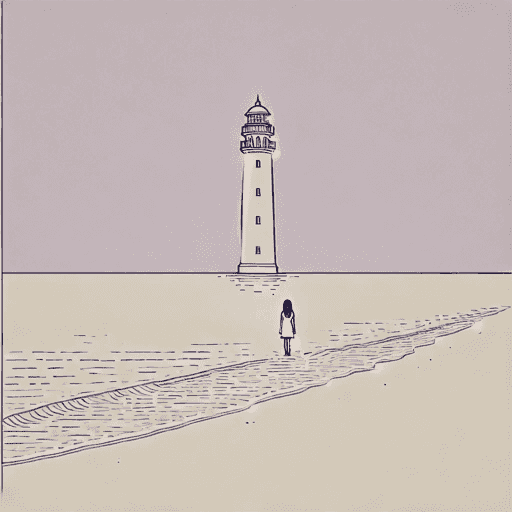
“In about six hours you’d never know there was anything here other than sand and surf. The beach will be what it always is. Just a beach.”
(Chapter 36, Page 305)
The novel’s focus on The Persistence of Hope amidst Death elicits a mood of constancy that steadies the various twists in plotting and shifts in pacing. Once Mary sees the ocean and hears the words of the unnamed man on the beach, however, her understanding of constancy changes drastically. Like a soothsayer or mentor figure, the man offers her a new truth, suggesting that the ocean is as healing, cleansing, and timeless as Mary hoped it might be. In that timelessness rests her hope for humanity in the future, symbolized by her acceptance of his words and her trust in a new path that begins in his lighthouse.

Unlock every key quote and its meaning
Get 25 quotes with page numbers and clear analysis to help you reference, write, and discuss with confidence.
- Cite quotes accurately with exact page numbers
- Understand what each quote really means
- Strengthen your analysis in essays or discussions