The Fourth Daughter
51 pages • 1-hour read
Lyn Liao ButlerThe Fourth Daughter
A modern alternative to SparkNotes and CliffsNotes, SuperSummary offers high-quality Study Guides with detailed chapter summaries and analysis of major themes, characters, and more.
Part 2, Chapters 18-23Chapter Summaries & Analyses
Content Warning: This section of the guide includes discussion of mental illness and death.
Part 2, Chapter 18 Summary: “Ang-Li: March 1961, Taichung”
In March 1961, journalist Ang-Li Ong’s wife, Jin, brings home a frightened toddler, Yili Wang. Jin and Ang-Li already have three children: Clare, George, and Henry. Jin claims the girl is a shim-pua, a girl adopted to become a future daughter-in-law for their son, Henry, who is blind. She insists on renaming the toddler Hsu-Min and orders everyone to use the new name. Amid the climate of fear under the White Terror, Ang-Li grows suspicious about why Jin is hiding the girl’s origins.
Ang-Li visits a medicine shop, where the owner, Wong Tai Tai, reveals that Hsu-Min is the child of a KMT-affiliated man, Wang Po-wei, with whom Jin is having an affair. Ang-Li knows Po-wei from university and knows Jin once loved him, but he had no idea the affair had continued after he and Jin married.
Two months later, Wong Tai Tai hurries to the Ong home to report that police have arrested Jin for spying for the communists. She tells Ang-Li that Po-wei orchestrated the arrest. Ang-Li is confused: Why would Po-wei betray Jin after he had entrusted her with his daughter? Wong Tai Tai warns Ang-Li that he could be arrested next if he causes trouble. Ang-Li resolves to find Jin.
Part 2, Chapter 19 Summary: “Liv”
Liv and Simon arrive at Clare's apartment, where they piece together the truth: Sue Huang, whose DNA profile listed her as Hsu-Min Chen, is Yili. Clare confirms that her father, Ang-Li, adopted Sue. She explains that Sue now lives in New York City and works for the United Nations, which shocks Liv. Right now, the whole family is in town for Ang-Li's funeral.
Clare reveals that after the KMT executed her mother, Jin, Ang-Li emigrated to Georgia with the children and changed their surname from Ong to Huang to protect them. George, Clare's brother and Genevieve's husband, learns for the first time that his mother was executed, and Sue is adopted.
Liv calls Ah-Ma, who reacts with joy and rushes over. Genevieve, George’s wife, shows Ah-Ma photos of Sue, and Ah-Ma identifies the heart-shaped birthmark, confirming it is Yili. Clare then gives Ah-Ma Ang-Li’s journal, warning that it contains painful truths about the past.
Part 2, Chapter 20 Summary: “Ang-Li: June 1961, Taichung”
In June 1961, Ang-Li confronts Po-wei's father, a powerful KMT official, at the family office and begs him to release Jin. The man refuses to intervene.
Jin has been imprisoned for two months when Wong Tai Tai brings Ang-Li devastating news: Authorities plan to execute Jin the next day but have granted him a final visit. At the prison, he finds Jin beaten and shaken. She confesses the full truth of her affair with Po-wei and reveals that Clare is not Ang-Li's biological daughter but Po-wei's. She explains that Hsu-Min is Po-wei's child with his wife, Yi-ping, which makes Hsu-Min and Clare half-sisters. Jin pleads with Ang-Li to protect both girls from Po-wei.
Jin then explains the circumstances of her arrest. She had been having an affair with Po-wei and threatened to tell Yi-ping about it. Po-wei had her arrested to frighten her into silence, but a bureaucratic error mixed up her paperwork with that of another woman, who was accused of spying for the communists. Po-wei's father refused to correct the mistake, and so Jin was sentenced to death. She apologizes for the affair and for the pain she has caused.
After their final goodbye, Ang-Li is heartbroken, humiliated, and devastated beyond measure. He resolves to get the children out of Taiwan as soon as possible.
Part 2, Chapter 21 Summary: “Liv”
After reading Ang-Li’s journal, Ah-Ma learns that Clare is her husband Po-wei’s daughter with Jin. Clare admits that she has resented Ah-Ma for years, believing Yi-ping was an evil woman who lived with the man who killed her mother and discarded her own daughter. She apologizes, and the two women reconcile.
Sue arrives at Clare’s apartment for a long-awaited reunion with Ah-Ma. Ah-Ma embraces her fourth daughter, calling her Yili. Sue describes having recurring dreams of her birth mother and a sense that someone has been waiting for her.
Liv introduces herself as her niece. Ah-Ma, Clare, Sue, and Liv embrace as a family for the first time. Sue proposes a reunion dinner to celebrate.
Part 2, Chapter 22 Summary: “Liv”
The next night, the extended Wang and Huang families gather for a reunion banquet. Clare gives a toast, marking their reunion after 63 years. Liv meets Sue’s daughter, Francesca, and Liv’s friend Amy arrives to join the celebration. Liv shares that she and Ah-Ma have been filming cooking videos that are gaining an online following. She mentions that she and Simon have plans to visit Sun Moon Lake the following day, after she and Ah-Ma meet with producers interested in a cooking show.
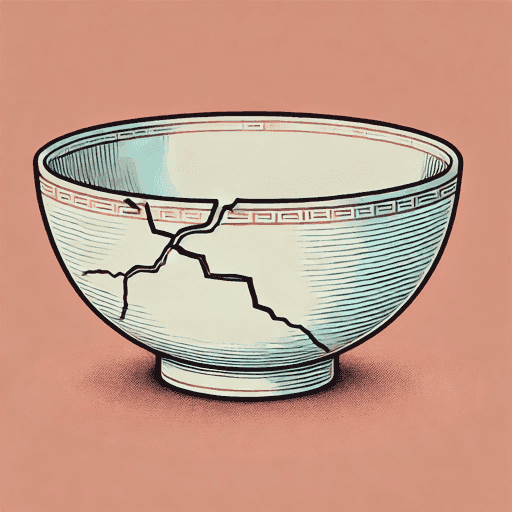
During dinner, the crash of a dropped bowl triggers a severe panic attack in Liv. Amy, Ah-Ma, and Clare take her to a quiet room and stay with her until she regains control. They encourage Liv to seek professional help for her trauma, and she agrees to consider it.
Later, unable to sleep, Liv goes to Ah-Ma's room. Ah-Ma sits with her and begins sharing more entries from Ang-Li's journal. She is saddened to learn that Ang-Li believed that she was a monster for giving her daughter away.
Part 2, Chapter 23 Summary: “Ang-Li: August 1961, Taichung”
In August 1961, Ang-Li secures passports and exit visas for himself and his four children. Before they leave, Wong Tai Tai reports that Yi-ping came searching for her missing daughter. She repeats a damaging secondhand claim: that Yi-ping called the child garbage. The lie hardens Ang-Li’s heart, reinforcing his decision to cut all ties to protect the children.
Ang-Li and his children depart for America and change their surname from Ong to Huang. By June 1963, in Georgia, Ang-Li struggles with money and single parenthood. A local tutor, Mrs. Davis, befriends the family and helps him prepare for exams and improve his English. She gives Hsu-Min the nickname Sue, which she gladly adopts. Ang-Li vows to protect his children by keeping their history secret.
Part 2, Chapters 18-23 Analysis
The introduction of Ang-Li Ong’s journal marks a structural pivot in the narrative, unearthing a hidden history that fundamentally reconfigures the novel’s central conflicts. By switching to Ang-Li’s first-person account from 1961, Butler provides direct testimony from the past, transforming what initially appeared as a story of maternal grief into a chronicle of paternal protection, political terror, and the impossible choices demanded by authoritarian rule. This narrative choice proves essential to the theme of Reckoning With the Past to Reclaim Identity. Ang-Li's account of Jin's arrest and execution provides the missing context for decades of silence, revealing the intricate connections between the Wang and Ong families. What the family understood as one tragedy reveals itself as something far more deliberate: Jin's death was not random political persecution but a calculated act. Thus, Yili's absence must now be seen as collateral damage in Po-wei's consolidation of power.
These chapters explore how secrets and silence function paradoxically as both destructive forces and perceived necessities born from trauma. The novel refuses to simplify this dynamic, instead examining how silence operates differently across historical contexts and why what begins as protection can calcify into pathology. Ang-Li's decision to obscure his family's history is a direct response to the political violence of the White Terror and the trauma of Jin's execution. His belief that secrecy will protect his children establishes a generational legacy of silence that outlives its original context, amplifying the theme of The Enduring Weight of Generational and Personal Trauma. Liv’s narrative approaches this theme from a different angle: Her symptoms of agoraphobia, hypervigilance, and retreat from public life represent what happens when violence is witnessed but not processed, experienced but not articulated. Liv's eventual willingness to seek help reflects a contemporary understanding of trauma, where open communication becomes a pathway to recovery. The difference between Ang-Li and Liv’s decisions is contextual: His silence was adaptive in 1961 Taiwan; hers would be maladaptive in 2020s New York. Yet the novel ultimately argues that while silence may serve as a tool for immediate survival, it perpetuates trauma's enduring weight across generations.
The revelations within Ang-Li's journal deconstruct and redefine the concept of family. The discovery that Clare is Po-wei's biological daughter links the Wang and Ong families at an even deeper level, reframing Clare's long-standing resentment toward Ah-Ma as something more complex than simple animosity. Their subsequent reconciliation, where Ah-Ma laments, “If I'd known, I would have welcomed you to the family” (223), demonstrates how truth can dissolve decades of hostility. The confirmation that Sue is Yili transforms the symbolic fourth daughter from haunting absence into living presence. Her rediscovery realigns the entire family structure, restoring the generational continuity that Po-wei severed. The emotional reunion between Sue and Ah-Ma testifies to the resilience of maternal love and the possibility of repair even after decades of separation. Family is no longer defined by bloodlines alone but by shared, acknowledged history.
Dramatic irony and narrative juxtaposition heighten the thematic resonance of these chapters, particularly in how misinformation shapes decades of family history. A key instance of irony lies in the misinformation from Wong Tai Tai, who reports overhearing that Yi-ping “threw her daughter out like garbage” (240). This misconstrued statement becomes Ang-Li’s justification for severing all ties with the Wang family, hardening his resolve and setting the course for 63 years of separation. The reader, having witnessed Yi-ping’s anguish and desperate search for Yili, is aware of the inaccuracy of this account. The narrative device reflects the atmosphere of suspicion that thrived during the White Terror, where gossip could be weaponized, objective truth became a casualty of political fear, and families could be destroyed by a neighbor's misheard conversation. By juxtaposing Ang-Li’s 1960s journal entries with the present-day reunion, Butler demonstrates the catastrophic consequences of flawed information. A single lie, however unintentional, can fracture families across generations.
The reunion banquet serves as a complex space where healing, community, and the persistence of trauma converge, emphasizing the novel’s theme of Personal Healing Through Family and Cultural Connection. Sharing a meal becomes a ritual of reconciliation that cements the newly blended family, a moment of communal joy that stands in contrast to decades of individual suffering. However, this atmosphere is shattered by Liv’s panic attack, a reminder that the healing process is not linear, and the body remembers what the mind tries to suppress. Yet, the response to her crisis marks an evolution in the family’s dynamics. Instead of retreating into isolation, Liv is supported by Ah-Ma, Clare, and Amy, who create a space of safety. This collective act of care signifies the formation of a healthier family unit, one capable of confronting pain openly. Liv’s subsequent decision to seek professional help signals a shift in her character. She accepts that recovery requires both community support and a direct confrontation of trauma.

Unlock all 51 pages of this Study Guide
Get in-depth, chapter-by-chapter summaries and analysis from our literary experts.
- Grasp challenging concepts with clear, comprehensive explanations
- Revisit key plot points and ideas without rereading the book
- Share impressive insights in classes and book clubs