The Fourth Daughter
51 pages • 1-hour read
Lyn Liao ButlerThe Fourth Daughter
A modern alternative to SparkNotes and CliffsNotes, SuperSummary offers high-quality Study Guides with detailed chapter summaries and analysis of major themes, characters, and more.
Themes
Content Warning: This section of the guide includes discussion of physical abuse, emotional abuse, mental illness, and death.
The Enduring Weight of Generational and Personal Trauma
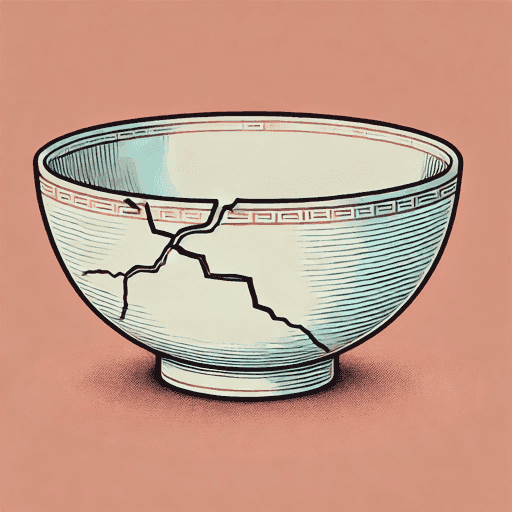
The Fourth Daughter argues that trauma is an inheritance, passed down through generations and reverberating outward to shape families, silence voices, and distort lives across decades. The novel demonstrates that unresolved suffering does not remain contained within the person who experienced it; instead, it transmits to those who follow, often without their knowledge. Butler also suggests that personal trauma is frequently inseparable from the larger political traumas that shape a family's past, and that healing becomes possible only when the cycle of silence is finally broken. In a narrative spanning 63 years and two continents, the novel traces how violence, whether inflicted by a gunman in Manhattan or an authoritarian state in mid-century Taiwan, leaves wounds that fester over years until they are confronted.
The characters’ lives are defined by the lingering effects of unresolved pain, each trapped in a distinct form of stasis. Liv’s present is dictated by the trauma of surviving a violent shooting, which leaves her with debilitating panic attacks and a fear of the outside world. She describes herself as a “spirit stuck in this world, unable to move on” (6), her life halted by an event she cannot process. Her grandmother, Yi-ping, endures a different kind of immobilization, having “spent sixty-three years mourning the loss of my daughter” (23), a grief so profound that resolving it becomes the central mission of her life. Her trauma is not a single event but a sustained absence, a wound reopened daily. The narrative parallels their stories with Ziyi's hidden suffering: decades of abuse by her powerful KMT husband, violence she endures in silence to protect her children. These struggles demonstrate how unresolved trauma isolates people, trapping them in cycles of fear and grief; each woman exists in a private hell.
The novel also illustrates how trauma transmits across generations, often without the knowledge of those who inherit it. The children of the Ong/Huang family carry burdens they did not create and still do not fully grasp. George learns only as an adult that his mother was executed and his sister adopted; Clare harbors decades of misplaced resentment, not knowing her biological connection to Po-wei. Ang-Li's decision to protect his children through secrecy, changing their name and withholding their history, was an act of love, yet it perpetuated the family’s trauma through silence, which becomes its own form of wound.
The narrative deepens this exploration by linking personal trauma to the collective trauma of Taiwan's history under martial law. The political violence of the White Terror is both a historical backdrop and the direct cause of the characters’ pain. Ang-Li's family is shattered when his wife, Jin, is falsely imprisoned and executed, forcing him to flee with his children. Yi-ping's husband can give their daughter away with impunity because his family's KMT status grants unchecked power. Ziyi's husband beats her for years without consequence because his political position shields him from accountability. By connecting private suffering to public histories of oppression, the novel argues that individual pain is often a symptom of larger societal wounds. Personal and political trauma are not parallel but intertwined, each reinforcing the other.
Healing, the novel suggests, requires breaking the enforced silence that allows trauma to perpetuate. Yi-ping's refusal to stop searching for Yili is an act of resistance against the family's demand that she forget. Ziyi's eventual confession to Liv about poisoning her husband breaks decades of concealment. The reunion between Yi-ping and Yili after 63 years is offered as proof that even the deepest wounds can begin to heal when truth is finally spoken. The novel ultimately argues that trauma's weight, however enduring, can be lifted not by forgetting but by remembering together.
Reckoning With the Past to Reclaim Identity
The Fourth Daughter argues that identity cannot be fully realized until individuals confront the buried truths of their personal and collective histories. The novel positions Yi-ping’s search for her lost daughter as a metaphor for the search for self, demonstrating that identity is continuously forged by uncovering what has been hidden. In this way, Butler suggests that the sanitized narratives families construct to protect themselves ultimately imprison them; only by reckoning with painful truths can characters reclaim authentic selfhood. In a story where political repression and patriarchal control have enforced decades of concealment, the act of excavating the past becomes an act of liberation and a reclamation of identity.
The characters’ initial identities are largely constructed upon incomplete or deliberately obscured versions of their family history. Liv, a chef in New York, is disconnected from her Taiwanese heritage and entirely unaware of her family's KMT past. Upon learning her grandfather was part of the KMT, she remarks, “There’s so much I don’t know about our family” (24), a realization that marks the beginning of her identity crisis. Her professional identity, built on Western culinary traditions rather than her own heritage, reflects this broader disconnection, which is mirrored within the family. Her mother and aunts have allowed the memory of Yili to fade, creating a collective amnesia that leaves a hole in their shared family identity. The family has amputated part of itself to avoid pain, but the wound has never healed.
The catalyst for transformation is Ang-Li's journal, which dismantles the accepted understanding of both families. The revelation that Clare and Sue are half-sisters, both fathered by Po-Wei, fundamentally redefines the family tree and forces every character to reconsider their relationships. For Clare, the truth is so profound that she moves back to Taiwan, her identity irrevocably altered by learning she is the biological daughter of the man responsible for her mother's death. She must integrate the paradox of being both survivor and offspring of the same oppressor. Sue, who has lived her entire life as a Huang, must now incorporate her Wang origins and her birth name, Yili. Even Yi-ping's understanding of her own family shifts; Clare, whom she resented as part of the Ong family that took her daughter, is revealed to be her stepdaughter. Beyond providing information, the journal restructures identity itself for several characters.
Yi-ping's arc across the novel's timeline demonstrates how reckoning with the past enables the reclamation of agency. She evolves from a powerless wife into an independent woman, and her decades-long search for Yili is not merely for her daughter but also for the self that was suppressed within the Wang household. By refusing to let Yili be erased, she refuses to let herself be erased, and her search becomes an assertion of maternal identity. Liv's journey extends this argument to the contemporary moment, demonstrating that reckoning with familial history is essential to understanding oneself. By traveling to Taiwan and immersing herself in her family’s history, Liv reconnects with her heritage and, through it, discovers a professional and personal identity she had lost. Her decision to create a cookbook with Yi-ping signals integration: Her Taiwanese roots are no longer separate from her culinary ambitions but foundational to them. The novel ultimately argues that wholeness requires discovery and acknowledgment of family history, positing that we cannot know who we are until we face what has been hidden.
Personal Healing Through Family and Cultural Connection
In The Fourth Daughter, connecting with one’s family and culture catalyzes healing. A key element of this idea is food, which functions as more than sustenance; it is a language through which characters preserve memory, express love, and ultimately heal from trauma. Yi-ping and Liv’s connections to their culinary heritage provides a pathway to emotional recovery, suggesting that these connections can foster emotional breakthroughs and personal growth.
In Butler’s novel, the characters’ relationships to food is a metaphor for links to cultural identity, familial connection, and personal history. The most significant example is Yi-ping's handwritten cookbook, which she begins after her daughter, Yili, is taken. She explains, "When Yili disappeared, I became obsessed with re-creating dishes for when she came home" (87). Each recipe becomes an act of remembrance and an expression of enduring love, transforming the cookbook from a simple collection of instructions into a tangible archive of grief and hope. The recipes preserve the memory of Yili herself, keeping her existence alive against the family's enforced silence. When Yi-ping cooks traditional Taiwanese meals for Liv upon her arrival, she provides a taste of home that grounds Liv in her Taiwanese roots. Food thus operates as an inheritance that bypasses the family's secrets, transmitting love and identity even when words cannot.
Liv’s healing is also fostered by this connection, and food again acts as an intermediary between her and her cultural identity and professional passions. Liv’s journey is a culinary reawakening that mirrors her psychological recovery. Initially, she dismisses Taiwanese food as too simple for her career, viewing it as beneath her professional ambitions. This attitude reflects her broader disconnection from her heritage and her fragmented sense of self. However, her former boss, Chef Wu, urges her to dig deeper and “[f]ind out what food means to [her], either through [her] culture or [her] own experiences” (27). His advice foreshadows the journey Liv must undertake to excavate her own identity. By cooking with Yi-ping, filming their sessions, and exploring the vibrant night markets, Liv rediscovers her passion for cooking. The act of cooking with her grandmother offers a connection to both her family and her culture.
Reconciliation and emotional breakthroughs are also achieved through human connection over meals and in markets. The celebratory reunion dinner for Yi-ping and Sue serves as the ceremonial center of their restored family, while the quiet intimacy Liv and Simon find at the night market facilitates their growing connection, allowing vulnerability in a space defined by sensory pleasure rather than clinical interrogation. Even the cookbook and cooking show that Liv and Yi-ping develop together transform private grief into public testimony, suggesting that cultural heritage, when shared, can heal not only individuals but communities. The novel ultimately argues that human connection through cultural and familial tradition is the key to personal healing, capable of mending broken spirits, bridging generations, and forging new bonds.

Unlock every key theme and why it matters
Get in-depth breakdowns of the book’s main ideas and how they connect and evolve.
- Explore how themes develop throughout the text
- Connect themes to characters, events, and symbols
- Support essays and discussions with thematic evidence