75 pages • 2-hour read
The Games Gods Play
A modern alternative to SparkNotes and CliffsNotes, SuperSummary offers high-quality Study Guides with detailed chapter summaries and analysis of major themes, characters, and more.
Character Analysis
Lyra Keres
Lyra Keres is one of the main characters, the main protagonist, and the main narrator of the narrative. Though she had a crush on Boone Runar, her main love interest is the god of death, Hades. At the age of three, her parents trafficked her to the Order of Thieves in order to settle their debts through her labor. On the day her mother’s water broke while pregnant with her in Zeus’s temple, Zeus cursed Lyra to be unlovable. For the whole of her 23 years of life, therefore, Lyra has never known a loving relationship—be it romantic, platonic, or familial. Her time in the Order of Thieves was not particularly successful either, since Lyra wasn’t stealthy enough to become a master thief and instead became the Order’s record keeper. According to Lyra, the only achievement she had was devising the whistling system members of the Order use to communicate with each other at the age of six.
Lyra describes herself as being “a slip of a woman with short raven hair, a smallish face, pointed chin, and catlike eyes. […] They are deep green with a darker outer ring and gold at the center, fringed by long black lashes” (27). When Hades chooses her as his champion for the Crucible, Lyra accepts in the hopes of using the prize—a boon from the new King of the Gods—to break her curse. Along the way, however, Lyra faces innumerable challenges, falls in love with Hades, and faces off against Zeus himself, killing her. Through Hades’s self-sacrifice, however, she survives and becomes a goddess and the new Queen of the Underworld. By the end of the narrative, however, she is trapped in Tartarus with Cronos and the other Titans.
Lyra’s arc is defined by her struggle to believe she is deserving of love and autonomy. The curse imposed upon her is not just a supernatural burden but a metaphor for the psychological effects of neglect and exploitation. Her journey in the Crucible mirrors a reclamation of agency, as she moves from believing she is an expendable pawn to proving she has value beyond the roles others have imposed on her. The relationships she forges—whether with Zai, Boone, or even Hades—underscore her ability to connect with others despite the supposed impossibility of her ever being loved. By the novel’s end, her transformation into a goddess and her position as Hades’s equal suggest that the curse’s true power was in making her believe it was absolute, rather than an unchangeable fate.
Hades, or “Phi”
Hades, or “Phi” to Charon, is one of the main characters in the narrative and Lyra’s main love interest. Known as the god of death and the King of the Underworld, Hades is the brother of both Zeus and Poseidon, and most likely others of the Olympian gods, but holds most of them in contempt. He is the son of Cronos, the Titan, who ate him as a baby and with whom Hades and the other gods went to war. Widely feared, Hades is also known for his alleged love of Persephone, the former Queen of the Underworld. As Lyra discovers, however, Hades and Persephone shared a friendship, one of familial love rather than romantic, and he counts Persephone, along with Charon and Cerberus, as his only friend. Through some mysterious occurrence, however, Persephone became trapped in Tartarus with Cronos and the other Titans, and it is to save her that Hades decides to participate in the Crucible for the first time. He plans to use Pandora’s Box to open the gate to Tartarus to retrieve her, but to do so, he needs to be King of the Gods. Through the foresight of an unknown individual, he learns that he must make Lyra his champion and keep her from loving him in the final Labor so he can win the Crucible.
Lyra describes Hades as having silver eyes and a perfectly “sculpted face—with its hard jaw, a high brow, dark eyes, and lips almost too pretty for his harsh features […]. Only the gods and goddesses boast that kind of beauty. But it’s the pale lock that curls up off his forehead into the blackness of the rest of his hair that gives him away” (26). Though their relationship often sees them at odds with each other, Hades has allegedly known of Lyra for a long time and sees her in his idea of paradise in Elysium. Such is the strength of his feelings for her that by the end of the narrative, he sacrifices his essence as a god and his role as King of the Underworld in order to bring her back from the dead. He is then crowned King of the Gods when Lyra is deemed the victor, but his plan to save Persephone goes awry, and he loses Lyra in the process.
Hades embodies the novel’s theme of The Value of Love, as his desire to win the Crucible is deeply personal rather than driven by conquest. He is a character whose strength is defined not by his ability to command others but by his willingness to sacrifice everything for the people he cares about. His choice to manipulate Lyra, ensuring she cannot love him, reveals his deep-rooted fear of vulnerability. His final act of surrendering his godhood to save her stands as his greatest moment of humanity, proving that his real transformation was not in winning the throne but in understanding the true weight of devotion.
Zeus
Zeus is a secondary character in the narrative and one of its main antagonists. The current King of the Gods, Zeus is Hades and Poseidon’s brother and is most likely related to other Olympian gods if the author kept to the relationship dynamics of the classical myths. Like Hades, Zeus is also Cronos’s son and participated in the war against the Titans. He is known for being the “god of the skies, thunder and lightning, god of weather, law and order, kingship, destiny and fate” (39). Whimsical and prone to tantrums, Zeus is the source of much of Lyra’s misery since he cursed her as a baby to be unlovable. Though Zeus is a powerful god, he is nevertheless fearful of Hades and his powers. In the Crucible, therefore, Zeus goes out of his way to cheat against the other gods to ensure he retains the kingship over the gods.
Lyra describes Zeus as having “pale curls that look like they’ve been shocked white, forming a halo over his forehead […]. He doesn’t even look thirty […and] it is said his skin bears the scars of the Anaxian Wars” (49). By the end of the narrative, however, Lyra uncovers a mystery about Zeus: While using Eos’s tears, she sees that Zeus’ face appears filtered through a prism and painted on.
Zeus embodies the unchecked power and corruption of the Olympian order. While Hades represents a more personal and conflicted use of power, Zeus’s authority is absolute and self-serving. His role as antagonist extends beyond merely opposing Lyra and Hades—he is emblematic of the gods’ disregard for human life and autonomy. The reveal of his potentially false identity at the novel’s end suggests a deeper intrigue within the pantheon, hinting that Zeus may not be the true master of his own destiny, and that larger forces are at play. This unresolved tension leaves room for further exploration in future installments.
Boone Runar
Boone Runar is a secondary character in the novel and Lyra’s eventual friend. Like Lyra, Boone was also trafficked to the Order of Thieves when he was young in a settlement agreement with his family. Though he, too, has paid off his debt and purchased himself his own cottage, Boone remains in the Order of Thieves as a master thief. Though Lyra held a crush for Boone, the feelings were never reciprocated. Boone, however, had always wanted to be Lyra’s friend and had been the source of her nickname “Lyra-Loo-Hoo,” as he had wanted her to have a nickname like the others. During the Crucible and after Lyra’s confession, Boone is coded as a big brother to Lyra: He teases her, protects her, and understands her in a way few do. He often clashes with Hades as a result, since Boone blames him for all the misfortunes Lyra encounters during the Crucible.
Lyra describes Boone as being “well over six feet of muscle, brute strength, and a fuck-with-me-and-find-out air thanks to, again, the muscles and the recent addition of a scruffy brown beard a shade darker than his hair” (18). During Hephaestus’s Labor, however, his friendship with Lyra temporarily draws to an end as, in an effort to protect her, he falls to his death. Bringing him back as a god becomes a driving force for Lyra to win the Crucible, and when she does, Hades makes him the god of thieves. By the end of the narrative, he is sucked into Tartarus with Lyra because of Cronos.
Boone serves as a grounding force in Lyra’s life, representing the past she has long struggled to reconcile. His death marks a turning point in her character arc, as it is the first loss that she truly internalizes as a personal failing, making her feel responsible in ways she has never experienced before. Boone’s presence is also key in shaping Lyra’s understanding of relationships: His unwavering friendship shows her that love does not always have to be romantic to be meaningful. By the time he is resurrected as a god, Lyra’s evolution is complete—where once she followed Boone’s lead, she now carries the strength to protect him, demonstrating her full transformation from survivor to leader.
The Champions
Zai, Meike, Diego, Dex, Samuel, Neve, Isabel, Dae-hyeon, Trinica, Jackie, Amir, and Rima are all secondary characters in the narrative and are the twelve chosen champions to participate in the Crucible.
Zai Aridam is Hermes’s champion and Lyra’s first ally and friend. The son of the former Crucible champion, Zai is at odds with his father, who believes him unworthy of being chosen by a god because he is prone to sickness. He chooses to permanently ally himself with Lyra during Hermes’s Labor. At the end of Zeus’s Labor, he decides Lyra has earned her victory with the others and lets her win the Crucible.
Zai’s arc parallels Lyra’s in that both characters struggle against perceptions of weakness. While Lyra fights against the belief that she is unlovable, Zai fights the notion that he is physically unfit to succeed. His decision to support Lyra over the course of the Crucible speaks to his belief in integrity over power, reinforcing one of the novel’s core themes.
Meike is Dionysus’s champion and another of Lyra’s allies. During Athena’s Labor, she is killed by Dex while he is under a spell.
Meike’s death is one of the most emotionally charged losses in the novel, underscoring how the gods manipulate and devalue mortal lives. Her role also serves to reinforce Lyra’s growing leadership—where Lyra once operated independently, Meike’s trust in her marks the shift toward a collective resistance against the gods.
Diego is Demeter’s champion, a father of two children, and a neutral champion. Officially, Diego never allies himself to one group. Throughout the Labors, however, Diego is one of the only players who plays with integrity and treats Lyra with respect. Though he was poised to win the Crucible, he, like the others, decided she should win instea
Diego represents the balance between self-preservation and morality. His role challenges the notion that winning the Crucible is the ultimate goal, as his eventual surrender to Lyra reflects the recognition that some victories hold greater meaning than personal success.
Dex is Athena’s champion and Lyra’s antagonist throughout the novel. While Dex often appears cruel and calculating, he has a reason to do so: He needs to win to be able to save his sister from a disease. While under Zeus’s influence during Athena’s Labor, however, he kills Meike and fights with Lyra, Zai, and the others. He dies by accident.
Dex serves as a foil to Lyra, embodying the ruthless pragmatism that the Crucible fosters. His willingness to sacrifice others for his own gain contrasts sharply with Lyra’s emerging leadership, which values alliances and ethics over brute force. His downfall is particularly tragic because it reveals how even the strongest competitors are ultimately pawns in the gods’ games.
Samuel is Zeus’s champion and, like Diego, a neutral champion who plays the Crucible with integrity. During Zeus’s Labor, he returns what he believes is Lyra’s axe to her (it was Hades’s twin axe, which Zeus had stolen) and is of the same mind to let her win the Crucible at the end.
Samuel’s character underscores the idea that honor can exist even in a competition designed for destruction. His arc adds depth to the moral landscape of the Crucible, proving that some champions resist the gods’ influence even when it may cost them victory.
Neve is Ares’s champion and another of Lyra’s antagonists who allies herself with Dex. She dies during Hera’s Labor by thunderstrike. Neve’s alliance with Dex suggests that strength and violence are often mistaken for true power. Her demise serves as a cautionary example of the consequences of blind loyalty to the gods.
Dae-hyeon, or Dae, is Artemis’s champion and one of Dex’s allies for the better part of the novel. During Aphrodite’s Labor, he is forced to watch his grandmother, the person he loves the most, die because of Hera’s gift to Amir. By the end of Zeus’s Labor, he, too, believes Lyra should win and lets her take the victory.
Dae-hyeon’s arc illustrates the cost of the gods’ cruelty. His grief over his grandmother’s death is a stark reminder that divine intervention often brings suffering rather than salvation, reinforcing the idea of resistance against the gods’ arbitrary control.
Trinica is Hephaestus’s champion and Lyra’s ally who also steps aside to let Lyra win the Crucible.
Jackie is Aphrodite’s champion and, like Diego and Samuel, a neutral champion in the competition who also steps aside to let Lyra win the Crucible.
Amir is Hera’s champion, the youngest champion in the Crucible, and Lyra’s ally. He, too, steps aside to let Lyra win the Crucible after Zeus’s Labor.
Rima is Apollo’s champion and often Dex’s ally. Gifted with foresight from Apollo, Rima has a prophetic vision that shows who she believes to be Hades (but is, in fact, Cronos) destroying the world. She works against Lyra because of this prophecy but in the end allows her to win the Crucible all the same.
Isabel is Poseidon’s champion and the first to die among the champions during the first Labor.
Collectively, these champions highlight the different ways mortals respond to the gods’ manipulation. Some fight for their own survival, while others, like Rima, become consumed by prophecy and fear. Their varied responses add depth to the Crucible’s social dynamics, emphasizing that no single approach guarantees survival or success.
The Other Gods
Poseidon, Hera, Demeter, Aphrodite, Hermes, Ares, Apollo, Artemis, Hephaestus, Athena, and Dionysus are secondary characters in the novel and Olympian gods. While Poseidon and Athena act antagonistically toward Lyra, others—specifically Hera, Demeter, and Hermes—reserve their ire for Hades. Demeter especially dislikes Hades since she is Persephone’s mother, and according to legend, Hades would have lured Persephone to the Underworld. Aphrodite is an exception, as she deems Hades to be part of her “favorites” among the gods and often favors Lyra.
Charon and Cerberus
Charon and Cerberus are secondary characters and friends of both Hades and Lyra. Considered closer than his own brothers, Hades sees Charon and Cerberus as his immediate family along with Persephone.
Charon is the ferryman of the dead in the Underworld who brings the souls of the dead to Elysium by the River Styx. Charon serves as a bridge between Hades’s godly duties and his personal attachments. His loyalty to Hades humanizes the King of the Underworld, demonstrating that Hades is more than just the cold, calculating figure he presents to the world.
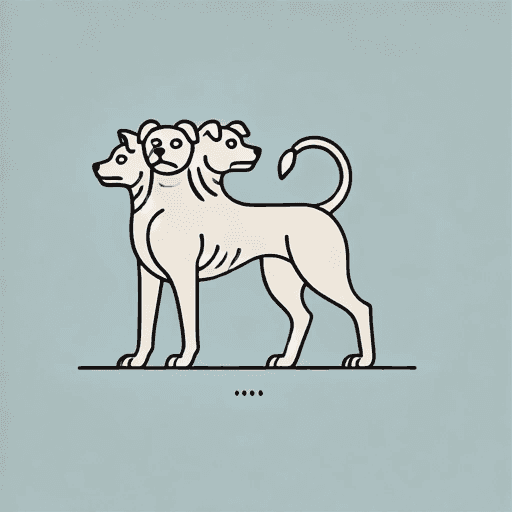
Cerberus is the legendary three-headed dog who guards the gates to the Underworld. Both he and Charon come to be acquainted with Lyra and befriend her. Cerberus is reimagined in this novel as an emotional tether to both Hades and Lyra. His injury and subsequent healing serve as a metaphor for trust, signaling Lyra’s growing acceptance of her role in the Underworld.

Unlock analysis of every major character
Get a detailed breakdown of each character’s role, motivations, and development.
- Explore in-depth profiles for every important character
- Trace character arcs, turning points, and relationships
- Connect characters to key themes and plot points