75 pages • 2-hour read
The Games Gods Play
A modern alternative to SparkNotes and CliffsNotes, SuperSummary offers high-quality Study Guides with detailed chapter summaries and analysis of major themes, characters, and more.
Parts 7-8Chapter Summaries & Analyses
Part 7: “My Only Hope” - Part 8: “The Spoils”
Part 7, Chapter 90 Summary: “The Answer Is No”
Lyra wakes with muddled feelings and Hades gone. She finds Charon and Cerberus in the kitchen for breakfast. When Hades arrives, he is cold and impassive. Rima arrives with the champions’ answer before the next Labor. She tells Lyra they unanimously decline her proposal because her blessing from Apollo is the gift of prophecy, and she’s seen a future wherein Hades, as King of the Gods, burns the whole world, and no one can stop him.
Part 7, Chapter 91 Summary: “Athena’s Labor”
Athena greets the champions in a colosseum where they will need to face a maze. To shake their morale, she creates an illusion where the heads of Neve, Isabel, Dae’s grandmother, and Boone sit on spikes. Lyra calls Athena a monster multiple times, while Dex seems off and adamant about wanting Lyra dead. Athena fills the maze with overgrown insects and tells them the first champion to conquer the maze will win her Labor.
Part 7, Chapter 92 Summary: “Creepy as Fuck”
With a snap of Athena’s fingers, the champions are transported in the maze. Lyra runs the maze and is soon caught in a spider’s web. She untangles herself, and as she’s running, summons her tarantula, fox, and panther to help her. The tarantula communicates with the maze’s spiders, and in exchange for not killing them, the spiders agree not to attack her. With the fox and panther, Lyra devises a system where she sends them in opposite directions at crossroads to find the best way forward. A bullet ant attacks her.
Part 7, Chapter 93 Summary: “Crystal Labyrinth”
The panther clashes with the ant, and they continue forward. Lyra then encounters Trinica, who asks for directions. Lyra helps her, despite Trinica’s refusal of her proposal. Lyra is again attacked by a bullet ant. The panther kills it, too, just as Dae arrives. He offers her a healing petal in exchange for safe passage past her summoned animals. She agrees. After ingesting the petal, she runs off again, only to encounter an invisible Dex.
Part 7, Chapter 94 Summary: “Murderers & Monsters”
She fights with Dex with the help of her animals. Through the crystal walls of the maze, however, she sees that Meike has overcome the maze and won the Labor. But within seconds of her victory, Dex chokes her. Lyra runs to them and attacks Dex, but just as she thinks she’s subdued him, he lunges and kills Meike. He looks stunned at his own actions and then tries to kill Lyra by choking her, too, but in their struggle, Dex is pushed onto Zai’s sword and dies. Lyra whirls on the gods and accuses Athena of interfering by influencing Dex. She calls her a monster a fourth time, and Charon appears to take her away.
Part 7, Chapter 95 Summary: “Fury”
Charon calms her, and grief overtakes her. She asks why Charon came to retrieve her instead of Hades. When he tells her he was away for unknown reasons, Lyra is bitter at Hades’s indifference. She walks away and ends up at Hera’s observatory. Cerberus finds her with Charon, and they try to reassure her of Hades’s feelings. Inadvertently, they reveal that Persephone isn’t dead as everyone believes; she is trapped in Tartarus. Hades appears.
Part 7, Chapter 96 Summary: “Don’t”
More than the anger she feels for being kept in the dark about Persephone’s alleged death, Lyra feels jealous of her. She and Hades argue about her name-calling Athena. Hades dismisses Charon and Cerberus, who hesitate to follow his order out of concern for Lyra. She accuses Hades of manipulating her for his gains. Though she lost in the Labor, Hades intimates that there is still a way for her to win—by killing Diego. He offers her anything she wants, but she declines. A shadow passes overhead, and suddenly, Lyra can feel Hades’s fear.
Part 7, Chapter 97 Summary: “In the Wake”
The Daemones capture Lyra. Hades tries to attack them, but because he agreed to the terms of the Crucible, he cannot harm them. When he threatens to kill them, Lyra interjects and refuses to let anyone die on her behalf. Zeles tells them that she won’t be harmed, despite Athena calling for her death. They will incarcerate Lyra where neither Hades nor Athena will have access to her.
Part 7, Chapter 98 Summary: “Prisoner”
Lyra settles into her jail cell. She thinks being in the cell is the most protected she’s felt since she was three years old. She asks for a change of clothes and then goes to take a shower, where she allows herself to crumble emotionally. She then uses a provided laptop to search the web and finds headlines about Meike and Dex’s deaths. She thinks about using her remaining pomegranate seeds to avoid participating in the final Labor.
Part 7, Chapter 99 Summary: “Plans & Schemes”
After three days in the cell, Lyra is on good terms with the Daemones and plays cards with them. Zai arrives to visit her. The guilt of Dex’s death haunts him, and Lyra tries to unburden him. She explains that she’s only incarcerated because of Athena. He tells her that he and Hermes have made a deal to bring back Boone if he wins. Lyra asks for a favor.
Part 7, Chapter 100 Summary: “There Can Only Be One”
On the day of the last Labor, Aphrodite visits Lyra. She tricks the Daemones into leaving them alone, and she tells Lyra the favor she asked from Zai was unsuccessful: Demeter refuses to visit her out of her association with Hades. Lyra reveals to Aphrodite that Persephone is alive, and since Diego is Demeter’s champion, Lyra believes Demeter could figure out how to save Persephone when she wins through Diego. Aphrodite refuses to tell Demeter, because she believes it might start another war amongst the gods. When Aphrodite leaves, Lyra reviews her relationship with Hades and knows that some moments were truthful. A Daemon comes to retrieve her for the last Labor.
Part 7, Chapter 101 Summary: “One Last Blow”
The minute Lyra leaves the incarceration facility, Hades appears, checks in on her well-being, and tells her he’s required to take her to the last Labor. She admits to confessing about Persephone’s situation to Aphrodite and wanting to do so with Demeter, which infuriates Hades. She tells Hades that if he’d told her the truth from the beginning, they would be facing different prospects, but Hades admits that everyone he’s ever trusted has betrayed him. Before she leaves for the Labor, she asks whether he’d been honest about making Boone a god. Hades only tells her to finish the Labor, return home, and forget about everything.
Part 8, Chapter 102 Summary: “Zeus’ Labor”
Zeus welcomes the champions to the final Labor in Death Valley, where they will need to escape monsters and clear three gates. He adds that whoever wins the Labor adds three wins to their tally, making it anyone’s game. Zeus summons a minotaur as the first monster.
Part 8, Chapter 103 Summary: “Don’t Look Back”
Samuel finds Lyra and hands over what appears to be her axe relic—only, she has it already. She deduces that Zeus has stolen its twin, which belonged to Hades, and given it to Samuel. While the champions run to escape the minotaur, Lyra plants her last dragon teeth before joining them. When the minotaur closes in on her, she feels her two axes come together and propel the minotaur away with a shockwave. Zai and Jackie assist her as her bone soldiers emerge. Lyra orders them to protect them from the monsters. Together, they close the first gate.
Part 8, Chapter 104 Summary: “Monsters, Monsters Everywhere”
As the minotaur charges the gate, the champions run to the next one when their next monster emerges: a kraken. While the bone soldiers defend them, the champions dodge its attacks. As Lyra is running for the second gate, she fails to notice an oncoming attack, but Jackie saves her and brings her the rest of the way. When they all make it to the gate, they close it, too.
Part 8, Chapter 105 Summary: “All the Reasons Why”
Beyond the second gate is an impenetrable darkness. Something starts to sing, and Zai deduces their third foes are sirens. Everyone but Lyra, Jackie, and Samuel falls under their spell, and though they try to stop the others, the thrall is too strong. The three remaining champions follow them to save them from the sirens, with Lyra using her prize from Apollo’s Labor to see through the darkness. Before long, however, all the champions are snatched away, and Lyra is alone. Cornered by a siren herself, Lyra keeps perfectly still. The siren, however, cannot see her because sirens crave a human’s love—something Lyra cannot give because of her curse. She deduces that Hades chose her as a champion not because she is special, but because she is unlovable.
Part 8, Chapter 106 Summary: “The Choice Was Always Mine”
Lyra believes Hades must have known about the sirens. When the siren leaves, Lyra chooses to save her fellow champions instead of winning the Labor for herself because she suspects Zeus would leave no champion alive but the victor. She concludes that Hades wouldn’t want her to leave the others to die either, because ultimately, she believes he wanted her to choose her path for herself. She uses one of the pomegranate seeds to make her way to Anthemusa, the Isle of Sirens. She finds Zai, Rima, and Diego in an amphitheater, but not the others.
Part 8, Chapter 107 Summary: “Clerk, Ally, Friend”
Lyra makes her way around the amphitheater and finds Jackie and Samuel. She shows them the seed and they gather Dae, Amir, and Trinica while the sirens squabble. She teleports all four of them back to the darkness and instructs them to get to the gate before taking another pearl back to the Isle to Zai, Rima, and Diego, where she proceeds to teleport them, too. When they’re back in the darkness, they all run for the gate—only to find the others waiting for them. Collectively, they all decide to let Lyra go first and win the Labor. She crosses, and all parts of the Labor disappear, but suddenly, Cerberus appears and growls behind her.
Part 8, Chapter 108 Summary: “The Final Blow”
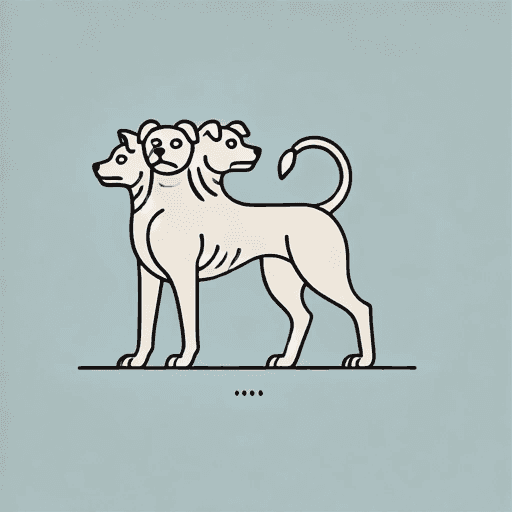
Lyra hears the three heads of Cerberus calling for her death before it lunges for her. Its attack sends her flying, and her bone soldiers attack in retaliation. They critically injure Cerberus, but the pain brings back his lucidity. Zeus appears, and when she looks at him, his face seems painted on. He suddenly recalls the curse he placed upon her, but he refuses to let Hades win and hits her with lightning. With her last pomegranate seed, she sends Cerberus to the Styx to heal. As she lies dying, she feels bad for Hades but faces Zeus all the same.
Part 8, Chapter 109 Summary: “The God of Death”
Hades appears, and he and Zeus face off. Hades, however, is clearly stronger. He confronts Zeus about all the ways he cheated throughout the Crucible, and the Daemones take him away. He then goes to Lyra, and she questions whether he didn’t let her love him on purpose so she would remain immune to the sirens, which he confirms. As she feels herself slipping, she tells him to visit her in Elysium and not to burn down the world.
Part 8, Chapter 110 Summary: “And Then…”
Lyra wakes up and feels power and a light pulsing through her. Hades has made her into a goddess and queen of the Underworld by sacrificing his own essence and role. He confesses that the paradise he sees in Elysium is of the two of them together, and he’s seen it for a very long time. He tells her to be the queen there and to keep him at her side.
Part 8, Chapter 111 Summary: “The Makings of Sovereigns and Gods”
Lyra and Hades prepare for the crowning ceremony. Hades reveals he knows someone with foresight, which is how he knew about her and the sirens, and why he broke her heart. They dress in fine clothing and their new conjoint symbol, two butterflies unified to form one in the center of a black-threaded star. Lyra joins the other champions alone as the Daemones enter to announce the results: Lyra has won, and Hades is to be King of the Gods. To claim his power, Hades sits on the throne, and all the gods and goddesses bow to him, their power creating a rainbow of light that strikes him in the chest. He keeps his promise to Lyra and makes Boone the god of thieves. He then offers a gift to the other champions and abundance to their families and homelands. Hades then calls for Pandora’s box, the one step in his plan he never told Lyra about.
Part 8, Epilogue Summary: “Even Gods Make Mistakes”
Lyra fears using Pandora’s Box, as it holds the power to unleash the Titans, but she believes in Hades. They go to the Underworld with other gods. In front of Tartarus’s gates, Hades slips Pandora’s box into a waiting lock. The door opens a crack. Boone grabs Lyra, but everyone is frozen still. Together with Boone, Lyra is sucked to the other side of the gates to Cronos, who looks astonishingly like Hades. The gates lock behind them, and Lyra realizes Rima’s apocalyptic prophecy wasn’t about Hades but Cronos.
Parts 7-8 Analysis
In this final section, Owen crafts the final development of Hades’s character through the resolution of The Value of Love. Throughout most of the novel, Hades is described as conniving and ruthless, an assessment Lyra has denied until her confrontation with Hades over Persephone’s alleged death. This revelation destabilizes Lyra’s sense of trust in him at a crucial moment, as she realizes she may have been manipulated just like the other champions, merely another pawn in the gods’ games. The tension between them mirrors the novel’s larger struggle between fate and free will—questioning whether Lyra was always meant to be Hades’s champion or if there a genuine choice in their connection. There is truth to this assessment, since the text pits Hades’s two loves—his familial love for Persephone and his budding romantic love for Lyra—against one another, where Hades must exploit the latter to save Persephone from Tartarus. Though Hades’s goal is objectively an honorable one, it nevertheless objectifies Lyra and his feelings for her as a means to an end, a fact she notices when she claims, “Was that what last night was about? Boosting my confidence or something to try to get me to win? You feel nothing for me. I’m just a tool” (456). The text implies that this is the deepest cruelty for someone like Lyra, who’d always dreamed of having a meaningful and loving relationship. Lyra’s curse—her inability to be loved—has defined her for so long that Hades’s seeming confirmation of it shatters her completely. This moment forces Lyra to confront not only her trust in Hades but also her own self-worth. The emotional stakes are raised even higher because, despite this betrayal, she still feels something for him, and that internal war between anger and longing is part of what makes their dynamic so powerful.
Hades’s behavior is also an indication of his own practice of self-hatred. Hades’s feelings for Lyra are genuine, and while his cruelty might be intentional to safeguard Lyra against the sirens, it’s also directed at himself. This parallels Lyra’s own deeply ingrained belief that she is unlovable—both of them, in their own ways, have internalized a sense of unworthiness. Hades’s self-loathing is evident in his need to push Lyra away, convinced that if he lets himself care for her openly, he will lose her, just as he lost Persephone. In a way, he treats love like a battlefield—something to be strategically managed rather than surrendered to. The author suggests, however, that such a misappropriation of another’s love isn’t tenable or excusable in Lyra’s final confrontation with Zeus, wherein, as she lay dying, Hades decides to sacrifice everything that he is—his godly powers, his role as the King of the Underworld—to save her life. This act is not just an expression of love; it is a direct rebuke of the gods’ philosophy that power must always be hoarded and used for personal gain. By giving up his divinity for Lyra, Hades disrupts the very foundation of Olympus’s power structure. Though Hades becomes King of the Gods when Lyra is deemed the victor, the act is nevertheless monumental since they had no way of knowing the Crucible’s outcome. In this way, Hades rights his relationship with Lyra as he does away with the posturing and scheming to uphold what he values the most: his love for her. As he explains:
Do you [Lyra] know what I [Hades] see in Elysium? […] The two of us there. And you as my queen. I’ve seen it for a long, long time. […] I just thought it was only something I’d get in the afterlife someday. […] Be the queen there. Keep me at your side (518).
Effectively, Hades treats her as his equal in this statement. Whereas, throughout the Crucible, Lyra is made to bear the brunt of his plans and the pain of the Labors on her own, here, Hades puts himself at risk and bears the consequences of his own actions out of love. This moment cements their relationship as one that transcends mere attraction or survival—it is a true partnership, forged across betrayal, sacrifice, and hard-won trust.
This section also completes Lyra’s arc as she comes into her own power—not just as Hades’s queen but as someone who defines her own fate. She no longer follows Hades’s plans blindly, nor does she rely on the gods’ whims to determine her path. Her choice to save the other champions in Zeus’s Labor, rather than ensuring her own victory, marks a significant shift that developed across the previous sections as she sought to unite the champions. She is no longer just trying to survive; she is actively shaping the outcome of the Crucible in a way that aligns with her values.
This section also explores the depth of Zeus’s antagonist role within the narrative. Though suspicions of gods cheating were mostly reserved for Athena during her Labor, Zeus’s machinations prove widespread and thorough. The full extent of Zeus’s villainy remains unresolved, as the author suggests Zeus’s treachery may either run further than initially believed or may not be attributable to him at all, given this passage: “And what I [Lyra] see is a shimmering veil of mesh over Zeus’ face. In the odd rendering of [Eos’] tears, it’s all sorts of colors, like looking through a prism, and fitted to his features like it’s been painted on” (510). While Zeus’ evil deeds are evident, his identity is troubled in this passage, as Owen leaves open the possibility that Zeus may be impersonated or under a spell, and another antagonist might, in fact, be the true source of evil in Olympus. This revelation adds an intriguing layer to the story’s conclusion concerning who is in control. This question lingers over the final moments of the novel, setting the stage for future conflicts.
Finally, the epilogue introduces a twist that reframes the entire narrative: Cronos, not Hades, is the prophesied destroyer of the world. This revelation transforms Rima’s vision from an omen of inevitable destruction into a dire warning that was misinterpreted. Throughout the novel, Lyra was primed to believe that Hades’s ambition for power might have catastrophic consequences. Instead, it is Cronos, the primordial Titan, who looms as the true apocalyptic force. This last-minute revelation challenges everything the characters assumed about the nature of fate and prophecy.
By trapping Lyra beyond Tartarus’s gates, it is clear that the sequel will not simply be about ruling Olympus—it will be about escaping an ancient prison, facing down a Titan, and possibly rewriting the fate of the gods themselves. The final scene leaves Lyra at the brink of an even greater battle, one that will test not just her strength but her very understanding of the divine order.
Ultimately, this final section cements The Games Gods Play as a novel about breaking cycles—whether those be cycles of power, suffering, or self-doubt. Lyra’s journey is not just about winning or survival; it is about proving that love, choice, and humanity have a place in a world ruled by gods.

Unlock all 75 pages of this Study Guide
Get in-depth, chapter-by-chapter summaries and analysis from our literary experts.
- Grasp challenging concepts with clear, comprehensive explanations
- Revisit key plot points and ideas without rereading the book
- Share impressive insights in classes and book clubs