The Gene: An Intimate History
69 pages • 2-hour read
Siddhartha MukherjeeThe Gene: An Intimate History
A modern alternative to SparkNotes and CliffsNotes, SuperSummary offers high-quality Study Guides with detailed chapter summaries and analysis of major themes, characters, and more.
Index of Terms
Alleles
An allele is a variant form of a gene. A gene can have several alleles, alleles often being created by mutations. When an organism receives a dominant allele of a trait, it is likely that allele will be expressed as a trait.
Chromosome
The chromosome is a filamentous structure found in the nucleus of cells, containing coiled DNA and proteins called histones. The term chromosome (colored body) itself was coined by Bovari’s colleague Wilhelm von Waldeyer-Hartz, because aniline stained the filaments blue.
Chromosomal Disorders
Conditions resulting from changes in the number, order, and structure of chromosomes are known as chromosomal disorders. Chromosomal disorders are often the result of errors during gamete formation and embryogenesis. Common chromosomal disorders include Trisomy 21 or Down’s Syndrome, in which an individual possesses an extra copy of chromosome 21. Chromosomal disorders often lead to widespread, systemic changes, though some individuals with disorders like Down’s Syndrome can lead near-independent lives.
Crossing-Over
During gamete formation, homologous (similar) chromosomes from each parent “hug” each other and swap chromosomal segments to give rise to sperms and eggs with a unique combination of maternal and paternal qualities. Crossing-over is a rare process of genetic exchange that ensures variance and diversity in species.
DNA
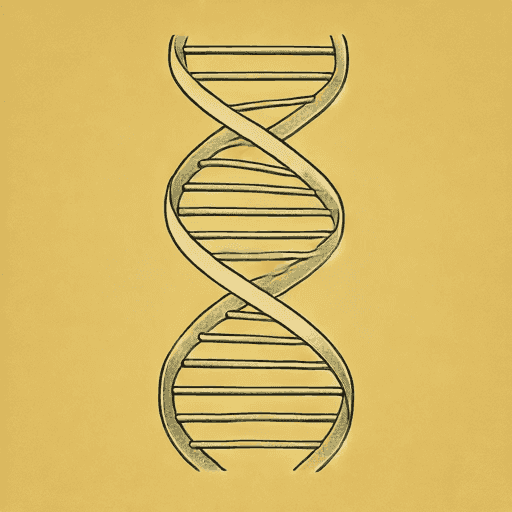
DNA or deoxyribonucleic acid is a large molecule located in chromosomes in the nucleus of cells. Containing the entire genetic code of an organism, the DNA is structured like a double helix, with bases or nucleotides slung like rungs across two sugar-phosphate strands. DNA molecules can be very large, since they contain a long sequence of nucleotide (base) pairs; human DNA contains over 3 billion base pairs. To conserve space, DNA is coiled tightly on chromosomes.
Dominant and Recessive Traits
A trait is a physical or biological feature of an organism, such as the shape of an insect’s wing or the color of a human’s eye. Some traits are determined by a single gene, others by multiple genes—for instance, many genes would be involved in encoding the shape of an insect’s leg. Sometimes one gene can direct multiple traits. A dominant trait is the one that is asserted or expressed in the phenotype. On the other hand, a recessive trait is expressed when an organism inherits two recessive alleles.
Embryogenesis
The process by which a fertilized cell or a zygote develops into a multicellular embryo is known as embryogenesis. From the moment of formation of the zygote, its genes start directing the rapid division into cells, and further differentiation of the cells into specialized organs and functions.
Epigenetics
Epigenetics refers to the study of phenotypic variations that are not caused by changes in the DNA sequence, but by chemical alterations of DNA, such as methylation of DNA, where a methyl base is “tagged” to a base in order to silence a gene. Sometimes, epigenetic changes can be inherited, as in the case of survivors of the Dutch Hongerwinter.
Gene
A part of DNA, the gene refers a specific sequence of the nucleotides Adenine (A), Guanine (G), Cytosine (C) and Thymine (T) in DNA that directs the synthesis of a protein or the execution of a physiological function. For instance, globin genes code the specific proteins required for hemoglobin, the oxygen-carrying component for blood. Genes can thus be regarded as the function units of heredity.
Master-Regulator Genes
Top-most in gene hierarchy, master regulator genes control embryogenesis and major biological processes throughout life by switching on or off large groups of downstream genes. In response to environmental and epigenetic factors, master-regulator genes can recruit helper proteins to “tag” genes with chemical imprints. The tags in turn signal which gene in the particular individual is to be silenced.
Monogenic Diseases
Monogenic diseases are conditions that can be traced to a single mutation in a gene, such as sickle-cell anemia where a single mutation causes the sickle-like shape of blood cells.
Polygenic Diseases
Most human genetic diseases, such as cancer, diabetes, schizophrenia, and Alzheimer’s disease, are influenced by multiple gene systems, and thus, known as polygenic diseases. Environmental and epigenetic factors, as well as chance, play a large role in the development of polygenic diseases.
RNA
RNA or ribonucleic acid is a genetic molecule, like DNA, the vital difference being RNA is single-stranded. RNA is vital in carrying out the instructions coded in DNA, since in animals the RNA copies the message of the DNA, converting A,G,C, and T to A,G,C, and Uracil (U) and helps translate the message into a protein. RNA is also the genetic material for some organisms, such as viruses.
Transcription
The process of generating an RNA copy of a gene is known as transcription. A gene sequence such as ATG-CAC-GGG is copied as AUG-CAC-GGG in RNA, the T swapped with U.

Unlock all 69 pages of this Study Guide
Get in-depth, chapter-by-chapter summaries and analysis from our literary experts.
- Grasp challenging concepts with clear, comprehensive explanations
- Revisit key plot points and ideas without rereading the book
- Share impressive insights in classes and book clubs