The Gene: An Intimate History
69 pages • 2-hour read
Siddhartha MukherjeeThe Gene: An Intimate History
A modern alternative to SparkNotes and CliffsNotes, SuperSummary offers high-quality Study Guides with detailed chapter summaries and analysis of major themes, characters, and more.
Part 2Chapter Summaries & Analyses
Content Warning: This section includes discussion of medical experimentation amounting to torture, genocide, mental illness, gender discrimination, death by suicide, and child death.
Part 2: “In the Sum of the Parts, There Are Only the Parts”
Part 2, Chapter 8 Summary: “Abhed”
Mukherjee recounts a conversation with his father during a visit to India to see Moni. In response to Mukherjee’s enquiry about a Bengali word for gene, his father provided a loose substitute: “[A]bhed,” the word sometimes used for identity, but the true meaning of which is “indivisible” or “impenetrable.” Mukherjee is struck by the uncanny rightness of the approximate term, because genes are both linked with identity, and also a discrete, indivisible unit.
The narrative returns to the history of the gene, where, after unlocking the puzzle of the purpose of the gene, scientists were grappling with its location. As early as the 1890s, German embryologist Theodor Boveri had proposed that genes lives in chromosomes, threadlike filaments that reside in cell nuclei. Boveri’s student Nettie Stevens, working on cells from the common mealworm, had discovered that the Y chromosome was found only in male cells. Since maleness—a genetic trait—was linked with chromosomes, Stevens extrapolated that all genes were carried on chromosomes.
Using the findings of Boveri, Stevens, and others, Thomas Morgan, a zoology professor at Columbia university, bred fruit flies in milk bottles in his lab between 1905 to 1925, noting several mutations over generations of hybrids and cross-hybrids. The biggest advancement Morgan achieved from the Mendelian hypothesis was that mutations did not always occur independently: Some were sex-specific, while others occurred in specific clusters. To Morgan this meant that genes were physically linked to each other. In 1911, Alfred Sturtevant, one of Morgan’s students, constructed a map of genes in the flies, imagining it as a sequence of letters, where A, B, and C represented genes located at a proportional distance from each other. Mukherjee terms this rudimentary map of half a dozen genes on a chromosome the precursor to the Human Genome Project.
Morgan also discovered that genes, very occasionally, crossed over or unlinked from each other. The “crossing over” was most likely during gamete formation, when sections of the maternal and paternal chromosome swapped places with each other to give rise to sperm and eggs with a unique genetic structure.
Part 2, Chapter 9 Summary: “Truths and Reconciliations”
Mukherjee emphasizes that genetics was not shaped by biologists alone. As the gene was identified late in scientific history, its discoveries had to be reconciled retroactively with established biological fields, namely variation, evolution, and embryogenesis. Between 1920 and 1940, scientists from diverse disciplines successfully reconciled genetics with variation and evolution. The reconciliation with embryogenesis, however, would take a little longer (discussed in Chapter 16).
The reconciliation of genetics with variation was accomplished by Ronald Fisher, a Cambridge mathematician. Fisher noticed the contradiction that while genes were binary (say, tall/short), phenotypes of any population showed variation (different heights) that could be plotted as smooth bell curves. The only answer to the discrepancy could be that most physical traits were governed by multiple genes. Fisher used a computational model to show how even a small number of genes—e.g., six—could produce several phenotypic outcomes.
Theodosius Dobzhansky, a Ukrainian biologist trained under Morgan, reconciled genetics with evolution when he bred a mix of two varieties of wild flies under different conditions. Dobzhansky quickly simulated natural selection in real time. Only one of the two variants thrived in each specific environment. However, Dobzhansky still struggled to explain how variants became distinct species, as his variants could still interbreed. The answer emerged when he accounted for isolation. When populations were geographically separated, they evolved independently until they could no longer interbreed, forming new species.
Dobzhansky also revised the prevailing view that genotype alone determined phenotype, proposing that genotype + environment = phenotype. Mukherjee expands this equation further, arguing that chance events and molecular triggers also play critical roles.
Part 2, Chapter 10 Summary: “Transformation”
While Morgan and his team had established that genes were material, visualized as “beads on a string” (111), it was still difficult to study genes as they never left the confines of the nucleus, and were transmitted vertically from mother to daughter cells. The answer lay in the exception to the rule of vertical transmission. In simpler species, genetic material occasionally “jumps” from one organism to another, and can be visualized during the jump. The process of jumping is called transformation, and was discovered by English bacteriologist Frederick Griffith in 1920, while developing a vaccine for the deadly Streptococcus pneumoniae.
Griffith found S. pneumoniae came in two strains. The strain with a smooth coat escaped immunity, and caused the most serious illnesses in mammals, while the rough-coated strain was harmless. When Griffith inoculated mice with the killed smooth cells, it expectedly had no effects on the animals. However, when the inoculation contained dead smooth cells and live rough cells, it was ineffective. The mice died from bacterial infection. Genetic material had “jumped” horizontally from the dead smooth bacteria to the live rough strains to transform the organisms into their more insidious form.
Part 2, Chapter 11 Summary: “Lebensunwertes Leben (Lives Unworthy of Living)”
Inspired by the confinement colonies of the US, the Nazis enacted their own sterilization laws soon after Hitler came to power in 1933. Meant to enact the Nazi policy of Rassenhygiene or “racial hygiene,” the laws allowed the forced surgical sterilization of anyone with a hereditary illness. By the end of 1933, a new set of laws sought to forbid the intermixing of genetics between non-Jewish Germans and Jewish Germans by banning interfaith marriages.
Mukherjee tracks the speed with which sterilization leapt to outright murder. After a married couple—Nazi party members—offered their congenitally ill child to be euthanized so he could not pass on his inheritable diseases, Hitler expanded the program to other children. Children deemed having lebensunwertes Leben—“lives not worth living”—were to be euthanized at extermination centers across the country. With the extermination-center apparatus in place, it was only a matter of time before the Nazis moved onto the mass-murder of Jews.
While the Nazis were twisting the indelible nature of the gene for their political ends, communists in the Soviet Union were manipulating the importance of environment to the same effect. Since environment played a crucial role in the phenotype, it was argued that the effects of heredity—even individuality—could be washed away with the right training to reveal a homogenous population. Thus, scientists and political opponents were sent to gulags for their brains to be “retrained.”
The debunked science of eugenics did make two useful contributions in the study of genetics. One was Galton’s proposal of studying identical twins to test the effects of environment on the genotype, temporarily abandoned after Josef Mengele, the Nazi physician-in-chief at Auschwitz, tortured, maimed, and killed identical and conjoined twins as part of his experiments. The second useful contribution was the Nazi-era migration of scientists out of Germany, enriching the study of genetics in various countries.
Part 2, Chapter 12 Summary: “That Stupid Molecule”
Over the next few chapters, Mukherjee focuses on one of the most important discoveries in 20th-century biology: The structure of the “gene molecule,” or DNA. Although the structure of DNA was revealed to the world in 1953, the foundation of its discovery had been laid as early as 1869. In that year, Friedrich Meiser, a Swiss biochemist, found a new class of molecules in cells. Since these dense, swirly molecules were found in the nucleus, they came to be known as “nucleic acids.”
By the 1920s, scientists had also figured out that chromatin, the biological structure where genes reside in chromosomes, was made up of proteins and nucleic acids. Nucleic acids came in two forms—DNA and RNA—and were composed of four components, or bases, sticking out of a spine. However, the search for DNA’s structure stalled here at that stage, leading scientists to dub it a “stupid molecule” (135). The consensus was that the stuff of heredity was carried by the proteins in chromosomes, the nucleic acids being just stuffing.
The consensus unraveled in 1940, when Oswald Avery, a 55-year-old bacteriologist, continued Griffith’s experiments on smooth- and rough- coated bacteria to reveal that the “transforming principle,” or the genetic material that jumped between strains, was neither sugar nor protein. In fact, it was DNA that induced hereditary changes.
Part 2, Chapter 13 Summary: “Important Biological Objects Come in Pairs”
Avery published his paper on DNA in 1944, drawing the attention of scientists everywhere to the erstwhile “stupid molecule.” Mukherjee terms New Zealand scientist Maurice Wilkins “among the early converts to the religion of DNA” (140). Moving to King’s College, London, in the 1940s, Wilkins used X-ray diffraction to figure out the DNA molecule’s form. The idea behind diffraction photography is that under X-rays, DNA casts shadows that can be photographed. The problem Wilkins faced was that the ever-twisting DNA molecule refused to sit still to be photographed.
As Wilkins struggled to capture DNA, a scientist called Rosalind Franklin was appointed to his team. Franklin would turn out to be the neglected hero of the DNA story, sidelined no doubt because of her gender. It was Franklin who discovered that the DNA molecule relaxed in humid conditions, making its shadow infinitely easier to capture. Soon, Franklin was taking clear photos of the shadows. Though Franklin’s work was significant, she was isolated from the “boys’ club” of London science.
Meanwhile, in Cambridge, audacious duo James Watson and Francis Crick decided to unlock the three-dimensional structure of DNA through constructing a physical model of DNA as if it were a “stick-and-stone assemblage” (149). Attending a talk by Franklin at King’s, Watson got a sense of the structure of DNA from the description of her photos, and applied the information to his model.
Watson and Crick’s initial model was a failure, its flaw being that it was a triple helix, wound tight, with the sugar-phosphate spine in the center: Phosphates are negatively charged and repel each other, which means the twisting strand of phosphate would blow apart the molecule. Watson and Crick were crestfallen, but soon a controversial action would set them up for success.
In January 1953, Wilkins showed a visiting Watson “Photograph 51,” the clearest image yet taken by Franklin, without her knowledge or approval. “Watson was immediately transfixed” (154), using his memory of the photo to sketch a new model of DNA on his train back to Cambridge. Soon, the preliminary work of Wilkins and Franklin would also fall in the hands of Watson and Crick, providing many important measurements. Again, Franklin would not be consulted.
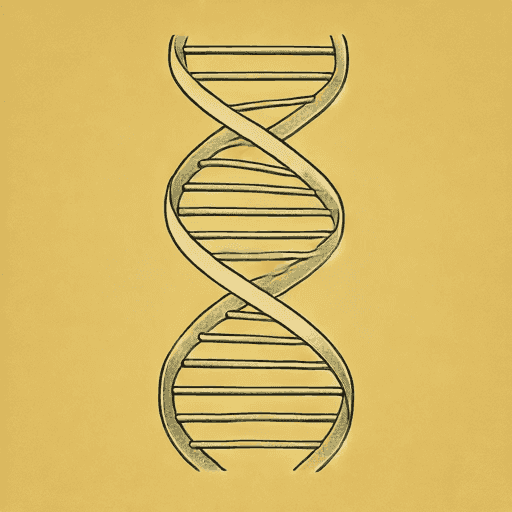
The final model Watson and Crick built “was so beautiful that it could not possibly be wrong” (156). DNA was a double-helix structure twisting upwards, with the spine on the outside, and bases on the inside. The secret to the bases staying in place was driven by the idea that biological objects came in pairs. Watson and Crick proposed that pairs of complementary bases—A-T, and G-C—locked together to form steps in the spiral stairway of the DNA molecule.
Watson and Crick’s model was an instant hit in the scientific community, winning them, and Wilkins, the Nobel Prize in 1962. Franklin, who had died in 1958, was not included in the prize.
Part 2, Chapter 14 Summary: “That Damned, Elusive Pimpernel”
With Watson and Crick having established the molecular structure of DNA, the next pressing question in genetics was how DNA transmitted information that resulted in a physical trait. How, for instance, could the gene for redness create red hair or red eyes? In the 1930s, Stanford scientists George Beadle and Edward Tatum found an answer to this question while growing bread mold in petri dishes filled with a nutrient-rich broth. Beadle and Tatum found that the mold was unable to grow in the absence of even a single enzyme, and traced the missing enzymes to mutations in a mold strain. It became clear that genes encoded enzymes, which in turn created proteins. Beadle and Tatum won the Nobel Prize in 1958 for their discovery.
The discovery raised another question concerning “how”: Given that DNA molecules do not leave the cell, how does a sequence of DNA carry instructions to form an enzyme/ protein? Watson had long suspected the DNA was first converted into a messenger molecule, which carried the gene’s instructions on how to build a protein. RNA—the other nucleic acid—was the most likely candidate for being a messenger. However, RNA was found in ribosomes and ribosomes were notoriously difficult to stabilize, causing Crick to label genetic RNA “that damned, elusive Pimpernel” (165).
Once the biologists Sydney Brenner, Jaques Monod, and Francois Jacob managed to stabilize the ribosome with the help of magnesium ions, they could isolate RNA and establish that when DNA wanted a form or function manifested, a copy RNA was created. The RNA moved out of the nucleus into the cytosol (cellular fluid), where its message was decoded to make a protein or an enzyme. The creation of the RNA facsimile was termed “transcription.” The key feature of transcription was that the base T was translated to U in the copy RNA.
Watson and Crick worked out that the message which RNA carried was not a single base, but a triple sequence of bases, such as ACT, or CAT. The triplet sequence directed the formation of a specific amino acid. Chains of triplets gave rise to chains of amino acids, that is, proteins. Crick termed the flow of information from DNA to RNA to protein/ function “‘the central dogma’ of biological information” (169).
While a changed triplet in the genetic code of an organism may seem minor, Mukherjee uses the example of sickle-cell anemia to show the enormity of this change. In sickle-cell patients, the triplet GAG in DNA is changed to GTG, leading to the amino acid glutamate being switched for valine. The change alters the hemoglobin chain, warping the disk of the molecule into a sickle shape. Sickle-shaped blood is unable to glide smoothly through capillaries and jams into small clots, precipitating the painful symptoms of the genetic illness.
Part 2, Chapter 15 Summary: “Regulation, Replication, Recombination”
The strange thing about the action of genes is that it is selective, as shown through the example of sickle-cell anemia: All cells inherit the mutation, yet it is only the hemoglobin molecule in red blood cells that is affected. This selective action implies genes are “regulated” or switched on or off by master genes (key genes that control large functions). In yet another momentous scientific leap that characterized the study of genetics between 1930 and 1970, Monod and Jacob, along with microbial geneticist Arthur Pardee, discovered three cardinal principles that governed the regulation of genes.
The first principle of regulation according to Monod, Jacob, and Pardee was that during this induced change, the master copy of the DNA was kept intact in the cell. It was the RNA which altered. The second principle was the coordinate regulation of genes, that is, in case of a metabolic alteration, an entire module of genes was turned off or on. The third principle was that genes had information not just to encode proteins, but also about when and where to make that protein.
Part 2, Chapter 16 Summary: “From Genes to Genesis”
Scientists across the globe were also trying to reconcile genetics with embryogenesis, or how the genetic code in a single cell—the zygote—directed the creation of an entire organism. Between 1950 and 1990, two discrete sets of scientists observed the development of the fruit fly embryo to find that each embryonic segment laid the foundation of an adult body part. Differentiation occurred early, as if directed by master-regulator “effector” genes telling particular proteins to congregate where the future thorax or leg would be.
The commander genes in turn were activated by certain chemicals called “maternal factors”—mostly proteins—made by the fly during the development of the egg and deposited in the egg in a concentration gradient. It was the concentration gradient that activated and silenced genes to build, first a head-tail axis, and then other organs, structures, and parts. Meanwhile, the biologist Sydney Brenner, in his painstaking study of the embryo of the tiny C. elegans worm, found that each cell was directed by a gene, ensuring every non-mutant worm had exactly 959 cells. This meant an animal was assembled, cell by cell, from genetic instructions. It wasn’t just birth that genes dictated: Brenner found 131 cells were lost during worm development, their deaths planned by genes. The cells were often mutants, their own genes acting as their executioners.
While genes closely directed cell birth and death, occasionally pairs of cells “chose” a different function based on their proximity to other cells. All these findings could be applied to higher organisms as well and suggested, in the words of evolutionary biologist Richard Dawkins, that the formation of an organism followed both a blueprint and a recipe. While certain genes behave like a blueprint, encoding instructions to build specific proteins, the majority of genes collaborate with others to “cook” complex physiological functions.
Part 2 Analysis
The Ethics of Eugenics and Gene Editing in Policy and Medicine is centerstage in the early chapters of Part 2, with Mukherjee tracing the enmeshment between Nazi politics and eugenic concepts. The developments after the Nazi Party seized power in 1933 may have capitalized on the centuries-old social evil of antisemitism, but the actions taken were, as “the biologist Fitz Lentz once said […] nothing more than ‘applied biology’” (119). Mukherjee further narrows Lentz’s definition to explain Nazism as applied eugenics, with the clear goal of Rassenhygiene. Mukherjee similarly traces the effect of an anti-genetic movement in the USSR, where “environment” was prioritized over genetic make-up to insist that the right training could manipulate any genome into the right way of thinking. In the cases of both Nazi Germany and the USSR, the link between bad science and state policy is clear. Mukherjee shows how any scientific advance in genetics is always susceptible to such manipulation, since the idea of creating customized “races” and humans is forever close to tyrants.
This section also illustrates Heredity, Environment, and Chance Resisting Simple Determinism. While a gene is “abhed” or an indivisible, fundamental unit, this does not imply that genotype equals phenotype, or that one’s genetic make-up solely determines physical expression. To defeat the idea that one’s genes are deterministic, Mukherjee emphasizes the role of plain luck in an organism’s health throughout their life, as in the case of cancer with a genetic component. A particular mixture of bad luck, triggers, and environment switches on the gene for the cancer, and it is impossible to predict which individual will receive this mix. Mukherjee’s emphasis on chance is deliberate, because it counters biological determinism, and also questions the notion that illness can always be avoided by the “right” choices. The truth is that sometimes, despite every “healthy” decision, unknown triggers and luck can switch on a gene for a disease like cancer or Alzheimer’s Disease.
Two of the text’s subtler thematic elements also appear in these chapters, the first being scientific discovery as a continual team effort. The narrative tracks several major moments in the discovery of the DNA double-helix to show that scientists build on the efforts of their colleagues and predecessors—there are seldom stand-alone epiphanies in science. The general reader may associate the names Walter and Crick with DNA, but the story of DNA also owes much to Wilkins, Franklin, Oswald Avery, and others.
The second thematic element that runs through the early sections of the book is gender bias in the field of science. Rosalind Franklin is a classic example of the unfair treatment of women scientists, with Mukherjee showing how Franklin was undermined and betrayed by her colleagues at every step. Wilkins thinks little of sharing Franklin’s momentous discovery of Photograph 51 with Watson, and another scientist, Max Perutz, even shares a copy of Franklin’s report with Watson and Crick. The men do not acknowledge Franklin’s contribution to their discovery, with Mukherjee pointedly noting that she was not included in the Nobel Prize that brought glory to Watson, Crick, and Wilkins. Mukherjee often uses irony, sharp social commentary, and wry humor to call out sexism and other biases in science and culture, such as when he observes that had Watson paid more attention to Franklin’s words, “and not the styling of her hair—he might have noticed that she was circling a monumental conceptual advance” (150).
Mukherjee ends Part 2 with the coda of a story from his childhood. He recalls his father growing enraged with Jagu, the youngest brother who lives in the room of Mukherjee’s grandmother. Jagu’s creditors have reached their home, and Mukherjee’s father is embarrassed and angry. Intent on setting Jagu right, he drags him out of his bed. Mukherjee’s grandmother defends Jagu “glowering like a she-wolf” (199). She says something in rustic, difficult Bengali to Mukherjee’s father, which Mukherjee is able to piece together only years later: “If you hit him, I will wash my womb with water to clean your taint” (200). The words, with their suggestions of inheritance—the child a taint on the mother’s womb—establish how central genetics and inheritance are to identity. At the same time, they illustrate the nature of genetic variance: A mother grappling with the extremely different fates and temperaments of two brothers born from the same genetic lot.

Unlock all 69 pages of this Study Guide
Get in-depth, chapter-by-chapter summaries and analysis from our literary experts.
- Grasp challenging concepts with clear, comprehensive explanations
- Revisit key plot points and ideas without rereading the book
- Share impressive insights in classes and book clubs