The Gene: An Intimate History
The Gene: An Intimate History
A modern alternative to SparkNotes and CliffsNotes, SuperSummary offers high-quality Study Guides with detailed chapter summaries and analysis of major themes, characters, and more.
Summaries & Analyses
Quizzes
NEWReading Tools
Summary and Study Guide
Overview
The Gene: An Intimate History (2016) by Siddhartha Mukherjee weaves a family narrative with the tale of the evolution of genetics. Informed by Mukherjee’s experience as an oncologist and researcher, the book showcases both the life-changing potential, as well as danger, of gene-editing technologies. Mukherjee uses the cautionary tale of eugenics to examine what the power to change the genetic structure of human beings means in a fraught, fragmented world. Refuting notions such as biological determinism, Mukherjee also showcases how an individual is much more than their genes and their environment. The work explores The Ethics of Eugenics and Gene Editing in Policy and Medicine, Heredity, Environment, and Chance Resisting Simple Determinism, and
The Shifting Line Between Normalcy and Mutation.
Included in Washington Post’s 10 Best Books of 2016, The Gene became a bestseller. Mukherjee is also the author of The Emperor of All Maladies: A Biography of Cancer, which won the 2011 Pulitzer Prize for General Nonfiction, and The Song of the Cell: An Exploration of Medicine and the New Human (2022).
This guide uses the paperback version of the Penguin Random House India 2016 edition.
Content Warning: The guide and source text discuss medical experimentation amounting to torture, genocide, mental illness, gender discrimination, anti-gay bias, death by suicide, and child death. There is also a brief reference to rape. The guide preserves the source text’s inclusion of terms such as “homosexuality,” and “dwarfism,” used in a purely clinical sense.
Summary
Oncologist and author Siddhartha Mukherjee sets out to understand heredity because of his paternal family’s experience with genetically-linked mental-health issues. Embarking on the story of his family and the gene, Mukherjee explores why the diseases spared some members and affected others. In the process, he uncovers the significant role environment and chance play in heredity.
Beginning with the pre-Christian era, Mukherjee observes that the question of “likeness,” or the similarity between parents and offspring, had forever puzzled philosophers, leading to theories such as “spermism,” in which the man’s seed circulated through his body, collecting likeness for his child. However, the greatest breakthrough in the theory of genetics occurred in the 19th century, when the monk Gregor Mendel proposed that heredity was not a concept, but a material trait that passed on from parent to child. Through his experiments in breeding hybrids of peas, Mendel showed that a child receives two copies of each trait (such as tall/short height) from each parent, though only one is usually expressed. Mendel’s units of heredity would come to be known as “genes.”
Though Mendel did not enjoy fame in his lifetime, his work laid the foundation for genetics. Mendel’s findings coincided with Charles Darwin’s theory of evolution. Darwin came to the startling conclusion that all animals evolved from previous species. Further, this evolution worked hand-in-hand with “natural selection,” the phenomenon where nature occasionally produces mutations. If the mutation is better suited for an environment, nature selects the mutation till it becomes a dominant species, with the mutant “wild” type crowding out the “normal” type.
By the end of the 19th century, scientists increasingly believed that it was the gene that mutated to drive natural selection and evolution. Genes, thus, had a dual aspect: They were designed to replicate traits across generations, yet were also capable of sudden variance. Variation from the norm was not a flaw, but nature’s design. Further, scientists also showed that genotype, or genetic structure, did not equal physical traits; chance and environment influenced which genes would be expressed. For Mukherjee, this complex interplay explains why only some members of his family dealt with mental-health issues.
Despite evidence that genes did not equal identity, the concepts of heredity were manipulated to disastrous effect in the late 19th and early 20th centuries. The term “eugenics” was coined in 1883 by Francis Galton, Darwin’s first cousin, and refers to the pseudoscience suggesting the human gene pool can be improved by careful breeding. The even more sinister side of eugenics is “negative eugenics,” which suggests supposedly “inferior” variants be weeded out so a “superior” species could take root.
The Nazis made eugenic concepts state policy after they came to power in 1933, sterilizing and killing “defective” individuals to make space for a healthier, fitter “race.” From euthanizing children with inheritable medical-health issues, the Nazis swiftly moved to plans to eliminate an entire people to ensure a “pure-bred” nation, killing millions of Jewish people and other minorities in concentration camps. After the fall of Hitler and the end of World War II, eugenics was declared a flawed science, but its shadow loomed heavy over the developing field of genetics. Even as scientists moved ahead with discoveries, there was a universal note of caution around the implementation of techniques that aimed to influence heredity.
By the middle of the 20th century, scientists had determined that genes were linked with DNA, a mysterious molecule in chromosomes. The race now began in earnest to find out the structure of DNA, which was essential to learning how heredity worked. Two parallel projects that would change the face of 20th-century genetics kicked off in England: At King’s College, Maurice Wilkins and Rosalind Franklin photographed the shadows of the DNA molecule under X-rays to determine its structure, and in Cambridge, James Watson and Francis Crick decided to figure out the structure of DNA by building a physical model.
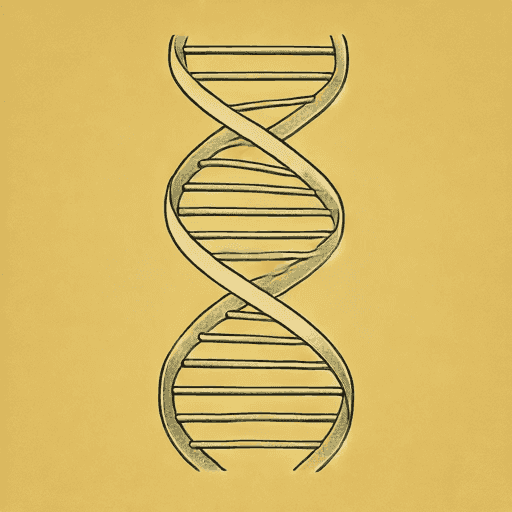
As the experiments converged, it was revealed that the DNA molecule is a double helix made up of two sugar-phosphate strands joined by the paired bases A-T, and C-G, like rungs in a ladder. Specific sequences of the bases—genes—encode information to create proteins and physiological functions. In 1962, Watson, Crick, and Wilkins were awarded the Nobel Prize for their discovery of the structure of DNA. Franklin, the neglected hero of the DNA story, was left out of the prize.
The discovery of DNA’s structure ushered in a new era in the growing field of genetics, with scientists rushing to clone genes and sequence the human genome. The greatest advantage of sequencing the human genome was its application in disease prevention and management: If the entire genomic sequence of humans was known, the wild type in patients with genetic disorders could be compared to the “normal” template. The genetic aberrations could predict the exact mutation causing the genetic disease, and treatments devised for the mutation, such as hemophilia and cystic fibrosis.
The human genome—containing 3.2 billion base pairs—was sequenced in 2001. While the knowledge of the human genome raises hope for developing drugs and therapies for conditions, such as hemophilia, the parallel rise of prenatal genetic testing has raised a fresh set of concerns around the ethics of gene editing. Prenatal testing makes it possible to detect genetic conditions in utero, giving parents the option to terminate such a pregnancy. With preimplantation genetic testing during IVF, parents have the option not to implant “abnormal” embryos. Mukherjee notes that the idea of “selecting” a “normal” embryo comes dangerously close to the bugbear of eugenics. Moreover, viewing all mutations as pathological is also counterproductive.
These questions have been compounded with the arrival of next-generation gene-editing technologies, such as Cas9/CRISPR. CRISPR and similar technologies enable geneticists to potentially “edit’ an embryo, i.e., fix a mutation for a disease, or remove a gene linked with illness. While the technologies are currently under an international moratorium, it is only a matter of time before their adoption catches on. Mukherjee devises a manifesto for this eventuality, suggesting that scientists and doctors reserve interventions only for the most extreme cases, such as a child or an embryo possessing a genetic disorder that is incompatible with life.

Get in-depth, chapter-by-chapter summaries and analysis from our literary experts.
- Grasp challenging concepts with clear, comprehensive explanations
- Revisit key plot points and ideas without rereading the book
- Share impressive insights in classes and book clubs