The Gift of Rain
67 pages • 2-hour read
Tan Twan EngThe Gift of Rain
A modern alternative to SparkNotes and CliffsNotes, SuperSummary offers high-quality Study Guides with detailed chapter summaries and analysis of major themes, characters, and more.
Part 1, Chapters 1-7Chapter Summaries & Analyses
Part 1: “Book One”
Part 1, Chapter 1 Summary
Content Warning: This section of the guide includes discussion of illness and death.
Philip Hutton (Philip Arminius Khoo-Hutton) is the son of an English man named Noel Hutton and his second wife, a Chinese woman named Khoo Yu Lian. According to a soothsayer in an ancient temple, Philip was “born with the gift of rain” (13). Now, as an old man, he struggles to remember her appearance, but her words remain with him, as does the image of rain.
Philip meets Michiko Murakami on a rainy early morning in Penang, 50 years after the end of World War II. Michiko is in her seventies, dressed in expensive clothes and carrying a suitcase. Philip recalls her name from his distant past and finds no excuse to turn her away. From the garden of his large house, he points her toward the nearby island where their friend, Endo, is buried.
Philip cooks dinner for his guest, pondering the decorations of his house. Of the many photographs, none contain Endo. Philip does not need a photograph of Endo, as Endo’s face is “painted in [his] memory” (16). Michiko recognizes a photograph of the World Aikido Headquarters in Tokyo; Philip no longer teaches the martial art, he explains in Japanese. In one photograph, Michiko sees Philip standing with his father. The picture was taken before World War II and was one of the few happy times when he felt truly a part of his father’s family. In another photo, he points out his sister. The picture was taken at their last party before “the war wrecked everything” (17).
Philip and Michiko dine together, toasting Endo. They console one another, having both suffered a great deal. Michiko begins to tell Philip about her life. She is a widow after 55 years of marriage. Her grief was all-consuming until she received a letter from Endo, sent in 1945, describing life in Malaysia and discussing Philip at length. Michiko was the daughter of a samurai; she became fascinated with aikido, to which Endo introduced her. They began to see one another regularly and fell in love despite their differences in age and class. Her father disapproved of Endo, whose own father was a disgraced court official. This was a violent time in Japan, and Endo’s father was jailed for criticizing the government. Michiko credits Endo’s pacifism to his teacher, Ueshiba, “one of the greatest martial artists of all time” (20). Endo left Japan and told Michiko not to wait for him. She never saw him again.
Philip reluctantly allows Michiko to stay the night in his house. She notices the spot where Isabel, Philip’s sister, shot a hole in the wall. Philip retires to his bedroom, where he has lived his entire life. He thinks about Endo and the letter, about the “painful and tragic years” since (23). That night, he dreams of Endo. The following day, he decides to train at aikido for the first time in five years. First, he meditates, then begins to practice his familiar routines with a wooden sword known as a bokken. His body aches as he remembers the mantra: “stillness in movement / movement in stillness” (25).
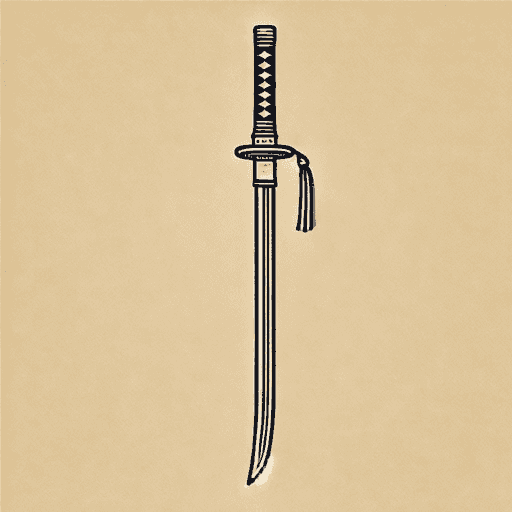
Michiko joins him and they train together. Michiko praises Philip’s skills, which have endured into his old age. He senses that she is “not well.” He invites her to stay with him so that he can learn more about Endo. Michiko accepts, so long as he takes her to the small island where Endo was laid to rest. Philip refuses. Instead, Michiko asks Philip to tell her about Endo and shows him Endo’s Nagamitsu sword, a weapon that he recognizes immediately. It is almost identical to Philip’s sword, as they were a pair. The sword provokes a sudden rush of grief in Philip, who suggests that Michiko return to her hotel.
Part 1, Chapter 2 Summary
Later in the morning, Philip drives Michiko back to her hotel. Then, he visits his business offices. The trading company, Hutton & Sons, was founded by his great-grandfather, a “legend in the East” (29). Philip’s knowledge of Japanese culture and language helped him make a lot of money in the post-war era.
Philip’s days are highly regimented, though not necessarily happy. He has been preparing for his death, but Michiko’s arrival has stirred unexpected feelings of melancholy within him. He leaves work early, walks through the bustling city of Penang, and thinks about his home. He has never hungered for cold, rainy England and has something of a reputation and status in Penang.
He sits in a peaceful churchyard, then decides that he must speak to Michiko, no matter how painful it may be. He finds her at his house by the pool, staring at Endo’s island. After dinner, she shows him Endo’s letter, which he agrees to read later. Beside the pool again, Philip is surprised by his contentment. They talk about Philip’s dead family and the local myths and legends. Once again, Michiko asks to know everything about Philip and Endo. This time, Philip agrees to speak about “[his] many shames, [his] failures, [his] unforgivable sins” (35). He examines the letter, preparing to speak about himself.
Part 1, Chapter 3 Summary
The narrative goes back to Philip’s youth. He is the youngest son of one of the oldest, wealthiest families in Penang, that runs Hutton & Sons, the business founded by his great-grandfather. The Hutton family has been part of the British colonial presence in Penang for four generations, living in the large mansion known as Istana. Philip is the youngest of four children. His three older siblings—Edward, William, and Isabel—were all born from Noel Hutton’s first marriage to an English woman named Emma.
After her death, Noel fell in love with a Chinese woman named Khoo Yu Lian, whose father was part of the mass migration of people from the Chinese province of Hokkien. Her father was a wealthy man and, like many people in Penang, he was “scandalized” by the marriage between a British man and a Chinese woman. He disowned his daughter and severed contact. Philip’s mother died when he was seven years old. He has few memories of her, especially as his father retreated into his work due to his grief. Philip was educated in the local languages and feels bound to Penang. He was not close to his older siblings; his multiracial heritage makes him feel alienated from two cultures, rather than a member of both.
In 1939, Philip is 16 years old. His family has traveled to England, though he has opted to remain in Penang rather than join them. Recently, his father leased the small island offshore from their beachfront property to a Japanese man. Philip enjoys spending time on that island, so he is annoyed that he is now forbidden from visiting.
One evening, when Philip is alone in the house, a Japanese man appears and asks to borrow a boat. The man is in his 40s, with gray hair and a stocky build. He introduces himself as Hayato Endo and reveals that his boat has been washed away by the tide. Philip is intrigued by Endo and his philosophical outlook. He takes Endo to the island, where Endo offers him a meal as thanks.
As he eats the unfamiliar Japanese food, Philip inquires about the items in the small house. He confesses to Endo that he feels like an “outcast” in his own family due to his parentage but struggles to explain himself. Their conversation touches on the seemingly inevitable outbreak of war. Endo speaks with longing and sadness about his hometown in Japan, though does not offer much information. Philip stays the night on the island and, in the morning, wakes to find Endo practicing martial arts. He is intrigued. Endo offers to become his sensei, his instructor in the art of aikijutsu.
With little else to do, Philip throws himself enthusiastically into this new practice. He visits Endo every day, even though he recognizes that his fraternizing with a Japanese man may cause consternation among the largely Chinese domestic staff. He learns how to fight according to the teachings of Endo’s favored aikido. He learns to trust Endo, who teaches him about calligraphy and philosophy as well as martial arts.
During this time, Philip also agrees to introduce Endo to Penang. Endo is the deputy consul for the northern region of Malaya and, Endo explains, he is tasked with caring for the affairs of the small Japanese community in the region. At this time, with the Japanese invasion of Manchuria, the Japanese are “not very popular in Asia” (53).
Philip learns to speak Japanese but struggles to ask Endo about Japan’s militarism. Instead, he learns about Buddhism and the concept of enlightenment. Endo cannot promise that Philip will become enlightened, but he promises to equip him with all the tools needed to reach enlightenment. They meditate together on the peaceful island as the world seems about to descend into war.
Part 1, Chapter 4 Summary
Penang is home to many different cultures. As well as the British colonial presence, there are Chinese, Indian, and Malayan communities on the island. Each has its own distinct culture, though these often merge on the bustling streets. Philip recalls the sights, smells, and sounds of the multicultural city. He gives Endo a tour of Penang, introducing him to places like Armenian Street.
In turn, Endo introduces Philip to the small community of Japanese people which Philip had not known existed. Endo explains that the Japanese were “attracted to the wealth in this region” (58). As they eat in a Japanese restaurant, Endo offers a melancholic recollection of why he came to Penang. Endo comes from a samurai family, but his father displeased the Emperor by criticizing Japan’s increasing militarism. He was forced to leave Tokyo and become a businessman, but he raised Endo in the “skills of the samurai” as well as many aspects of Western culture (60), which allows Endo to speak to Philip in English.
Philip takes Endo to the famous Temple of the Azure Cloud, where they find an old woman who tells fortunes. The old woman tells Philip that he has the gift of rain and that his “life will be abundant with wealth and success” but will also test him greatly (62). Looking at Endo, she announces that he and Philip have a shared past in a different time. She warns that they have a great journey to make after this life. Her words puzzle Philip but seem to reinforce something that Endo has already been told.
Embarrassed by the fortune teller’s anti-Japanese proclamations, Philip tries to apologize to Endo. Instead, Endo recalls similar fortunes being told to him and teaches Philip about Buddhist ideas of reincarnation en route to the state of Nirvana.
The training sessions continue and Endo instructs Philip that the martial arts techniques can just as easily be applied to everyday life. Each day, Philip returns home, covered in bruises.
Part 1, Chapter 5 Summary
Philip is delighted to show Penang to Endo. Endo warns Philip that the purpose of his martial arts training is not to fight, but “how not to fight” (67). The training should only be used as a last resort, and even then it may be better avoided.
They explore the harbor, the shipyard, and the nearby mountain. Hiking up Penang Hill, they reach the property that Philip’s family owns at the mountaintop. Endo takes many photographs; Philip notes how few of these photographs contain people, yet alone Endo himself.
At night, they dine together at the Bellevue Hotel. Philip admits that he is not close to his family, claiming that he does not “fit in anywhere at all” (71). Back on the island, they resume Philip’s training. In the following days, Philip helps Endo to find a suitable property to house the Japanese consulate. They visit the house on the top of the mountain. During their journey, Endo invites Philip to accompany him on a trip to Kuala Lumpur.
Part 1, Chapter 6 Summary
Philip talks to the family chauffeur, known as Uncle Lim. They speak in Hokkien, the Chinese dialect common in Penang. Uncle Lim does not like Japanese people; his daughter lives in China but she will arrive soon in Penang, having been driven out of her home by the Japanese invasion. Philip is concerned for Uncle Lim’s family but he refuses to stop seeing Endo.
Philip’s Aunt Yu Mei asks Philip to join her for the Chinese festival of Cheng Beng. His aunt accompanies him to pay respects to his mother. Philip does not feel a particular connection to his Chinese heritage, but he humors his aunt. Trying to remember his mother, however, has become more difficult with each passing year. His most vivid memory is from the days after she became sick. She fell sick while traveling with his father in Sungai Lembing, as his father had been seeking a rare butterfly for his collection. Philip remembers the night of her death and the funeral. His older siblings wept, as Philip’s mother had been like a replacement mother to them, even though he did not understand this at the time. Aunt Mei tells Philip that his grandfather would like to meet him for the first time. Philip agrees.
Later, Philip practices with Endo. Endo presents him with an elaborate gift: A Japanese katana sword, beautifully made and a partner for Endo’s own sword. Philip is overwhelmed by the gift and, after some deliberation, fetches a book of poems from his house. He reads one to Endo, selecting a Hebrew poem by Solomon Bloomgarden. Endo finds the poem particularly affecting, especially as it shows that Philip is “starting to understand the lessons” (86).
Part 1, Chapter 7 Summary
Philip shows Michiko the poem and then takes her to see something. Michiko mentions that Endo’s sword was sent to her after his death. They go to the beach and take a short boat ride until, in a particularly dark spot, they become surrounded by fireflies. Michiko recalls Endo sharing a similar memory with her. She notes that Philip reminds her of Endo.
Michiko explains that she was in love with Endo as a young girl. Her father was so angry at the relationship that he launched an investigation into Endo’s father, which ended in the family being disgraced. She feels guilty for the part she played “in the downfall of Endo-san’s family” (91). The only time he spoke to her after this was to tell her that he was leaving. Philip is surprised that he appreciates Michiko’s presence in his house. He is happy, at last, that he can tell his story to someone.
Part 1, Chapters 1-7 Analysis
The Gift of Rain is constructed from two narratives: The life of Philip Hutton in the mid-20th century and, 50 years later, his reflection on this turbulent period. The novel presents these two narratives through the means of a framing device. Michiko’s visit to Philip is set 50 years after the war, prompting them to open up to one another. This framing device is more than a narrative tool. As Philip notes, he has not shared his story with anyone before, with his sudden urge to share his story with Michiko introducing the theme of The Comforting Nature of Sharing Memories.
Michiko is a stranger to Philip but, through her relationship with Endo, she is one of the only people whom Philip feels has the right to know about what happened to him. He invites her understanding after decades of shielding himself from the world. She alone can understand what Endo really meant to Philip. That she can prompt these reveries shows the audience, from an early stage, just how formative an influence Endo will have on the younger Philip’s life.
The young Philip is defined by his sense of dislocation and The Complexity of Identity, as he struggles to find a sense of self that feels natural to him. Despite his family’s wealth and status, the young Philip feels that since he is a child of multiracial heritage, he does not belong in either British or Chinese social circles. He feels welcome nowhere, even though his wealth and status mean that he can go anywhere. His isolation is emphasized by his family’s absence: He is completely alone in the big family house when he meets Endo, cut off not just from his brothers and sister, but from the rest of the town by the high walls of Istana. The isolated physical setting thus reflects the emotional isolation with which he wrestles.
When Philip meets Endo, he begins to feel that he has at last met someone he can trust and talk candidly to. His relationship with Endo is the first step toward rectifying his sense of dislocation, as he helps to orientate an outsider to Penang. However, his growing intimacy with Endo comes at a cost: The locals’ antagonistic feelings toward the Japanese, as reflected in the attitudes of the fortune teller and Uncle Lim, foreshadow the key conflict that Philip will face after the Japanese invasion. Enthralled by Endo’s presence and teachings, Philip does not realize that he is drawing even further away from his family and community, placing his island at risk by inadvertently giving Endo the information the Japanese need for their invasion during the numerous tours he provides.
Though the young Philip takes steps toward resolving his sense of alienation, the older Philip is more acutely aware of his isolation. He has retreated into a self-imposed emotional exile, cutting himself off from the rapidly changing world. The older Philip is captured by the memories of what happened. The irony of this situation is that it is Endo who shakes Philip from his isolation for a second time, this time via Michiko. Just as Philip once showed Endo around the island, now he shows Michiko around. By explaining his isolation to her, he symbolically retraces the steps that were so formative in his youth.

Unlock all 67 pages of this Study Guide
Get in-depth, chapter-by-chapter summaries and analysis from our literary experts.
- Grasp challenging concepts with clear, comprehensive explanations
- Revisit key plot points and ideas without rereading the book
- Share impressive insights in classes and book clubs