The Girl in the Tower
61 pages • 2-hour read
Katherine ArdenThe Girl in the Tower
A modern alternative to SparkNotes and CliffsNotes, SuperSummary offers high-quality Study Guides with detailed chapter summaries and analysis of major themes, characters, and more.
Symbols & Motifs
Content Warning: This section of the guide includes discussion of gender discrimination and death.
The Tower
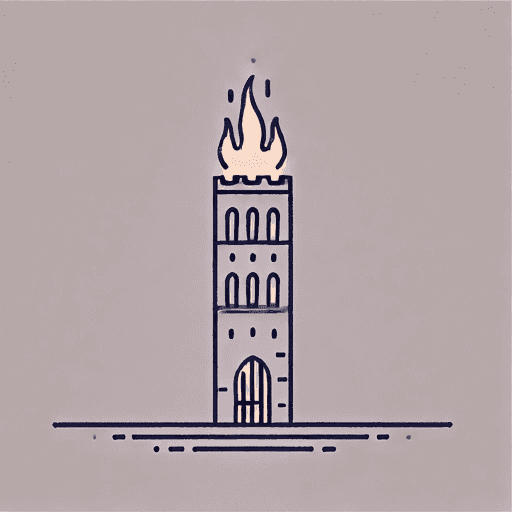
The tower is a symbol of the confinement of highborn women in medieval Russia, a gilded cage of safety, status, and powerlessness that forms the thematic core of female existence in the novel and establishes the need for Defiance of Gender Roles in a Patriarchal Society. As the book’s title suggests, the tower is the novel’s central image of patriarchal constraint, defining the limited choices available to women: marriage or the convent, both of which involve isolation and loss of authority.
The narrative juxtaposes Olga, who accepts her role as the powerful aristocrat and remains trapped in her terem, and her sister, Vasya, who flees this fate by adopting a male identity. Olga’s life exemplifies the tower’s dual nature; she wields domestic power and is respected, but she acknowledges the prison-like reality of her world, admitting that highborn women “must live and die in towers” (9). Her existence is a comfortable, orderly, and prosperous one, but her safety and security are predicated on a complete surrender of autonomy and freedom of movement, a price Vasya refuses to pay. The tower becomes a physical manifestation of the societal structures that limit women’s lives.
Vasya’s escape from her family’s home is a literal flight from a tower, but her journey reveals that the true tower is the patriarchal society itself, which she can only navigate by shedding her female identity. Olga’s desire to see her own daughter Marya follow the same path highlights the cyclical nature of this confinement, in which women become the enforcers of the very system that restrains them. The symbolism of the tower deepens over the course of the novel, coming to represent the choice between a life of constrained security and the perilous, uncertain freedom that lies outside its walls.
Horses
In direct opposition to the tower’s confinement, horses function as a symbol of freedom, wildness, and a connection to the magical, fading world of Slavic folklore, connecting to the theme of The Fading of the Old World in the Face of New Faith. Vasya’s stallion, Solovey, is powerful in his own right—he is not just a mount, he is also a partner. Solovey is also an extension of Vasya’s own untamed spirit, enabling her escape from a prescribed female life and facilitating her performance of a male identity. His magical nature and ability to speak with Vasya tie her directly to the world of the chyerti, a realm that is fading but still potent in the wilderness.
The fact that Vasya rides Solovey without a saddle or bridle underscores her rejection of domination in favor of a relationship built on mutual understanding and respect, mirroring her own refusal to be controlled by societal expectations. Her ambition is intrinsically linked to her horse, as she declares her intent to travel far from her circumscribed world: “Solovey will take me to the ends of the earth” (52). This partnership is what allows her to become “Vasilii the Brave,” giving her the mobility and power to claim a heroic male identity. The novel further develops this symbolism by contrasting Vasya’s horsemanship with that of others. Kasyan’s use of a cruel, golden bridle to control the firebird Zhar Ptitsa represents power through force, while Vasya wins the mare Zima’s trust through communication, ultimately demonstrating that true power and freedom are found in connection, not coercion.
Winter/Snow and Fire
In The Girl in the Tower, winter and its accompanying snow transcend their function as a setting, acting as a motif that both creates and represents the magical atmosphere central to the theme of the old world’s conflict with the new. As part of the Winternight Trilogy, winter defines the series’ core identity, establishing a harsh world where survival is paramount and the lines between the physical and supernatural blur. Fire is a motif that acts in opposition to winter, an elemental force of destruction that diminishes the magical world and the power of Morozko.
Winter is the domain of the frost-demon Morozko and other chyerti, a liminal space where the old powers retain their strength away from the Christian influence of cities like Moscow. Olga’s fairytale about Snegurochka, the snow-maiden, reinforces this connection, portraying a creature born of winter who cannot survive the coming of spring. Morozko’s warning in the story, “You were born of winter and you will live forever. But if you touch the fire you will die” (12), serves as an allegory for the pagan spirits themselves, who are immortal within their natural domain but vulnerable to the encroaching “fire” of a new faith that seeks to destroy them.
The brutal cold of winter forces characters into primal struggles, stripping away the conventions of civilization and revealing their fundamental natures. For Vasya, the winter forest is both a deadly threat and a place of refuge and power. In the deep snow, she communes with Morozko, hones her skills for survival, and solidifies her connection to the ancient magic that Christianity seeks to erase, positioning winter as the last bastion of a fading, enchanted world. Fire, too, is brutal and destructive, an element used by the bandits to destroy the villages. Vasya’s interactions with fire illustrate her growing power and ability to manage the elements: When she releases the fire bird, she accidentally sets Moscow ablaze, but later, she is given a coal by a domovoi, and her ability to control it and use it to guide her way shows her growing understanding of her elemental powers.

Unlock the meaning behind every key symbol & motif
See how recurring imagery, objects, and ideas shape the narrative.
- Explore how the author builds meaning through symbolism
- Understand what symbols & motifs represent in the text
- Connect recurring ideas to themes, characters, and events