The Girl Who Wrote in Silk
50 pages • 1-hour read
Kelli EstesThe Girl Who Wrote in Silk
A modern alternative to SparkNotes and CliffsNotes, SuperSummary offers high-quality Study Guides with detailed chapter summaries and analysis of major themes, characters, and more.
Character Analysis
Liu Mei Lien
Content Warning: This section of the guide discusses racism.
Mei Lien is one of the two protagonists in the novel. It is her experience as a Chinese American woman that drives the events of the novel, both in her time and later in Inara’s contemporary experience. She is young and dies at just 26 years old, likely from stomach or uterine cancer.
Out of necessity, Mei Lien dresses like a boy throughout the early parts of her life in Seattle and later on Orcas Island. Since she is her father’s only child, she is more helpful posing as a boy than she could be as a girl. On the Island, she initially conceals herself by dressing as a boy and acting as Joseph’s servant. She is a caring, loyal, and dedicated woman who devotes herself to her family. However, she is also slow to trust largely due to her repeated experiences with injustice, racism, and unfathomable violence.
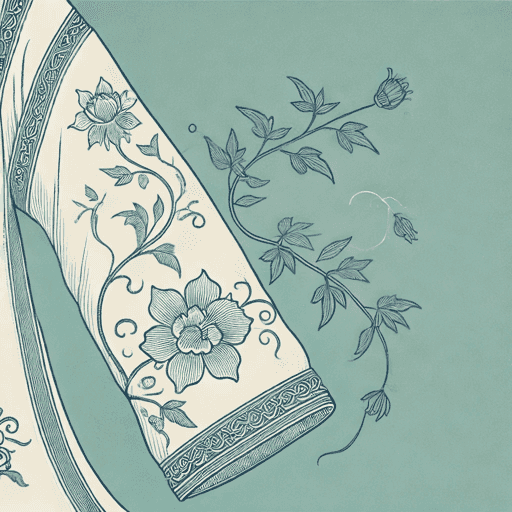
Her character arc begins in relative innocence before her family is evicted from their home city. Her primary concern on the morning they are violently forced out of Seattle is whether her father will allow her to have the candied plum early. By the end of the novel, however, she has developed the internal strength to care for her son alone and provide for his future even through serious illness and massive racism. In her short life, only four people ever accept her at all: Her father, her grandmother, her son, and her husband Joseph. Even so, she finds solace in nature, pride in caring for her family, and meaning in her embroidery. Her story and her need to expose the evil she sees in Duncan Campbell, as well as her deep desire to show her son the unadulterated truth of history, yields the robe and sleeve that set the events in Inara’s sections in motion.
The language in her sections revolves around color, nature, and an internal sense of quiet strength. She rarely speaks in the novel, but her internal experience is richly developed, just as she dedicates her passion to the rich embroidery that tells her story. Her ending mirrors her introduction in the novel: However, while she is forced to jump into the water at the novel’s opening, she voluntary walks into the ocean at the novel’s end after massive growth and with significant strength.
Inara Erickson
Inara Erickson is an attractive young woman who has just finished graduate school. She is the secondary protagonist of the novel, and it is her curiosity and internal drive that lead to the discovery of the sleeve and the history that is slowly uncovered with it.
Inara begins the novel as innocent and largely focused on herself and her father’s goals for her. Like Mei Lien, she is raised largely by her father after her mother’s death. She is haunted by her mother’s death, and slowly recognizes how much of her good fortune was won at the expense of the lives and happiness of others. Although she personally is a generous and kind person who has no elements of racism or bigotry in her behavior or beliefs, she lies and hides the truth about her family’s role in the destruction of hundreds of people in the past. She is a dynamic character, as what she learns pushes her to grow and develop throughout her character arc.
At the beginning of the novel, Inara’s primary concern is dispensing with her inheritance, in part to avoid confronting her guilt surrounding her mother’s death. However, the natural beauty of the island and her positive memories of her Aunt Dahlia encourage her to consider other avenues. Her discovery of the sleeve hidden in the stair leads her to pursue the history of her inheritance. That inheritance is both physical and emotional, and ultimately she has to confront her familial guilt as well as her own.
When she falls in love with Daniel and then learns that he’s Mei Lien’s great-great-grandson, she feels caught between loyalty to her family and her own sense of morality. Ultimately, she reveals all of her family’s secrets, and in fully confronting all of her and her family’s crimes and mistakes, she is able to embrace herself and move toward a healthy future. She grows more than any other character in the novel, and as such represents the potential for modern-day people to reach into the past and begin to heal the wounds caused by those who came before.
Daniel Chin
Daniel is the direct descendant of Mei Lien and Inara’s primary love interest. His discovery of his family’s history leads him to initially reject Inara, but also educate her about the appropriate response to her realization about his family.
Daniel is an academic, but his lived experience as a Chinese American lends an emotional and personal dimension to his practice of historical research. He is an ideal character to offer explanations of aspects of Chinese cultural tradition, both positive and potentially problematic, such as the limitations women faced in historical Chinese culture.
Since he’s an academic but also a member of the culture, the voice of the Chinese American experience is not appropriated by a white perspective. He acts as the representative of a modern Chinese American who honors both his ancestors’ culture and the current culture in which he engages. He and his family present a portrait of a successful immigrant story: Although their history involves massive tragedy and adversity, they have all found a productive and satisfying place in the modern United States.
Joseph McElroy and Duncan Campbell
Joseph McElroy and Duncan Campbell are both white men of Scottish descent living on Orcas Island in the late 19th century. The two men are in direct opposition, though, in terms of their perspective on the value of other human beings. While Campbell is the primary antagonist of the novel, both to Mei Lien directly and to Inara via inheritance, Joseph is the representation of open-minded kindness and the alternative to prejudice. The two characters remain static, entirely formed before the novel’s opening. Their differences, however, offer a dual perspective on the potential choices available to white men at the turn of the 20th century. That perspective undermines a popular historical argument that those who did terrible things were merely “products” of their time.
Campbell has a dual purpose in the novel. Initially, he’s portrayed as an exemplar of immigrant success and the benefactor of Inara’s entire family:
Duncan Campbell was their great-great-great-grandfather on their mother’s side of the family, and the man who had single-handedly launched the maritime trade industry in Seattle. He’d emigrated from Scotland in the late 1800s to what had been little more than a muddy logging town and built an international shipping company from practically nothing. Because of him, Seattle was known as a major port for trade. If not for Duncan Campbell, Seattle might never have been put on the map and Seattleites knew it, having named buildings after him and devoted a whole section to him at the museum of History and Industry (5).
As the novel progresses, however, he’s revealed to have been a racist murderer, more concerned with his own status and success than the value or success of any other person. Inara’s father describes Campbell’s attitudes thusly: “Your grandmother told your mother about the incident, how Duncan referred to it as ‘dumping the worthless ballast.’ He knew not to talk about it in public, but privately he was proud of what he did” (163). In other words, Campbell never regretted ordering the murder of more than 300 innocent people, including Mei Lien’s father and grandmother.
Campbell also regularly threatens Mei Lien, even though she’s under Joseph’s protection. However, he also demonstrates his cowardice throughout the narrative. After Mei Lien disappears, Campbell is terrified of her ghost coming to haunt him. He threatens Mei Lien and Joseph many times, but never personally acts violently—instead, he orders others to do his dirty work for him.
Joseph, on the other hand, views every person he meets as an individual human being. He rescues Mei Lien from the ocean and brings her home to his cabin. When she wakes up, he gives her space, and is respectful and kind to her even before he has any sense of her identity. He conceals her identity to keep her safe, believing her when she tells him about Campbell’s racist murder of her family. He marries her because he loves her, but also to keep her safe. Joseph actively defends her on multiple occasions, even before they’re married. He is also characterized as frequently baffled by the unfounded hatred he sees performed by his fellow islanders and white people.
It is Joseph who empowers Mei Lien to embroider her own story on the blue silk he gives her—not just by providing the material, but by loving and respecting her so fully that she can feel secure in her own identity. When Inara’s father tells her that “people didn’t understand about other cultures and ethnicities” and “fear drives people to do horrible things” (163), Joseph shines on from the past as an example of someone who did understand and chose not to do horrible things, never using fear as an excuse.

Unlock analysis of every major character
Get a detailed breakdown of each character’s role, motivations, and development.
- Explore in-depth profiles for every important character
- Trace character arcs, turning points, and relationships
- Connect characters to key themes and plot points