The Girl Who Wrote in Silk
50 pages • 1-hour read
Kelli EstesThe Girl Who Wrote in Silk
A modern alternative to SparkNotes and CliffsNotes, SuperSummary offers high-quality Study Guides with detailed chapter summaries and analysis of major themes, characters, and more.
Symbols & Motifs
The Sleeve
Content Warning: This section of the guide discusses racism and attempted death by suicide.
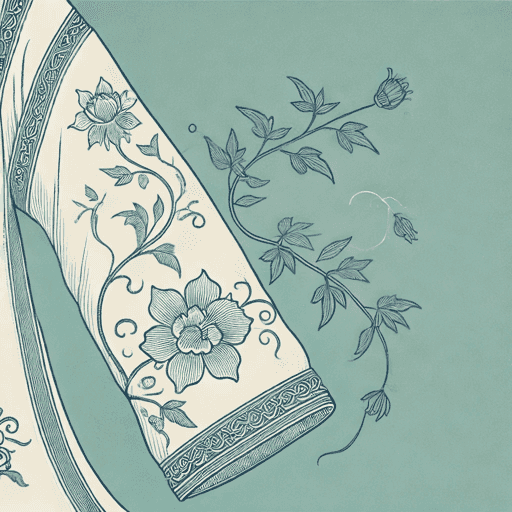
The silk sleeve of the ceremonial robe that Mei Lien embroiders for Yan-Tao symbolizes the connections between the present and the past, embodying The Cultural and Personal Value of History. The sleeve is the story of Mei Lien’s tragedies and triumphs, carrying her story through a century until it finds Inara, who allows Mei Lien’s truth to be heard.
The first description of the sleeve reveals its beauty and its mystery: “The entire thing had been cut from whatever it had once been attached to. But, intriguingly, every inch of the sleeve was intricately embroidered with richly colored threads, creating pictures as detailed as if they were paintings” (23). The sleeve’s hidden nature, its beauty, its mystery and its intricacy all inspire Inara to dig into the history of her home, her family, and even her country.
The sleeve leads Inara to Daniel, and their shared quest to trace its origin leads Daniel to the truth about his family. The novel ends with the sleeve finally joined with the robe it was meant to complete: “[T]he full impact of the robe and sleeve hit her. They were together […] the contrast between [the robe] and the sleeve was remarkable and showed how intensely the robe had been loved” (370). The sleeve stayed hidden over the years while the robe comforted Yan-Tao with his mother’s love, and long after both of their deaths, their descendants find peace as the robe finds its sleeve.
The Ocean
The ocean is a symbol of continuity, grief, and possibility for both Mei Lien and Inara. Every night from the day she arrives on Orcas Island to the day her son is born, Mei Lien visits the ocean. The ocean offered her sanctuary and rescue from the steamer when she was going to be killed. The ocean then acts as a threatening force, beckoning Mei Lien to her death and washing up her grandmother’s body onto the shore. Until Yan-Tao is born, the ocean becomes the space where she can commune with her lost family and reconnect with her roots. Mei Lien voluntarily walks into the ocean at the end of the novel, saving herself from a more prolonged death. She sees her family waiting for her beneath the waves, transforming the ocean into a symbol of peace and reunion.
The ocean also connects Mei Lien and Inara. Inara finds herself drawn to the same beach as Mei Lien, and it’s on that beach where Inara feels at peace and able to figure out how to resolve her inner conflict by publicizing Mei Lien’s story. The novel resolves with Daniel and Inara staring out at the ocean, feeling a timeless connection to Mei Lien’s spirit. While the ocean is the crime scene that begins The Generational Impact of Racism in the novel, it also offers the potential of healing and an end to a cycle of violence, secrets, and fear.
Dresses
The dresses that Mei Lien wears to please Joseph and to attempt to fit in with American culture are a motif which emphasize The Historical Evolution of Womanhood as well as The Generational Impact of Racism. The dresses are stifling both because they force Mei Lien into a role of woman that doesn’t match her complete lived experience, and because they represent American values which actively oppress Mei Lien and her family.
Mei Lien only wears white women’s clothing after she marries Joseph. Although she prefers her Chinese men’s clothing, she wants to make Joseph happy and avoid discovery by Campbell. The dresses she wears make her physically uncomfortable and make her feel mentally and spiritually trapped. When Joseph gives her the silk, she realizes he’s seen her discomfort, even when she tried to hide it: “She didn’t want him to know […] how she felt she was losing herself and her history […] He must know, she realized. Despite her best pretense, he’d known how she hated dressing like a white woman” (203). The dresses represent the loss of her culture to try to appease a racist population that doesn’t care whether she abandons her traditions to look “appropriate,” and she resists that sensation just as much as she resists the rigidity of a traditional white woman’s role.

Unlock the meaning behind every key symbol & motif
See how recurring imagery, objects, and ideas shape the narrative.
- Explore how the author builds meaning through symbolism
- Understand what symbols & motifs represent in the text
- Connect recurring ideas to themes, characters, and events