The Girl Who Wrote in Silk
50 pages • 1-hour read
Kelli EstesThe Girl Who Wrote in Silk
A modern alternative to SparkNotes and CliffsNotes, SuperSummary offers high-quality Study Guides with detailed chapter summaries and analysis of major themes, characters, and more.
Themes
The Cultural and Personal Value of History
Content Warning: This section of the guide discusses racism.
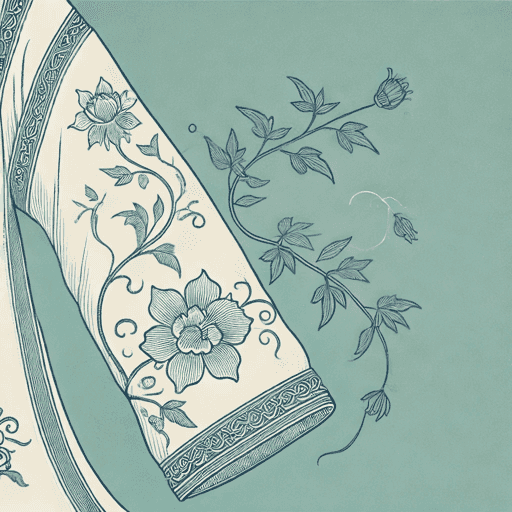
The Girl Who Wrote in Silk is a historical novel that explores the importance of remembering and understanding history. The sleeve is the unifying object that connects Inara, Daniel, and the other present-day characters to their shared ancestral past. Over the course of the novel, just as Inara discovers her family’s part in historical racism, Daniel and his family discover threads of meaning that connect them to their Chinese American ancestral history. The value of that history is significant, changing the way they each view themselves and one another.
The sleeve is the primary vehicle for the discovery of Mei Lien’s existence and the challenges of her life: “The sleeve knew something. It knew something about Mei Lien’s life that Inara had yet to discover, and it had something to do with Rothesay. Which meant it had to do with her family and herself” (124). Inara knows the sleeve isn’t simply an artifact of history—it represents the story of another individual human being. Inara’s discovery of the sleeve leads to the pursuit of its origin, which in turn leads her to Daniel and her investigation into her family’s company. In the process of investigating what initially appears to be a simple item, Inara and Daniel create and nurture a romantic connection. Inara begins to understand at an emotional level the value of the history of the sleeve, well beyond simple curiosity.
Daniel and Inara’s dedication leads to generational healing and the exposure of a century-old crime. The temporary damage to their relationship after Daniel learns the truth about Inara’s family leads to real action. Daniel’s anger is only partially that Inara kept the secret from him, it’s more that she kept the secret at all: “You should have told me, Inara. But you didn’t. And now I need to consider what is best for my family, which means I will be researching further into what actually happened that night. With or without your help” (335). The value of this history is personal to him, not just because it involves his family directly, but because it was history hidden from the world. In response, Inara and her siblings agree to publicize the true history instead of hiding it, enabling reconciliation to take place.
The Girl Who Wrote in Silk thus presents history as having both cultural and personal value. In discovering the true history of the sleeve, Daniel and Inara learn more about themselves as individuals. On a broader level, Mei Lien’s story is also linked to a wider context, illustrating the Chinese American experience in the 19th century.
The Historical Evolution of Womanhood
The Girl Who Wrote in Silk focuses on the experiences of women in both the past and present, creating links between Mei Lien and Inara’s experiences across time. Mei Lien’s masquerade as a boy highlights some of the rigid gender roles shared by Chinese and American culture in the 19th century, while Inara’s career pressures from her father demonstrate some of the obstacles even a modern woman can face.
Mei Lien initially dresses in men’s clothing to help her father, because as her father’s only child she is of more use to him as a male than as a female. The necessity for Mei Lien to disguise her gender in order to work and move more freely within society speaks to the limitations placed on 19th-century women in the US. Mei Lien enjoys the autonomy that men’s clothing gives her, and on her wedding day reflects sadly on how embracing marriage and an openly feminine identity will limit her: “[Mei Lien] preferred men’s clothing, but she knew that from today forward what she preferred would come second to her husband’s wishes” (157). Her old clothes represent the freedom of being a man—even a Chinese man—in a culture largely hostile to women. She only finds freedom in creating the robe for Yan-Tao, with the hope that his future will be freer than hers.
Mei Lien’s grandmother also invokes feminine experiences in Chinese culture. Mei Lien’s grandmother teaches Mei Lien all the rules surrounding the proper behavior of girls. Some of those rules reflect positive traditions that honor women and their role in the family, like the intricate needlework she teaches Mei Lien that inspires the ceremonial robe. However, other elements of the female experience, like the disabling practice of foot binding, show how traditional Chinese culture could also limit and oppress women in various ways.
In the present day, Inara’s struggles mirror some of Mei Lien’s frustrations with gender roles and expectations. Although Inara has far more privilege and freedom than Mei Lien does, she still has to work hard to prove herself. Her father’s various interventions in her hotel project initially show that he doesn’t see her potential as a leader. Her father’s doubts about Inara contrast with his confidence in her brother Nate, who is already closely involved in running the family business. Inara’s story demonstrates that even a modern, white, rich woman can face serious challenges in pursuing her own goals. Only the literal death of the previous generation truly frees her to do what she believes is right, both morally and professionally.
In creating parallels between Mei Lien and Inara’s struggles as women, Estes suggests that while much has changed for women in the US, there are still obstacles to overcome. In learning more about Mei Lien’s history, Inara comes into her own as a modern woman, becoming more determined than ever to build the life she wants.
The Generational Impact of Racism
The devastating experiences of Mei Lien and her family highlight the history of racism against Chinese immigrants in the US. The racist policies enacted by American cities and governments provide the impetus for the individual acts of racism experienced personally by Mei Lien and her family. The storylines of Daniel and Inara also explore the generational impact of racism.
Mei Lien’s personal experiences reflect the discrimination and persecution faced by many Chinese immigrants in the 19th century. Her family’s violent eviction from Seattle and the subsequent murder of the passengers from the steamer establish the very real threats of exclusion and violence that Chinese immigrants faced. Mei Lien also endures harassment from Campbell throughout her life on the island, while the islanders’ judgment and disdain toward her leave her socially isolated. While she attempts to protect her son from the racism she experiences, even he is not spared: When Elizabeth takes over the care of Yan-Tao, she leaves him in an orphanage, insisting, “[her] husband would never allow him in [their] home” (308). Yan-Tao conceals the truth of his identity even from his family, hiding the memories of his childhood in a trunk and refusing to discuss his past.
Daniel is a successful college professor at a university that clearly prioritizes the study of Chinese culture. However, in conducting historical research, Daniel often has to confront the emotional impact of how racism impacted his own family. His discovery of Yan-Tao’s trunk and the realization that Mei Lien’s son was his great-grandfather make him suddenly intensely serious. When he tells Inara about the Prince of the Pacific and the Chinese Exclusion Act (See: Background), he explains that “the prejudice went much further […] All up and down the West Coast, Americans of European descent—white Americans—tried, often successfully and usually brutally, to force all Chinese out of their communities” (133). He is well aware of the brutality with which his ancestors were treated and regularly has to explain it to people who have no such darkness in their family lore. Ultimately, the racism his family experienced historically disrupts and nearly destroys his relationship with Inara, thereby directly impacting both his personal and professional life.
Inara’s realization of her family’s role in Mei Lien’s suffering and her initial impulse to hide it, just as her parents and grandparents did, highlights the continuing impact of past racist actions. Even though Inara had no personal role in any racism, her secrecy regarding her family’s historical racism highlights the ease of casual racism. She loves Daniel and respects his family, but even so, she struggles to acknowledge the privilege she gained via Campbell’s racist violence and murders.
Although Inara and her siblings are able to change course by admitting and accepting responsibility both financially and socially, they are the first generation willing to do so. Inara and Daniel’s reconciliation at the novel’s end suggests that it is only by confronting the generational impacts of racism that a better future becomes possible.

Unlock every key theme and why it matters
Get in-depth breakdowns of the book’s main ideas and how they connect and evolve.
- Explore how themes develop throughout the text
- Connect themes to characters, events, and symbols
- Support essays and discussions with thematic evidence