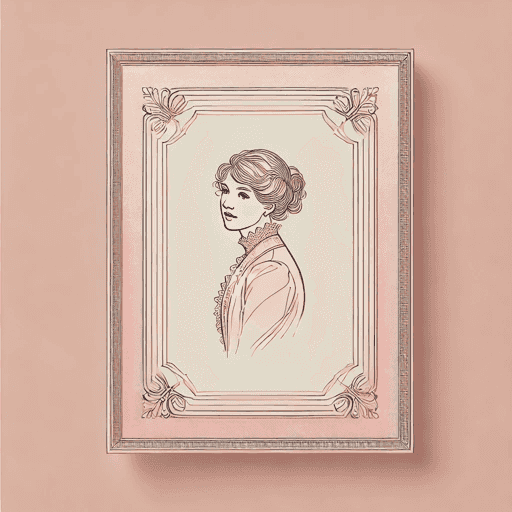
The Girl You Left Behind
57 pages • 1-hour read
Jojo MoyesThe Girl You Left Behind
A modern alternative to SparkNotes and CliffsNotes, SuperSummary offers high-quality Study Guides with detailed chapter summaries and analysis of major themes, characters, and more.
Part 1, Chapters 1-5Chapter Summaries & Analyses
Content Warning: This section of the guide contains descriptions of graphic violence, physical and emotional abuse, bullying, sexual violence and harassment, death by suicide, illness and death, disordered eating, and animal death.
Part 1, Chapter 1 Summary
Sophie Lefèvre is a young woman living in the German-occupied French town of St. Péronne during World War I. She runs Le Coq Rouge, the family inn, with her older sister Hélène while both of their husbands are away fighting. Living with them are their teenaged brother, Aurélien, and Hélène’s two small children, Mimi and Jean-Michel.
Sophie is asleep, dreaming of food, but is woken in the night by Hélène. German soldiers are outside beating Aurélien. They have heard rumors that the family are keeping a pig, a privilege denied to the occupied population. Sophie knows that they do indeed have a pig: They are fattening it in secret on behalf of the whole community. Sophie comes down with Mimi, carrying a baby. She acts imperiously to the German Kommandant, demanding to know what is happening and offering them to search the premises. When she learns that a neighbor, Monsieur Suel, has informed on them, he tells them that he lied to punish Sophie and Hélène for rejecting his unwanted sexual advances.
The beating stops and the Kommandant inspects the hotel. He pauses when he sees a portrait of Sophie painted by her husband, Édouard. He studies it intently, then unexpectedly ends the search. Once the Germans leave, the family laughs with relief when Sophie reveals the baby is no Jean-Michel but the secret piglet, made silent with chloroform. Sophie stands before her portrait, remembering Édouard and the woman she was before the war.
Part 1, Chapter 2 Summary
Word of Sophie’s ruse with the piglet spreads through St. Péronne. Although the story is good for morale, Sophie fears that news will reach the Germans. The family moves the piglet to a neighbor’s cellar. The mayor visits Le Coq Rouge and warns that the new Kommandant is sharper than his predecessor. Sophie notes that Le Coq Rouge is a center of the community in the midst of hardship and remembers how she and her sister have run it alone since the beginning of the war. The recounts how life has become increasingly difficult in the town during the war years, especially under occupation. Sophie relocates Édouard’s portrait to a less conspicuous spot. That night, Hélène and Sophie share how much they miss their husbands Sophie distracts Hélène by describing the feast they will have when the pig is ready.
Four days later, the Kommandant requisitions Le Coq Rouge for his officers’ evening meals, with food provided by the German command. Sophie knows that this will be dangerous and compromise the family’s position in the town, but may also give them increased access to food, which is requisitioned by the occupiers. The Kommandant also wants to billet soldiers there but Sophie objects, showing him the dilapidated bedrooms. The rooms have been looted and damaged by the occupying forces. He agrees the rooms are unsuitable but confirms the dinner arrangement. As he leaves, he notes the portrait’s new placement.
Part 1, Chapter 3 Summary
Sophie draws criticism from certain townspeople for feeding the Germans, although she argues that she has no choice. At the bakery, she witnesses the public shunning of Liliane Béthune, a woman accused of having sex with the enemy in return for favors. Liliane is the only person in town who looks well-fed, and she wears beautiful, expensive coats and shoes that only the occupiers can access. German soldiers deliver abundant food to the hotel, explaining that everything is closely audited and must be used for the German troops only. Near-starvation, the family is tormented by the cooking food as Sophie and Hélène prepare the meal for their enemy occupiers. Sophie feels fury at the injustice of their situation.
After serving the Germans, the Kommandant instructs Sophie’s family to eat the leftovers and devour the roast chicken in private. Sophie makes the children promise to tell no one, knowing that the town will view this as disloyalty. When the other officers leave, the Kommandant lingers to discuss the portrait. He shows knowledge of art and compares its style to Matisse. Sophie confirms Édouard studied under the master, then ends the conversation to tend to Hélène. Sophie is unsettled by the Kommandant’s conversation.
Part 1, Chapter 4 Summary
In a flashback to 1912, Sophie remembers her work as a shopgirl in Paris’s most glamorous department store. Édouard Lefèvre, an artist, repeatedly buys scarves from her as a pretext to meet her. Eventually, he asks to paint her. Intrigued but nervous, Sophie agrees, visiting him in his studio on her day off. Initial sessions in his studio produce stiff drawings that fail to capture her. Both feel frustrated.
On Bastille Day, they meet by chance while Édouard is with the star singer Mistinguett. He pays Sophie attention, offending Mistinguett. After dancing and drinking together, Sophie insists he paint her again immediately. Back in his studio, she lets down her hair and poses in her undergarments with new confidence. Édouard paints her successfully, creating a beautiful portrait that captures her character and her sexual attraction to him. Looking at the finished painting, Sophie sees herself in a new way. They kiss and their love affair begins.
Part 1, Chapter 5 Summary
A month after the Germans begin dining at Le Coq Rouge, a local hears his buried clock start to chime. The townspeople have buried many of their most precious belongings to avoid them being stolen and are afraid that the chiming will alert the Germans to their caches. To cover the sound, the town elders sing loudly in the square. Sophie pretends to the Kommandant that it is a local custom. German soldiers march French prisoners through the square. When an elderly woman hands one of them bread, the prisoner is beaten and the woman is threatened by a soldier. While this is happening, another prisoner tries to escape. As he runs across the square, the Kommandant coolly shoots him dead.
That night at the hotel, the Kommandant violently attacks a German officer who touches Hélène inappropriately. Afterward, he seeks out Sophie and apologizes for his officer’s behavior. He also reveals that he knows about the hidden piglet and her lie to him. Advising her to “keep him safe,” his words unsettle her, showing that he is keeping her secret for now but has ultimate control for retribution (62).
Part 1, Chapters 1-5 Analysis
These opening chapters establish the portrait, The Girl You Left Behind, as a symbol of contested identity and a catalyst for the novel’s central conflicts. For Sophie, the painting is an active source of psychological resilience in the face of dehumanizing occupation. Her decision to display the artwork, despite Hélène’s warnings, is a deliberate act of defiance against the Germans who seek to “decide what [she] may look at in [her] own home” (18). The portrait functions as a tangible link to her pre-war self—a woman defined by love, confidence, and agency rather than by fear and starvation. It is this sense of self that fuels her initial confrontation with the Kommandant, a boldness that surprises her sister, who asks, “How did you become so brave, Sophie?” (11). The painting externalizes an inner strength that Sophie must continually access to survive. For the Kommandant, the portrait represents an idealized form of beauty and culture that starkly contrasts with the brutality of his duties, making it a site of intellectual and emotional fixation. His fascination transforms Sophie from an anonymous occupied citizen into an individual, setting the stage for their complex relationship. This dynamic immediately activates the theme of The Iconic Power of Art to Promote Empathy and Reconciliation, illustrating that the artwork’s meaning is not fixed but is actively negotiated by those who view it.
The motif of food and hunger grounds the narrative’s moral complexities in the visceral realities of survival. The presence or absence of food is used to delineate power structures, moral compromises, and the erosion of communal trust. The hidden piglet is the narrative’s first tangible symbol of resistance—a secret source of future sustenance and hope that places the Lefèvre family in direct opposition to German authority. The subsequent requisition of Le Coq Rouge establishes a new dynamic of dependency; the Kommandant’s allowance for the family to eat leftovers is not an act of charity but a calculated exertion of control that creates both resentment and reliance. This transaction complicates the binary of occupier and occupied, forcing Sophie and Hélène into a form of collaboration that ensures their survival while isolating them from their starving neighbors. The theme of The Pursuit of Truth and Justice Across Time is illustrated when a woman is violently stopped from giving bread to a prisoner, an act of public compassion met with brutal force. The tainted bread sold to the suspected collaborator Liliane Béthune reveals how deprivation can corrupt a community from within, turning neighbor against neighbor. Both examples highlight how occupation transforms food from a basic human right into a weapon of social control and punishment.
The characterization of the Kommandant introduces a moral ambiguity that destabilizes simplistic notions of wartime antagonism. He is a figure of contradictions: His intellectual engagement with Sophie over art history coexists with his role as the enforcer of a brutal occupation. This duality prevents him from being a one-dimensional villain and forces Sophie into a precarious relationship where she must intimately navigate the nature of his power over her and her community. His disproportionate reaction to an officer who improperly touches Hélène suggest that he feels protective of the sisters, but also foreshadows his increasing need for ownership and control over Sophie. This complexity is crucial, as it makes Sophie’s subsequent interactions with him a dangerous negotiation with a man whose principles are unpredictable. His awareness of the hidden pig underscores this power dynamic, binding Sophie to him through a shared secret that is both a threat and a form of intimacy.
The narrative structure, particularly the inclusion of the 1912 flashback in Chapter 4, provides the emotional and ideological foundation for Sophie’s wartime identity. The contrast between the vibrant, sensory world of pre-war Paris and the bleak, starved reality of St. Péronne is a stark juxtaposition, providing the reader with essential context for the sudden privations of war 1914-1919. This flashback is a crucial narrative device that defines the “girl” of the painting’s title. In Paris, Sophie is a woman discovering her own agency and allure, a transformation catalyzed by Édouard’s view of her, captured in paint. The finished portrait is an epiphany; the painting reveals a self who is “strange and proud and beautiful.” This realization of her inner self is the bedrock of her wartime defiance. By presenting her past in such detail, the narrative illuminates the personal cost of war: Sophie not just fighting for survival, but for the preservation of her own sense of identity and dignity. This structural choice deepens the understanding of her profound attachment to the painting and foreshadows the sacrifices she will make to protect the life and love it represents.
Through the public shunning of Liliane Béthune and the nascent suspicion directed at Sophie, these early chapters establish the destructive consequences of gossip and superficial judgment in a community under extreme stress. St. Péronne is depicted as a town where survival often depends on secrets—the hidden pig, the buried clock, Liliane’s covert activities—which in turn breed mistrust. The townspeople, powerless against the German forces, redirect their fear and anger inward, targeting those who appear to escape the shared experience of suffering. Liliane’s appearance marks her as an outsider and a traitor in the eyes of women clad in worn-out garments. Their judgment is swift and based entirely on appearances, ignoring any possibility of a more complex private reality. This mirrors the criticism Sophie begins to face for feeding the officers, an act of forced compliance that is misread by her neighbors as willing collaboration. The community’s envy and fear makes it blind to moral nuance, creating an atmosphere where reputation is fragile and easily destroyed. This early focus on the gap between perception and truth lays the groundwork for The Pursuit of Truth and Justice Across Time, which is developed as the novel progresses to Liv’s narrative.

Unlock all 57 pages of this Study Guide
Get in-depth, chapter-by-chapter summaries and analysis from our literary experts.
- Grasp challenging concepts with clear, comprehensive explanations
- Revisit key plot points and ideas without rereading the book
- Share impressive insights in classes and book clubs