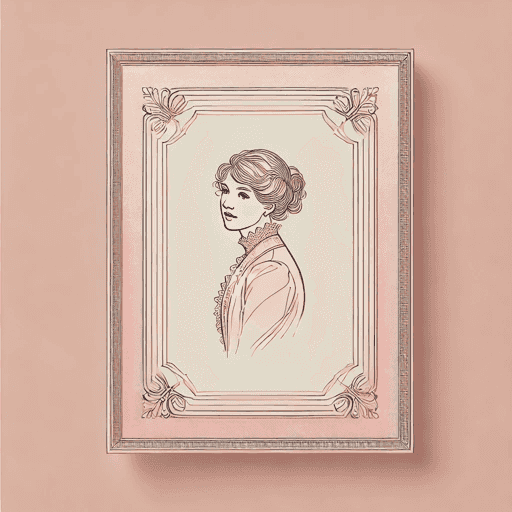
The Girl You Left Behind
57 pages • 1-hour read
Jojo MoyesThe Girl You Left Behind
A modern alternative to SparkNotes and CliffsNotes, SuperSummary offers high-quality Study Guides with detailed chapter summaries and analysis of major themes, characters, and more.
Part 2, Chapter 27-EpilogueChapter Summaries & Analyses
Content Warning: This section of the guide contains descriptions of graphic violence, physical and emotional abuse, bullying, sexual violence and harassment, illness and death, suicide, and sexual content.
Part 2, Chapter 27 Summary
Paul interviews a prospective client, Miss Harcourt, about a missing Kandinsky painting, a case Janey has pressed on him. Miss Harcourt offers only tenuous family stories as proof and tries to haggle over his commission. Irritated by her mercenary behavior, Paul refuses the case.
As Miss Harcourt leaves angrily, Paul’s business partner, Janey Dickinson, sees the exchange and asks what happened. She suggest that they can’t afford to be too picky about their clients. Paul retreats to his office, his gaze settling on a photograph of the portrait of The Girl You Left Behind on his wall.
Part 2, Chapter 28 Summary
Liv endures a viewing of the Glass House. Her friend Mo takes her to a café and explains her boyfriend, Ranic, will not join Liv for Christmas because of his view of the legal case. Mo urges Liv to return the portrait to avoid financial collapse. She asks Liv to think about what David would have done. She thanks Liv for letting her stay and says she plans to move in with him.
Sven summons Liv to his office. He tells her the Goldsteins have withdrawn their contract due to the negative publicity of the case. To keep the firm alive, they must remove the Halston name from the practice. Sven asks Liv to resign her honorary Directorship and work with the Foundation. Devastated and alone, Liv goes home and considers whether to use Sophie’s private papers in court.
Part 2, Chapter 29 Summary
In 1917, Sophie and Liliane are transported in a German military truck. Feverish and weak, they endure a stop where local women attack the truck with stones. The truck travels on through a snowy forest.
That night, their guard falls asleep in the van. Liliane urges Sophie to flee, but Sophie refuses, still hoping the Kommandant is taking her to Édouard. She urges Liliane to go without her, but Liliane refuses to abandon her, saying that Sophie’s will be blamed for her escape. She asks Sophie to look after her daughter, Édith. Suddenly, Liliane takes the guard’s gun and dies by suicide.
Part 2, Chapter 30 Summary
Paul drives to court with his brother, Greg, and son, Jake. Outside, press and protesters mob Liv. Paul rushes to help her lawyer get her inside. He confronts Janey, accusing her of leaking information and admitting to his relationship with Liv. Before leaving, he slips Liv a note promising to fix the situation.
Paul visits Marianne Andrews. They search a storage cupboard and find Louanne’s 1945 journal. Paul asks Marianne to deliver it to Liv’s legal team without telling them that Paul found it.
Part 2, Chapter 31 Summary
It is Friday, the last full day of the trial. In court, Marianne reads an entry from her mother’ journal. This proves that Louanne received the painting from a German woman as a gift in 1945. Christopher Jenks, the opposing counsel, counters with a later entry naming the woman as Liesl. He provides evidence that she was the Kommandant’s wife. This supports his contention that the painting was looted by the Kommandant. He reads a passage describing Liesl frantically scrubbing the back of the portrait before she handed it over, arguing that this is out of guilt.
Jenks then presents records stating Sophie Lefèvre died of Spanish influenza in a German camp, having been sent there by the Kommandant. Shattered, Liv leaves the courtroom. Paul meets her outside, apologizes, and, when she asks him to get a drink, he resigns from his job and goes with her.
Part 2, Chapter 32 Summary
Paul takes Liv to Greg’s house, where she meets Jake. Liv admits she expects to lose the case and the house. Overwhelmed with guilt, Paul steps into the garden. Liv follows, reassures him, and says that David’s sudden death shows people matter more than possessions.
Back at the Glass House, Liv turns Sophie’s portrait to the wall. She takes out the papers from Philippe Bessette that accused Sophie of collaboration and burns them to protect Sophie’s reputation.
Part 2, Chapter 33 Summary
Paul stays up all night at Greg’s house, combing through case files. By morning he has vanished, leaving a note asking Greg to look after Jake. the day juggling house viewings and waiting for Paul to call. Anxious, she goes to Greg’s bar, where Greg tells her Paul disappeared after obsessing over the case.
Liv spends Sunday alone, fearing Paul has walked away. On Monday morning, before court, she wraps the painting and meets Fran, a homeless acquaintance, for coffee. She braces for the day’s proceedings, not knowing if Paul will return.
Part 2, Chapter 34 Summary
On Monday, Liv prepare for court to hear the verdict. She carries the wrapped painting into court as a gesture that she has relinquished it. Before the verdict, she addresses the court, saying that she is sorry for the cost the case has had on David’s legacy. As the judge prepares to speak, Paul bursts in with an elderly woman in a wheelchair, whom he introduces as Édith Béthune, Liliane’s daughter.
Édith tells the court she has crucial information: the painting was not stolen. She testifies that, as a child, she delivered the portrait to Kommandant Hencken at Sophie’s request. Her statement stops the proceedings.
Part 2, Chapter 35 Summary
In a flashback, Sophie arrives at a camp and finds Édouard alive; they reunite.
In the courtroom, Édith testifies that Kommandant Hencken arranged freedom for both Sophie and Édouard and sent them to Switzerland. She says Hélène sent her to give the painting to the Kommandant. Édith explains that Hélène wrote a message from Sophie on the back in chalk, that it was “not taken, but given” (361). She also admits that, as a grieving child, she lied to the Kommandant, telling him Sophie had died in the camps to hurt him.
Part 2, Chapter 36 Summary
The courtroom erupts. Paul embraces Liv and tells her the painting is hers. The court clerk returns the portrait to Liv. Janey and the Lefèvre brothers watch in disbelief.
A guard offers to escort Liv and Paul out of a back exit to avoid the press. Liv refuses and chooses to leave through the front doors. Holding the painting, she and Paul walk out together to face the public.
Epilogue Summary
Records show Sophie and Édouard lived quietly in Switzerland under assumed names until at least 1926. On Christmas Eve in the present, Liv receives a conciliatory email from Mo. At Paul’s urging, she calls Mo and invites her for Christmas, repairing their friendship.
Liv reads a final letter from Édith that suggests that Sophie and Édouard moved on from Switzerland. She wonders if other portraits of an older Sophie may exist. Inspired, Liv lies in bed with Paul and asks for his help searching for the remaining lost paintings by Édouard Lefèvre.
Part 2, Chapter 27-Epilogue Analysis
The novel’s concluding chapters employ the structure of a legal procedural to dismantle historical certainty and reconstruct a narrative of private truth, supporting the theme of The Pursuit of Truth and Justic Across Time. The courtroom serves as a public stage where various forms fragmented evidence pieced together, forcing a reckoning with a long-buried past. This framework is used to interrogate the very nature of how history is recorded and contested. Louanne Baker’s journals function as a pivotal plot device, an example of the found document motif. The climax is achieved through a series of dramatic reversals around the meaning of evidence, culminating in the appearance of a living witness, Édith Béthune. Her testimony effectively transforms the courtroom from a space of legal debate into one of historical correction, replacing the flawed, incomplete official record of Sophie’s death with a direct, personal account of her survival. This structural choice elevates the narrative beyond a simple ownership dispute, positioning it as a broader commentary on the power of individual stories to challenge and rewrite institutionalized historical narratives.
These final chapters bring the theme of The Relativity of Loyalty and Betrayal in Times of Crisis to its conclusion, demonstrating that public reputation is a fragile construct, easily shattered by rumor and just as easily restored by the revelation of hidden facts. Liv’s decision to burn the papers from Philippe Bessette that detail the town’s accusations against Sophie is a deliberate act of historical curation. By destroying the records of public condemnation, she preserves the private truth she has come to believe in, protecting Sophie’s legacy from being permanently stained by the court records. Liv also protects herself from the temptation of using them to further her case out of desperation. Liv also seeks to rehabilitate her husband’s reputation, addressing the court to show that her actions were a flawed attempt to honor her husband’s memory, driven by the extremes of grief. The ultimate vindication for both women comes from Édith’s testimony, which collapses the foundation of a century of public judgment against Sophie. Liv’s final choice to walk out the front entrance of the courthouse, portrait in hand, is a symbolic rejection of the public’s incorrect moral judgement.
The resolution of the legal battle precipitates the completion of both Liv’s and Paul’s character arcs, moving them from states of emotional isolation to a shared future built on mutual sacrifice and trust. Liv’s journey from grief-stricken widowhood, where she clings to the glass house and the painting as tangible remnants of her husband, culminates in a profound emotional realization. Her confession to Paul that material possessions are “just stuff” and that “The only thing that matters is people” (337) marks her definitive turn away from the past and toward the possibility of a new life with him. This emotional liberation allows her to voluntarily surrender the painting, an act that would have been unthinkable at the novel’s start, but which also reflects David’s generous approach to life. Paul’s arc provides a counterpoint to his introduction as a cynical professional who dismisses a client for haggling over fees. His transformation is catalyzed by his partner Janey’s ruthless pragmatism, encapsulated in her assertion that “This isn’t about fairness. Nothing’s about fairness” (311). This statement crystallizes the moral conflict he faces, pushing him to reject a professional code her finds increasingly compromising. By secretly uncovering the journals, quitting his job, and finding Édith, Paul reinstates his own personal ethics.
The epilogue serves as a coda, providing both narrative closure and thematic resonance by fully restoring the “true” narratives that war and time had hidden. The historical records detailing Sophie and Édouard’s quiet life in Switzerland under assumed names complete their story, granting them the peaceful, anonymous existence they were denied in St. Péronne. This confirmation of their survival and enduring love is the ultimate triumph over the public judgment that had posthumously defined Sophie as a collaborator. The portrait, now rightfully in Liv’s possession, ceases to be an object of legal contention and is fully realized in its transcendent role, demonstrating The Iconic Power of Art to Promote Empathy and Reconciliation. The novel’s final lines, in which Liv enlists Paul’s help to find Édouard’s other paintings, signify the couple’s full transition into a shared future. Their quest transforms the painting from a relic connecting them to a tragic past into inspiration for a hopeful, collaborative future that honors both their own story and that of Sophie and Édouard.

Unlock all 57 pages of this Study Guide
Get in-depth, chapter-by-chapter summaries and analysis from our literary experts.
- Grasp challenging concepts with clear, comprehensive explanations
- Revisit key plot points and ideas without rereading the book
- Share impressive insights in classes and book clubs