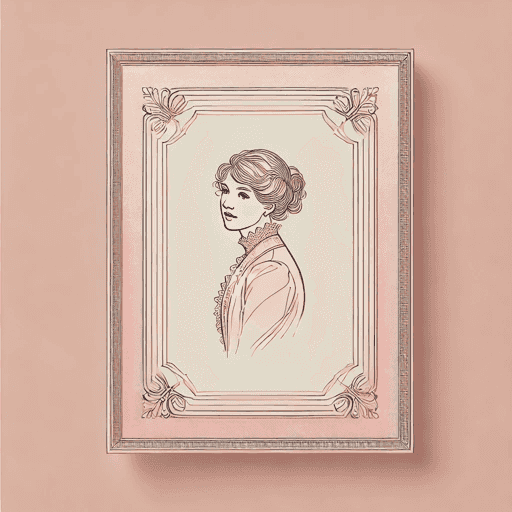
The Girl You Left Behind
57 pages • 1-hour read
Jojo MoyesThe Girl You Left Behind
A modern alternative to SparkNotes and CliffsNotes, SuperSummary offers high-quality Study Guides with detailed chapter summaries and analysis of major themes, characters, and more.
Summary and Study Guide
Overview
The Girl You Left Behind (2012) is a historical romance novel by British author and journalist Jojo Moyes. The novel is one of Moyes’s many works to become a number one New York Times bestseller, including Me Before You (2012). The Girl You Left Behind uses a dual-timeline narrative, alternating between German-occupied France during World War I and contemporary London. A painting connects two women across a century: Sophie Lefèvre, the subject of the painting, struggling to survive while her husband is away fighting, and Liv Halston, a young widow whose ownership of the painting draws her into a legal battle nearly 100 years later. Drawing on the historical impacts of war on civilian life, including the modern legal complexities of art restitution, the novel explores themes of The Relativity of Loyalty and Betrayal in Times of Crisis, The Iconic Power of Art to Promote Empathy and Reconciliation, and The Pursuit of Truth and Justice Across Time.
This guide is based on the 2014 Penguin Books edition.
Content Warning: The source text and this guide contain descriptions of graphic violence, physical and emotional abuse, bullying sexual violence and harassment, death by suicide, illness and death, child death, disordered eating, animal death and sexual content.
Plot Summary
In October 1916, in the German-occupied French town of St. Péronne, Sophie Lefèvre runs her family’s hotel, Le Coq Rouge, with her sister Hélène. While their husbands, Édouard and Jean-Michel, fight at the front, the sisters care for Hélène’s children and their younger brother, Aurélien. Sophie’s most treasured possession is an unnamed portrait of herself, painted by her artist husband, Édouard, which hangs in the hotel bar. When considering the toll that war, hunger, and loneliness have taken on her since 1914, Sophie increasingly thinks of the radiant painted version of herself as the girl “left behind.”
One night, German soldiers, led by the town’s new Kommandant, raid the hotel, accusing the family of keeping a pig without permission. As beat Aurélien badly and Hélène, Sophie thinks quickly. Audaciously, she wraps the chloroformed piglet in a blanket and, pretending it is a sleeping baby, she boldly confronts the Kommandant. The beating is halted. Searching the premises, the Kommandant sees the painting, becoming fascinated by both it and Sophie herself. He departs but warns her that their conversation is not over.
The Kommandant soon requisitions Le Coq Rouge to serve evening meals for his officers, forcing Sophie and Hélène to cook for the occupying force. The Germans provide the food supplies and, on the first night, the Kommandant allows the starving Lefèvre family to eat the leftovers. This act establishes a complex relationship of dependency and resentment. An admirer of art, the Kommandant engages Sophie in conversations about the portrait, and an intellectual intimacy develops between them. Their increasing familiarity brings suspicion from the townspeople, who begin to view Sophie and her family with distrust, as becoming too close to the occupying Germans. The Kommandant’s violent contradictory nature is revealed when he ruthlessly shoots and kills a fleeing French prisoner of war, yet later brutally beats a German officer for assaulting Hélène. His power over Sophie deepens when he reveals he knows about the pig she hid.
Tensions in St. Péronne escalate. Liliane Béthune secretly delivers a letter to Sophie from Édouard through a resistance communication network. Sophie realizes that Liliane is in the resistance, acting as a collaborator to gain the Germans’ trust. For Christmas Eve, the townspeople plan a secret feast, when they will eat the secret pig. Sophie agrees to stay behind to distract the German officers while the others celebrate. The Kommandant persuades Sophie to dance with him and, after a neighbor sees this and gossips about it, vicious rumors circulate that she is his mistress. The town turns against her, and Sophie begins to be treated with the hostility normally reserved for Liliane Béthune. Sophie’s brother Aurélien confronts her and they argue bitterly. Soon after, Liliane is publicly beaten and abused by the Germans forces. While the townspeople insult Liliane, considering her the Germans’ “whore,” Sophie defies them by taking in Liliane’s young daughter, Édith. When the news spreads that Liliane was in fact arrested and then deported for resistance work, the townspeople start to speak of her as a heroine.
Soon after, Sophie receives news that Édouard has been sent to a “reprisal” camp at Ardennes, widely considered a death sentence. Desperate to save her husband, Sophie begs the Kommandant to use his influence to free Édouard. She offers him the portrait and he tells her to come to his barracks at night. Sophie understands that the Kommandant may expect to have sex with her and agonizes over what she is willing to do to secure Édouard’s freedom. After sharing her dilemma with Hélène, Sophie goes to the barracks, realizing as arrives that the townspeople will make assumptions about her visit, whatever happens. Nervous, Sophie drinks brandy with the Kommandant, and then he kisses her and takes her to the bed. They have sex: She tacitly consents but feels disgust. Seeing the disgust on her face, the Kommandant loses his erection. Becoming enraged, he throws Sophie out into the winter night. She is able to take the painting but has to limp home without her coat or shoes. When she arrives home, Hélène cares for her tenderly.
A few days later, German soldiers arrive to arrest Sophie. Stubbornly believing that the Kommandant is keeping his side of the “deal” by sending her to be with Édouard, she ignores Hélène’s pleas to escape. As she is taken away, Aurélien, believing the rumors against her, publicly denounces her for having sex with the Germans. The townspeople jeer as she is forced into a truck, leaving her family and the portrait behind.
The narrative shifts to London in 2006. Liv Halston, a 32-year-old widow, lives alone in the minimalist glass house designed by her late husband, David. Four years after David’s sudden death, she is emotionally isolated and struggling financially. Her most cherished possession is the portrait The Girl You Left Behind, a honeymoon gift from David. While in a restaurant with her successful friends, Sophie accidentally meets with a former university classmate, Mo. After Mo helps Sophie avoid the unwanted attentions of one of the men at the gathering, Sophie impulsively offers for Mo, who has been sleeping in the restaurant, to stay with her for a while.
On another evening, while in a bar by herself, Sophie meets Paul McCafferty, an American ex-cop. He helps her after her handbag and keys are stolen. They feel an immediate connection and begin dating. Liv invites Paul to her home for the first time, and they sleep together. They each become aware that they are falling in love. The next morning, Paul sees the portrait and is visibly shaken. He recognizes it as one of the missing paintings his company, TARP (Trace and Return Partnership), has been hired to recover. Their clients are the descendants of the artist Édouard Lefèvre. Panicked, he leaves Liv’s house in a hurry. After some silence between them, he explains about the restitution claim, explaining that the Lefèvre family asserts the painting was looted during World War I. Liv is hurt and confused, feeling betrayed by him. Afraid to lose the loved painting, a connection to her lost husband, she resolves to fight for it in court.
The painting is valued at £2-3 million. The Lefèvre family refuses to compromise, and Liv is forced to remortgage the house to cover the exorbitant legal fees. The case attracts intense media attention, and leaked stories portray Liv as a greedy socialite clinging to looted art, making her a target of public animosity. Her friends increasingly drop contact, and her only emotional support comes from her father and Mo. Liv begins investigating Sophie’s story, traveling to Paris with Mo to meet Sophie’s nephew, Philippe Bessette. He reveals that the family ostracized Sophie, believing she was a collaborator, and gives Liv a folder of her private letters and writings. These indicate that Sophie had an ambiguous relationship with the Kommandant. Liv, feeling a protective connection to Sophie, is reluctant to reveal this in court, even though it would support her case that Sophie gave away the painting.
The court case begins. Paul’s firm presents evidence suggesting the painting was coercively taken by the Kommandant. They also introduce an article by an American journalist, Louanne Baker, who wrote about receiving a “souvenir” from a German collection point for stolen art in 1945. Liv’s lawyer counters this by having Louanne’s daughter, Marianne, testify. Although Marianne asserts that her mother would never have taken the painting under these circumstances, her statements are weak without supporting evidence. Marianne leaves court angry that her mother’s reputation has been impugned.
As the court case becomes increasingly expensive and emotionally taxing for Liv, it looks very likely that she will lose the case. Liv receives hate mail and is abused on the street. Negative publicity has devastating consequences: The main client of David’s architectural firm threatens to pull out unless the Halston name is removed, forcing his business partner to dissolve David’s foundation. Desperate, Liv starts the process of selling the house.
Wracked with guilt over the consequences for Liv, and suspicious that his boss is playing dirty, Paul secretly visits Marianne and locates Louanne Baker’s complete journals, which contain crucial evidence. He anonymously arranges for the journals to be delivered to Liv. In court, the journals show that Louanne was given the painting in 1945 by a woman called Liesl, who wanted to be rid of it. This clears up the question of Louanne’s “tainted” acquisition of the painting and, at first, it seems that the case is turning in Liv’s favor. TARP’s lawyers then present German army and census records that identify the Kommandant of St. Péronne as Friedrich Hencken and his wife as Liesl, who lived near the Collection Point after the war. Finally, TARP’s lawyers reveal records showing Sophie died of influenza in a German camp, at the Kommandant’s orders. This supports their assertion that the Kommandant stole the painting, arresting Sophie to cover his tracks.
As the day closes, Sophie realizes that Paul found the journals. When she thanks him, they make up. Angry with his boss’s behavior, Paul quits his job, leaving her dumbfounded. Sophie and Paul leave court together and share dinner with Paul’s family. Overnight, which is the last of the trial, Paul stays up trying to find the answer to Liv’s case. In the morning, he has disappeared.
On the final day of the trial, everyone is expecting the judge to find in favor of the Lefèvre family. Before the verdict is read, Liv addresses the court. She expresses her regret for fighting the case because of the damage it has caused to David’s legacy. At that moment, Paul arrives with an elderly woman, Édith Béthune, Liliane’s daughter.
Édith testifies that the painting was never stolen. She reveals that Kommandant Hencken had arranged for both Sophie and Édouard to be freed and sent to Switzerland. In gratitude, Sophie had instructed Hélène to give the portrait to Hencken, with a message written on the back: “Not taken, but given” (361). Édith confesses that, furious about her mother’s death, she lied to the Kommandant, telling him that Sophie had died in the camps.
Following Édith’s testimony, the case collapses, and the painting is returned to Sophie. She and Paul build a happy relationship. Sophie and Édith correspond, and Édith’s records and letters reveal that Sophie and Édouard lived in Switzerland under assumed names until at least 1926. Édouard continued to paint in later life. Liv starts writing a book about Sophie. Liv believes that Sophie and Édouard had another secret life after Switzerland and that there are more, later, paintings of Sophie to be discovered. She asks Paul to help her search for these.

Unlock all 57 pages of this Study Guide
Get in-depth, chapter-by-chapter summaries and analysis from our literary experts.
- Grasp challenging concepts with clear, comprehensive explanations
- Revisit key plot points and ideas without rereading the book
- Share impressive insights in classes and book clubs