62 pages • 2-hour read
The Golden Gate: A Novel
A modern alternative to SparkNotes and CliffsNotes, SuperSummary offers high-quality Study Guides with detailed chapter summaries and analysis of major themes, characters, and more.
Summary
Background
Chapter Summaries & Analyses
Character Analysis
Themes
Symbols & Motifs
Important Quotes
Essay Topics
Book Club Questions
Tools
Character Analysis
Content Warning: This section of the guide includes discussion of death, child death, death by suicide, child abuse, physical abuse, racism, gender discrimination, and mental illness.
Al Sullivan
As the novel’s protagonist and primary narrator, Detective Sullivan is a round, dynamic character whose investigation into Walter Wilkinson’s murder forces him to confront his own fractured identity and moral code. A Berkeley graduate and a decorated veteran, Sullivan is intelligent and highly competent, a protégé of the famed police chief August Vollmer. He approaches his work with a rational, evidence-based methodology, believing in forensics and procedural correctness. However, his defining characteristic is his internal conflict regarding his mixed ethnic heritage. He is the son of a Mexican Jewish father and a white mother who is considered an “Okie” (a derogatory term used during the 1930s to describe poor migrant workers, especially from Oklahoma, who fled the Dust Bowl and Great Depression to seek work in places like California). Sullivan chooses to pass as white, having changed his name from Alejo Gutiérrez to navigate a prejudiced society. This decision is the source of a persistent internal struggle, illustrating the theme of The Social and Psychological Costs of Racial Passing. He consciously lives his life trying to stay above what he calls the “suspicion line” (97), a boundary that separates those the law protects from those it protects against. His choice to become a police officer was a deliberate attempt to place himself on the powerful side of this line, granting him the authority to suspect others rather than be suspected himself.
Sullivan’s professionalism is often at odds with his personal history and sympathies. While he projects the persona of a hardened, meticulous detective, he possesses a deep understanding of the marginalized communities he polices. His fluency in Spanish allows him to connect with witnesses like Juanita Juárez, gaining their trust in a way that his colleagues cannot. Yet this very ability reminds him of the identity he seeks to suppress. This internal division makes him a uniquely perceptive investigator, skeptical of both the official narratives presented by the wealthy and powerful and the simplified prejudices of his superiors like Chief Greening. He relentlessly pursues the truth, even when it means defying orders from Greening or the ambitious DA Doogan. His investigation is not merely a professional duty but a personal quest to make sense of a world where truth is malleable and often obscured by power, class, and trauma.
Ultimately, Sullivan’s development is defined by his evolving sense of responsibility and his shift from a rigid professional code to a more personal, nuanced morality. His relationship with his niece, Miriam, is central to this transformation. He initially resists the role of a father figure, scarred by his own family’s “wreckage” and his father’s deportation. However, Miriam’s presence forces him to confront his legacy and his obligations. This culminates in his decision to help Isabella Stafford by destroying fingerprint evidence. This illegal act represents a profound turning point. Having spent his career trying to stay above the “suspicion line,” Sullivan deliberately crosses it, not for personal gain but out of a complex mix of empathy, admiration, and a desire to protect someone who he believes has been damaged by circumstances similar to his own. He abandons the institutional law that he once used as a shield in favor of his own moral judgment, completing his arc from a man running from his past to one who actively shapes his own ethical path.
Isabella Stafford
As a primary suspect and Sullivan’s romantic foil, Isabella is a round, dynamic character who embodies the archetype of the “femme fatale” while simultaneously subverting it with deep psychological complexity. On the surface, Isabella is a consummate performer. She is beautiful, intelligent, witty, and adept at manipulation, often using flirtation and disarming candor as tools to control conversations and deflect scrutiny. Her initial interactions with Sullivan are a cat-and-mouse game where she pitches him theories about the murder to steer his investigation, demonstrating her role as an unreliable narrator in her own right. This penchant for performance is rooted in a lifetime of trauma, beginning with the death of her sister, Iris, and compounded by the neglect and cruelty of her mother, Sadie. Her lies and personas function as a sophisticated defense mechanism: They are a way to conceal the profound pain and vulnerability that define her inner world, a core aspect of the theme of Inherited Trauma and the Pathology of Female Pain.
Beneath her polished and often provocative exterior, Isabella is a deeply traumatized individual struggling with the psychological fallout of her childhood. The loss of her sister led to what the narrative describes as “fugue states” (152), periods where she would lose memory or adopt Iris’s persona, suggesting a psychological merger with her dead sibling. This behavior is not presented as mere weakness but as a complex coping strategy developed in response to an unwell and unloving mother. Her grandmother’s advice to become “like steel, forged in fire” became a guiding principle (134), teaching her to harness her suffering and turn it into a source of strength, even if that strength manifested as a talent for prevarication and emotional misdirection.
Isabella’s arc is one of gradual, painful movement toward truth and vulnerability. Her relationship with Sullivan is the catalyst for this change. While she initially attempts to manipulate him, his persistence and his own status as an outsider create a space where she can begin to dismantle her defenses. Her eventual confession about her relationship with Wilkinson, her true father, and her presence at the Claremont on the night of his murder marks a critical turning point. It is an act of trust that stands in stark contrast to her lifelong habit of deception. Though she remains fiercely protective of her family, particularly her mother, her willingness to confide in Sullivan signals a departure from the isolating performance of her past, suggesting a potential for healing and a future not entirely dictated by the secrets and traumas that she has inherited.
Mrs. Genevieve Bainbridge
The matriarch of the Bainbridge family, Mrs. Bainbridge is a round, dynamic character who functions as both an unreliable narrator and the novel’s ultimate antagonist. Presented initially as a dignified and fiercely protective grandmother, she frames the entire narrative through her deposition, a masterful performance of storytelling designed to control the official record and shield her family from prosecution. She spars intellectually with DA Doogan, using her family history as both a shield and a weapon to delay and misdirect. Her testimonial is a curated narrative, meticulously crafted to elicit sympathy and obfuscate the truth, making her a key figure in the novel’s exploration of The Unreliability of History and Memory. She wields her story to portray her granddaughters as victims of circumstance and inherited pathologies, all while concealing her own central role in the family’s tragedies.
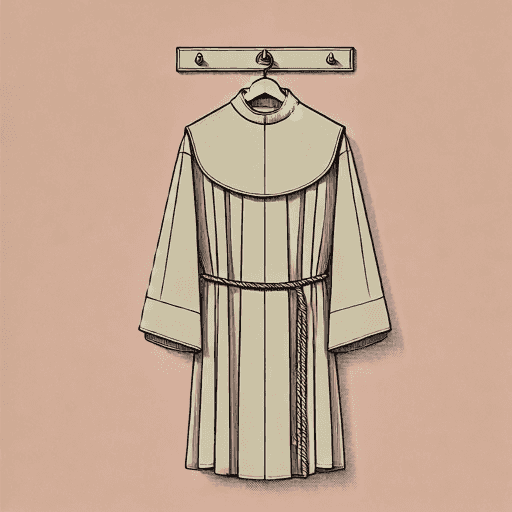
Mrs. Bainbridge’s actions are driven by a lifetime of repressed desire and corrosive jealousy. Her final confession reveals that she, not her daughter, Sadie, had the foundational affair with Wilkinson. His subsequent affair with her own daughter ignited a long-simmering rage that festered for decades. This envy of Sadie’s youth and beauty, which she saw as having stolen Wilkinson from her, is the dark secret at the heart of the family’s dysfunction. Her murder of Wilkinson was the culmination of this resentment, perversely framed in her mind as an act of protection to prevent him from seducing the third generation of Bainbridge women, her granddaughter Isabella. Her use of a hooded cassock to commit the crime connects her to the recurring motif of hooded figures, symbolizing her hidden guilt and the danger lurking beneath a veneer of respectability and matriarchal concern.
Despite her crime, Mrs. Bainbridge is not a one-dimensional villain. Her character is a study in the destructive potential of secrets and the pathology of a woman constrained by societal expectations. As the “plainest” of her sisters, she cultivated a persona of intellectual superiority and iron will, but this was a defense against her own feelings of inadequacy and unrequited passion. Her love for her granddaughters appears genuine, yet it is inextricably linked to her own thwarted desires and jealousies. In the end, her desperate attempt to control the narrative and protect her family’s legacy leads to its complete unraveling. Her confession and subsequent suicide are the final, tragic acts of a woman whose entire life was a carefully constructed story.
Sadie Bainbridge-Stafford
Sadie is a round character whose significance lies in her past actions and her symbolic embodiment of the theme of Inherited Trauma and the Pathology of Female Pain. Though she is mentally and emotionally absent for much of the present narrative, her life story is the key to the Bainbridge family’s dysfunction. Famously beautiful and desired, Sadie’s sense of self was entirely dependent on male attention. Her value, as defined by her society and her family, resided in her looks, leaving her with no inner resources when faced with hardship. Her affair with Wilkinson, which resulted in the birth of her daughter Iris, set in motion the tragedy that destroyed her and rippled through the generations.
Sadie’s character is a portrait of psychological disintegration. After Iris’s birth and later death, Sadie developed a mental illness, leading to her forced hospitalization and eventual lobotomy. The novel frames her condition as the result of a patriarchal society that pathologizes female desire and grief. Her desperate neediness and violent outbursts were the external manifestations of a woman trapped by her own beauty and the limited roles available to her. She became a cruel and neglectful mother, particularly to Isabella, because she resented her daughters for eclipsing her and for representing the responsibilities that had tethered her.
Although she functions as a red herring for Wilkinson’s murder, Sadie’s primary role is that of a catalyst. Her life is a cautionary tale about the consequences of secrets and the psychological cost of living as an object of desire. The lobotomy, a violent medical procedure intended to “cure” her, symbolizes the brutal societal effort to control and silence inconvenient female emotion. While she appears as a confused and pitiable figure in the present, her past actions—her recklessness, affairs, and maternal failings—are the source of the trauma that has defined Isabella’s character and motivated Mrs. Bainbridge’s murderous rage. Sadie is a living embodiment of the trauma that is passed from mother to daughter.
Nicole Bainbridge
A round, dynamic character and one of the three Bainbridge granddaughters, Nicole serves as a foil to her cousins, representing a political rather than a personal form of rebellion. A Berkeley student and a self-declared communist, Nicole despises her family’s wealth and the capitalist system that produced it. Her political fervor, however, is portrayed as somewhat naive and performative: It is fueled by a desire to impress her working-class lover, Sal Ibarra, and to carve out an identity separate from her privileged upbringing. She is intelligent and judgmental but also, as her grandmother notes, “the most likely to make a catastrophic mistake entirely out of self-delusion” (132). Her willingness to provide a false confession for the 1941 police car bombing to protect Sal reveals her capacity for misguided idealism. Initially a primary suspect in Wilkinson’s murder due to her vocal hatred of him and her fabricated alibi, Nicole’s arc forces her to confront the romanticized and abstract nature of her political convictions when faced with the brutal reality of the justice system.
Cassie Bainbridge
The most pragmatic of the Bainbridge granddaughters, Cassie is a round, dynamic character who acts as a foil to her more emotionally or intellectually driven cousins. Described by her grandmother as a fearless, practical “natural huntress” (114), Cassie’s defining trait is her unwavering loyalty. While her cousins grapple with psychological trauma or political ideology, Cassie’s narrative is grounded in direct, protective action. This is most evident in her romantic relationship with Yuko Sasaki and her determined efforts to shield Yuko and other Japanese Americans from internment. This subplot highlights her quiet courage and moral clarity, placing her in direct opposition to the racist wartime policies of the era. Though she participates in the joint alibi, her motivations are rooted in a fierce sense of justice, making her the most straightforwardly heroic of the three sisters.
Walter Wilkinson
The victim of the central murder, Wilkinson is a flat character who functions as a posthumous antagonist. A charismatic and handsome presidential candidate, he presents a public image of progressive politics, even advocating for desegregation. This respectable façade, however, conceals a private life of reckless philandering and moral corruption. His secret, long-running affair with Sadie, which resulted in the births of Iris and Isabella, is the novel’s inciting incident, triggering decades of familial trauma, jealousy, and eventually his own murder at the hands of Mrs. Bainbridge. Wilkinson embodies a particular kind of male privilege and power; Mrs. Bainbridge describes him as a “sybarite” who used women and discarded them without a thought for the consequences. His death is not merely a political assassination but a deeply personal act of revenge for the destruction he wrought upon the Bainbridge family.
Miriam Milsap
Sullivan’s 11-year-old niece, Miriam, serves as his moral compass and a constant reminder of the heritage he attempts to deny. As a biracial child who cannot “pass,” she stands in stark contrast to Sullivan, highlighting the complexities and costs of racial identity in America. Despite her difficult upbringing with an absent mother, Miriam is resilient, intelligent, and perceptive. She forces Sullivan to confront his own loneliness and his deep-seated resistance to familial responsibility. Her precarious situation, particularly her debt to the predatory Mickey, ultimately pushes Sullivan to move beyond his self-imposed isolation and accept the role of a father figure, marking a crucial step in his own character development.
Iris Stafford
Although deceased years before the novel’s main events, Iris is a pivotal posthumous character whose tragic death haunts the narrative. Her presence is felt through the memories of her family, the ghost stories surrounding the Claremont Hotel, and the symbolism of the Dy-Dee Doll. The doll, which Iris marked to resemble her own physical imperfections, becomes a vessel for her suffering and a key to unlocking the family’s suppressed history. Iris’s death is the catastrophic event that fractured the Bainbridge family, precipitating her mother Sadie’s mental illness, shaping her sister Isabella’s psychology, and fueling their grandmother Mrs. Bainbridge’s decades-long rage. Iris represents a lost and damaged innocence that is central to the theme of Inherited Trauma and the Pathology of Female Pain.
Diarmuid Doogan
Doogan, the ambitious district attorney, is a flat character who represents a self-serving and prejudiced justice system. He pursues the high-profile case for political gain, readily targeting the Bainbridge family and later the Japanese Americans with little concern for actual guilt. He acts as a foil to Sullivan’s more methodical, truth-seeking approach to police work.
Juanita Juárez
Juanita, the Claremont Hotel maid, is a flat character whose testimony is central to the theme of The Unreliability of History and Memory. As a working-class Mexican woman, she is caught between the powerful Bainbridge family and the police. Her initial lies and eventual, fearful confession highlight her vulnerability and the way that truth is distorted by fear and power dynamics.
Yuko Sasaki
Yuko is a flat character whose plight illuminates the racism that Japanese Americans faced during World War II. Forced to hide their identity and live as fugitives to avoid internment, passing is not merely a social strategy for them but a tactic for survival. Yuko’s story provides the context for Cassie’s heroism and exposes the deep-seated prejudice of the era.
Roger Stafford
Roger, Isabella’s nominal father, is a flat character defined by bitterness and resentment. His discovery that he is not Iris’s biological father turns him into a cold and hostile figure. His cynical warnings to Sullivan about Isabella reveal the depth of his disillusionment and the emotional poison that has infected the family.
Chief Greening
Chief Greening serves as a minor antagonist and a flat character representing an older, more complacent form of law enforcement. His deference to the wealthy Bainbridge family and his casual prejudices act as an obstacle to Sullivan’s investigation, forcing Sullivan to work around the official chain of command.

Unlock analysis of every major character
Get a detailed breakdown of each character’s role, motivations, and development.
- Explore in-depth profiles for every important character
- Trace character arcs, turning points, and relationships
- Connect characters to key themes and plot points