62 pages • 2-hour read
The Golden Gate: A Novel
A modern alternative to SparkNotes and CliffsNotes, SuperSummary offers high-quality Study Guides with detailed chapter summaries and analysis of major themes, characters, and more.
Summary
Background
Chapter Summaries & Analyses
Character Analysis
Themes
Symbols & Motifs
Important Quotes
Essay Topics
Book Club Questions
Tools
Part 3, Chapter 27-EpilogueChapter Summaries & Analyses
Content Warning: This section of the guide includes discussion of death, child death, death by suicide, graphic violence, child sexual abuse, racism, and mental illness.
Part 3, Chapter 27 Summary: “1944: Tuesday, March 21”
Sullivan quizzes Miriam on vocabulary at his Berkeley home, but she once again expresses her desire to quit school and work to pay off her mother’s debt to Mickey. Isabella visits and brings Miriam books, including Anne of Green Gables. Isabella offers to secure Miriam a place at a boarding school with a full scholarship. She tells Sullivan that her grandmother got Yuko into a graduate program in Cornell University so that she could avoid internment, but Yuko is refusing to go and leave her old, ailing father behind. Isabella asks Sullivan to transport Yuko and her Japanese companions to safety in Nevada, saying that no one would think of checking a police officer’s car.
Sullivan agrees to help on the condition that Isabella has dinner with him afterward. He then drives the police van carrying Yuko and her family through redwood country toward Nevada. They successfully pass several police roadblocks during the journey. While traveling, Yuko shares her family’s experience with internment and the racism that forced them into hiding. Sullivan confesses his shame over his own participation in the internment raids.
Part 3, Chapter 28 Summary: “1944: Wednesday, March 22”
Returning from the Nevada trip, Sullivan learns that Jane Chao’s killer has been arrested. The murderer is identified as a man named Ping, and he killed Jane for political reasons under Madame Chiang’s orders.
Isabella visits Sullivan’s home to thank him for his help with Yuko and her Japanese companions and confirms that Miriam’s full scholarship to Sacred Heart Academy has been secured. She invites both Sullivan and Miriam to dinner at the Claremont the following evening.
Sullivan visits the five-and-dime store that Miriam works at to confront Mickey about Miriam’s debt, but he discovers that the establishment is now owned by mobster Tony Lima. An employee threatens them, saying that Miriam must either return to work or pay off her debt in full. At home, Sullivan finds Miriam struggling with her homework and tells her about the boarding-school opportunity. She resists until Sullivan angrily compares her to her mother, which prompts her to reluctantly agree to take the entrance examination.
Part 3, Chapter 29 Summary: “1944: Thursday, March 23”
Sullivan and Miriam meet Isabella for dinner at the Claremont’s Prime Rib Room, but Isabella appears troubled. While Sullivan and Isabella converse, Miriam explores the hotel. During their conversation, Isabella begins feeling faint and excuses herself. Madame Chiang approaches Sullivan’s table and shows him a threatening letter that appears to be from Isabella and addressed to the murdered Wilkinson. She proposes exchanging the letter for Ping’s release from custody.
Panicked, Sullivan cannot locate Isabella anywhere in the hotel and rushes to search the Tower section. He discovers Isabella with Miriam on the eighth floor, where Miriam’s head is dangerously close to the opening of the same laundry chute that Iris fell into. Sullivan quickly pulls Miriam to safety and observes Isabella’s clearly disoriented and confused mental state. Recognizing the severity of the situation, Sullivan makes the decision to arrest Isabella for Wilkinson’s murder.
Part 3, Chapter 30 Summary: “April 1944”
Two weeks later, Sullivan forfeits his deposit on a dream house to purchase a modest home in West Berkeley. He formally adopts Miriam, knowing that her mother will never be a capable parent, and he pays off her debts. During a jail visit, Isabella tells Sullivan that she is leaving Miriam an inheritance. She describes the state of confusion she experienced when she was with Miriam in the Claremont’s Tower, and she wonders if she might have murdered Wilkinson while in a similar psychological state. Then, she recalls seeing a hooded figure near Iris on the day she died. Sullivan asks her who it was, and Isabella tells him (the novel later reveals that the hooded figure she saw was her grandmother).
Sullivan then visits Mrs. Bainbridge and lies to her, claiming that a graphologist has confirmed that Isabella wrote the threatening letter to Wilkinson. Distraught by this news and believing that Isabella’s conviction is inevitable, Mrs. Bainbridge excuses herself and ingests poisonous oleander leaves. As she dies, she directs Sullivan to her written confession, which she has prepared.
The testimonial reveals her own secret affair with Wilkinson years earlier, soon after her husband, Lionel, died. She was deeply infatuated by him, but Wilkinson abandoned her and began an affair with Sadie, who was just 17 at the time. When Mrs. Bainbridge found out, she was both jealous and enraged. She met with Wilkinson and threatened to have him arrested for rape since Sadie was under 18; to avoid charges, he promised to leave and never return. However, he left Sadie pregnant.
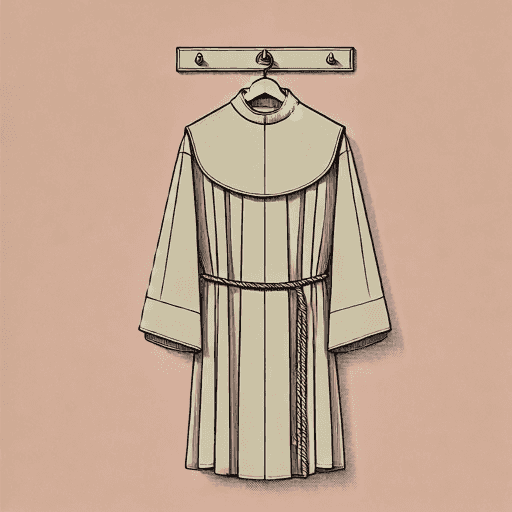
Nine years later, Mrs. Bainbridge was shocked when she spotted Wilkinson at the Claremont with Sadie. She had a cassock with her that the monks at St. Andrew’s had gifted her, and she wore this hooded garment and entered the hotel to investigate. She observed Sadie and Wilkinson arguing and, like them, paid no attention to Iris, who climbed into the laundry chute and fell to her death. Rushing to the chute to see if she could pull Iris out, Mrs. Bainbridge saw her silver necklace caught on the chute and took it.
Years later, she once again saw Wilkinson at Madame Chiang’s party. She noticed that he couldn’t keep his eyes off Isabella and deduced that he would attempt to seduce her next. When she found the note from Wilkinson asking Isabella to meet him in his hotel room at midnight, Mrs. Bainbridge was furious. She wrote him an angry letter in Isabella’s handwriting, asking him to stay away. However, on the day of the proposed liaison, she called the hotel and discovered that he was still a guest there. So, she went to the hotel with a gun and waited for him in his room. When he showed up before midnight, she shot him, believing that she was protecting Isabella by doing so. She put the jade seal she stole from Madame Chiang’s house into his mouth—among other detritus—to implicate Madame Chiang in the murder. Then, in case that failed, she went to the Stafford house and hid the gun there, believing that if the police thought Sadie was the murderer, they wouldn’t be able to convict her since she is mentally unwell.
Epilogue Summary
Sullivan and Miriam celebrate her completed adoption at an ice cream parlor. He reflects on his lie to Mrs. Bainbridge, privately acknowledging that the real graphology report concluded that the threatening letter was a forgery, not Isabella’s genuine handwriting. Miriam explains that her encounter with Isabella at the laundry chute was not malicious; instead, Isabella was experiencing a dissociative, sleepwalking-like state that she had sometimes experienced since childhood.
This altered mental state had triggered Isabella’s suppressed memory of seeing her grandmother wearing a hood on the day Iris died. The remaining mysteries resolve: Ping has confessed to killing Jane Chao for political reasons, and Isabella is cleared of all charges. Jane was the one who fired the first warning shot at Wilkinson at the Claremont, delivering a message from Mao that he expected Wilkinson’s support. Further, the Dy-Dee doll in Wilkinson’s closet had belonged to Iris. Wilkinson took it from Sadie’s tennis bag on the day Iris died, and he brought it with him to show it to Isabella as proof of his paternity. All these years, Mrs. Bainbridge had no idea that Wilkinson was Isabella’s father.
Part 3, Chapter 27-Epilogue Analysis
Mrs. Bainbridge’s final testimonial serves as the novel’s ultimate act of narrative manipulation, exemplifying The Unreliability of History and Memory. She has orchestrated multiple false stories to protect her family while concealing her own guilt. Her written confession demonstrates the constructed nature of truth that has defined the entire investigation. The confession’s formal structure—presented as a legal document prepared for the DA—underscores how even this final revelation is a carefully crafted performance. The testimonial reveals that every major “truth” in the case has been a lie: Isabella’s threatening letter was forged, Sadie’s apparent guilt was manufactured, and even the Chinese political angle was partially orchestrated. This systematic deconstruction of narrative reliability reinforces the novel’s central assertion that truth is always mediated through the storyteller’s agenda.
Sullivan’s ultimate decision to lie to Mrs. Bainbridge about the graphology report complicates traditional notions of justice, once again highlighting how narrative controls truth. His knowledge that the threatening letter was actually a forgery, combined with his certainty of Mrs. Bainbridge’s guilt, creates a moral dilemma that the legal system cannot resolve. By telling her that the graphologist confirmed Isabella’s authorship, he forces Mrs. Bainbridge to choose between her own survival and her granddaughter’s life, ultimately compelling her to confess. His manipulation suggests that moral action sometimes requires strategic deception.
The resolution of the hooded figure motif connects directly to Inherited Trauma and the Pathology of Female Pain, revealing how Mrs. Bainbridge’s actions have perpetuated a cycle of destruction across generations. The revelation that Mrs. Bainbridge wore the monk’s cassock while following Iris to her death transforms the symbol from one of religious protection into one of predatory surveillance. This image of the grandmother as a hooded stalker literalizes the way that family secrets and trauma are passed down through generations of women, with each generation being both victims and perpetrators of the cycle. Mrs. Bainbridge’s hyperbolic description of her psychological state during moments of crisis—“Rather I am crystalline. I become a much larger version of myself and I can sing and paint and compose and waltz beautifully and do the trapeze” (358)—mirrors the dissociative mental states experienced by both Sadie and Isabella, suggesting that the family’s mental illness is a shared response to the suppression of female desire and agency.
Sullivan’s decision to help the Japanese American refugees represents a critical turning point in his moral arc and deepens the novel’s examination of The Social and Psychological Costs of Racial Passing. For much of the novel, Sullivan has rationalized his assimilation into whiteness as being necessary for personal and professional survival, even when this required him to enforce policies he found abhorrent. His participation in the Japanese internment raids haunts him throughout the journey to Nevada, particularly his memory of forcing his mother’s friend, Mrs. Obate, onto the bus. He confesses to Yuko, saying, “After Berkeley’s internment order came down in late April 1942, the military made us—the Berkeley PD—do the dirty work” (322), which marks a moment of reckoning and reveals how his racial passing has required him to participate in systems of racial oppression. This mission becomes a form of atonement, allowing him to use his position of privilege to protect rather than persecute. The successful completion of the mission marks a turning point in his moral development, suggesting that racial passing can be wielded ethically in acts of resistance and solidarity.

Unlock all 62 pages of this Study Guide
Get in-depth, chapter-by-chapter summaries and analysis from our literary experts.
- Grasp challenging concepts with clear, comprehensive explanations
- Revisit key plot points and ideas without rereading the book
- Share impressive insights in classes and book clubs