42 pages • 1-hour read
The Hidden Stairs and the Magic Carpet
A modern alternative to SparkNotes and CliffsNotes, SuperSummary offers high-quality Study Guides with detailed chapter summaries and analysis of major themes, characters, and more.
Symbols & Motifs
The Door Under the Stairs and the Hidden Stairs
The door under the stairs in Eric’s basement and the rainbow staircase collectively serve as portals between the ordinary world and the magical world of Droon, and they therefore stand as symbols of Escaping the Mundane World and Embracing New Growth. Both the door and the stairs have qualities that mark them as not fully belonging to the ordinary world. Eric has seen the little door under the stairs many times, but until now, he has never thought to open it or explore what lies beyond. This fact suggests that the door operates as a seal between the two worlds; it is a door meant to be opened only at the right time and remains closed otherwise.
The stairs that Eric and his friends discover beyond the door have even more clearly magical qualities, for they appear and disappear unexpectedly. The staircase’s glimmering appearance and elusive qualities also make it similar to an actual rainbow. Traditionally, many mythological systems have regarded rainbows as a common means of connection between the ordinary world and more magical realms. For example, both Norse and Greek mythology depict rainbows as bridges between the world of gods and the human world. In this way, the door and the hidden staircase represent the possibility of connecting with the extraordinary at any moment on an ordinary day.
Whimsical Names
In The Hidden Stairs and the Magic Carpet, many of the characters and places bear absurd names that work together to imbue the text with a lighthearted, whimsical tone and further develop the theme of Escaping the Mundane World and Embracing New Growth. From the Ninns and the groggles to Galen’s pilka and the benevolent “spider-troll,” Max, these names utilize repeated sounds, doubled letters, rhyming, and unfamiliar combinations of sound that stand out from typical English names. Notably, some of the names in the story are also charactonyms—names that reflect the characters’ key traits. For example, the name “Lord Sparr” contains the verb “spar,” which carries connotations of hand-to-hand combat and an overall sense of irascibility. In this way, Lord Sparr’s very name reflects his aggressive, dangerous nature. “Galen Longbeard” is another charactonym, for his last name emphasizes his stereotypically wizardly appearance and reinforces his characterization as a wise, elderly mentor figure. All of the story’s fantastical names have comic qualities that keep the tone of the narrative light and fun. By contrast, the names of the three friends—Eric, Julie, and Neal—strike a familiar and mundane tone by comparison, emphasizing the key differences between Droon and the Upper World.
The Flying Carpet
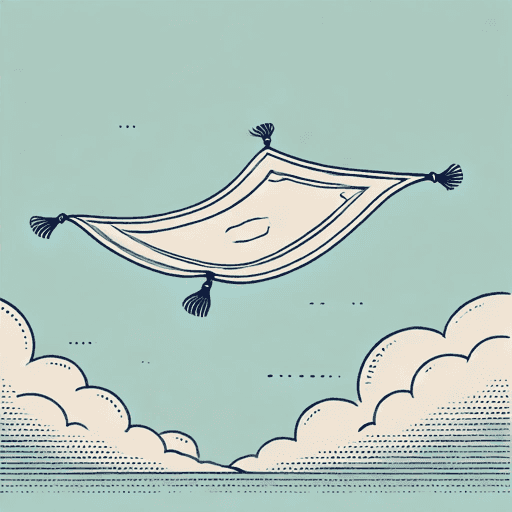
The flying carpet that the children ride in Chapters 9 and 10 is another symbol that supports the idea of Escaping the Mundane World and Embracing New Growth. In particular, it suggests the freedom that becomes possible in the magical realm, where new powers allow the children to shrug off the constraints of ordinary life—like gravity. The children’s ride on the flying carpet is liberating in a literal and a spiritual sense, for just as they use it to escape from Sparr’s tower, they also experience the thrill of a ride that would be impossible in their own reality.
When the children are trapped in the narrow tower room, they are keenly aware of their confinement. They compare the room to a dungeon several times, making it clear that they feel imprisoned and helpless. Then, Keeah spots the pile of rugs and finds one that is green “with purple spirals in the corners” (67). The purple spirals are a whimsical touch that shifts the tone, indicating that the children’s fortunes are about to change. Similarly, when the carpet rises into the air, it goes up with a “Swoosh!” (68). The onomatopoeia, italics, and exclamation mark all emphasize the excitement inherent in this development, and this tactic repeated three more times as the children use the flying carpet to flee the tower room and take to the skies. These detailed descriptions make it clear that the children are thrilled by the promise of adventure that the appearance of a flying carpet represents. Importantly, however, their determination to use this item as a means of escape also illustrates their own internal growth, for rather than passively wandering from one plot point to the next, they now decisively engineer their own escape, altering their destiny and seizing the new adventures that their acquaintanceship with Keeah promises to bring them. This dynamic becomes particularly prominent when the carpet responds to Julie’s voice, implying that she has the innate right to dictate where the carpet will go. Later, as the children “[swerve] through narrow mountain passes and over icy peaks” until they see “a rainbow of colors [glistening] ahead of them” (73), their arrival at the rainbow staircase portrays the magic carpet ride as a sort of apotheosis—the highest point of a hero’s adventure, and it is clear that this part of the journey acts as a magical or divine reward for the heroes’ hard work and inner growth.

Unlock the meaning behind every key symbol & motif
See how recurring imagery, objects, and ideas shape the narrative.
- Explore how the author builds meaning through symbolism
- Understand what symbols & motifs represent in the text
- Connect recurring ideas to themes, characters, and events