The House of the Seven Gables
The House of the Seven Gables
A modern alternative to SparkNotes and CliffsNotes, SuperSummary offers high-quality Study Guides with detailed chapter summaries and analysis of major themes, characters, and more.
Summaries & Analyses
Quizzes
NEWReading Tools
Themes
The Legacy of Violence
The history of the Pyncheon family is one rooted in a terrible crime. The house is built on land stolen from Matthew Maule, who was falsely accused and executed for witchcraft due to Colonel Pyncheon’s treachery. Before dying, Matthew Maule cursed the colonel—a curse that is remembered by the townspeople, and which appears to shape the lives of his descendants even many generations later. Through the dilemmas of the present-day Pyncheon clan, Hawthorne explores the legacy of violence and how different people choose to grapple with an uncomfortable past.
Judge Pyncheon embraces his role as the heir to this violent legacy, and both his personal qualities and actions mirror those of his cruel ancestor, despite the two being separated by over 150 years. Judge Pyncheon both bears a strong physical resemblance to Colonel Pyncheon, as evidenced by the colonel’s portrait, and behaves in a similar greedy manner: He willingly enables Clifford’s imprisonment, and he attempts to extort Hepzibah and Clifford into handing over the old land deed to him so that he can become even richer. Judge Pyncheon’s behavior thus represents an active continuation of the family’s violent legacy, perpetuating cycles of violence and injustice instead of seeking to end them.
However, there are some Pyncheon family members who wish to break with this violent legacy. Uncle Jaffrey is the first to attempt this: He wishes to hand over the house to the Maule clan, but his sudden death foils his plans. Both Hepzibah and Clifford also represent a gentler, more compassionate side of the family, with Hepzibah living a modest life filled with tender-hearted care for others, and Clifford appearing as a timid and vulnerable man who does not seek vengeance for his false imprisonment. The lack of avariciousness and the humane qualities of these Pyncheon family members suggest that choosing to mirror the actions of one’s ancestors is ultimately a choice, not a hereditary curse. In choosing to live lives of integrity and humanity, these Pyncheons are breaking with Colonel Pyncheon’s legacy instead of continuing it.
At the novel’s close, it is the good-hearted Pyncheons who emerge victorious. Judge Pyncheon’s sudden death rids them of the threat to their well-being and paves the way for Clifford’s exoneration. Ironically, their escape from the house of the seven gables is enacted thanks to an inheritance from Judge Pyncheon: They inherit his house in the countryside, and move there to begin happy new lives for themselves—a victory that symbolizes the triumph of love and goodness over greed and violence.
The Complications of Home
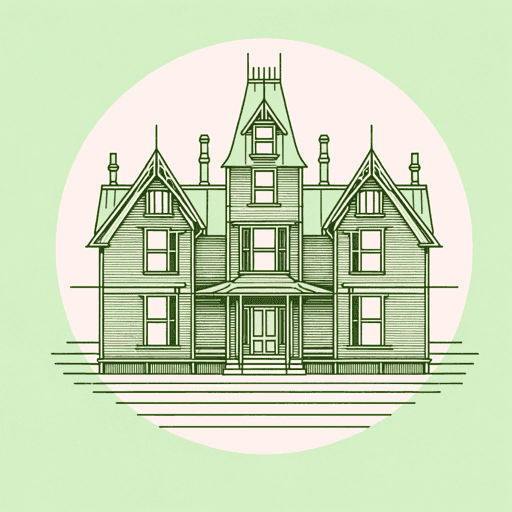
The question of what a home should be runs throughout the novel, with the characters having a complex relationship with the house of the seven gables. The house of the seven gables is gloomy and decayed, reflecting both The Legacy of Violence it embodies and the characters’ states of mind. In order to find peace, the characters must therefore confront what home really means to them.
The house is both a curse and a blessing to Hepzibah and Clifford. Though the land on which it was built was obtained through Colonel Pyncheon’s killing of Matthew Maule, the house is also a refuge for Hepzibah and Clifford. Hepzibah has the house as a place to live in spite of her poverty, and when Clifford is finally released from prison, he has a home to return to. However, the house is also a different kind of prison for them both: They feel entrapped by it and sometimes struggle to connect with the outside world. When Hepzibah and Clifford attempt to go to church, they find themselves unable to follow through, with Clifford sadly remarking that they are “ghosts.” There is thus the sense that the siblings are both sheltered by the house and suffocated by it, suggesting that it is ultimately somewhere they must escape from if they are to truly move on with their lives.
Holgrave represents a different conception of home. He argues that houses should be consciously made of fragile materials so that they collapse after a generation, enabling each generation to build a home of their own. Holgrave’s extreme opposition to inheritance of any kind, and his desire that everything be forever “new,” reflects both his own “self-made” background and his secret identity as a Maule: He is both aware of his own troubled connection to the house and yet conscious that he must break free of it. Holgrave’s deep mistrust of the concept of “home,” however, is also problematic: It prevents him from forming deep interpersonal connections with others and leaves him rootless, unable to commit to any particular place or way of life.
The novel’s conclusion suggests that there can be a middle ground between these two conceptions of home, one that is healthier and more liberating. In leaving the house of the seven gables, Clifford and Hepzibah choose to start a new life in a place that is neither gloomy nor too heavily marked by a troubling past. However, the fact that their new house is still an inheritance—from Judge Pyncheon’s estate—suggests that a total break with their family identity is not necessary to create a better home: this identity is transformed instead of discarded. Similarly, Holgrave abandons his former aversion in favor of settling down with Phoebe, and admits that he would like to have a family home for their children. As the new couple’s home will be built on love and harmony instead of violence, the novel implies that the home they leave their children will be a joyous inheritance.
The Influence of the Past on the Present
Hawthorne’s work is known for its interest in the past, specifically the past of 17th-century Puritan New England. The Scarlet Letter (1850), his best-known work, takes this past as its setting, grounding itself in Puritan culture. The House of the Seven Gables, however, considers the relation between past and present within Hawthorne’s own moment of the mid-1800s, with the characters and narrator constantly looking back on the past and experiencing the past in the present. The novel thus examines how the past can influence the present in various ways.
Living in the family home, the house of the seven gables, grounds the current Pyncheon generation in the distant past. The house is the direct result of the violence of their ancestor, Colonel Pyncheon, who insisted on the execution of Matthew Maule to seize his land. The house is built on this land, and the Pyncheon descendants are both aware of this legacy and uncertain of how best to address it. The presence of Colonel Pyncheon’s portrait is a reminder of both the house’s provenance and the past’s ongoing power. The notion of inheritance is, on the one hand, genealogically linear, with children descending from parents (an ancestral blood “line”), and also metaphorical, with the past seemingly repeating itself in subsequent generations, as in the sudden and mysterious deaths of both Uncle Jaffrey and Judge Pyncheon.
Another link between past and present emerges in the brief train trip that Hepzibah and Clifford take toward the end of the novel, during which Clifford insists that history is spiral instead of linear in form. Clifford insists that time moves circuitously “backward” and “forward,” with progress entailing a revision and perfection of the past (and, thus, is spiral in nature). The train, Clifford claims, “spiritualizes” travel, making a nomadic existence easier and revitalizing this older nomadic lifestyle against the more recent sedentary lifestyle of ensuing eras. Clifford’s theory thus suggests that the present responds to, and revises, the past, perfecting some of its elements instead of discarding or replacing them wholesale.
The emotions and experiences of the characters and their conceptions of time therefore challenge the idea of time as strictly linear, continuously blurring the lines between past and present. While the past can be oppressive and a hindrance, it can also provide sources of earlier ways of being that can be, as Clifford argues, perfected via modern means and understandings. In this way, it is possible for past and present to exist simultaneously and in harmony with one another.

Unlock every key theme and why it matters
Get in-depth breakdowns of the book’s main ideas and how they connect and evolve.
- Explore how themes develop throughout the text
- Connect themes to characters, events, and symbols
- Support essays and discussions with thematic evidence