46 pages • 1-hour read
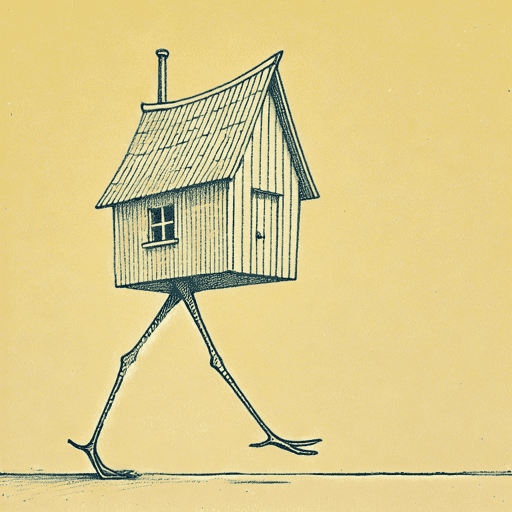
The House with Chicken Legs
A modern alternative to SparkNotes and CliffsNotes, SuperSummary offers high-quality Study Guides with detailed chapter summaries and analysis of major themes, characters, and more.
Chapters 12-17Chapter Summaries & Analyses
Content Warning: This section of the guide includes discussion of death and bullying.
Chapter 12 Summary: “The Next Guardian”
After The Gate closes, Marinka is immobilized. She tells herself Baba will return, but she doesn’t. Then she realizes Jack has gone missing, too. She cuddles with Benji and waits, deciding Baba will return when The Gate opens again. She spends the night ruminating on everything that has happened. Finally, Jack returns. Marinka begs the house to open The Gate, but nothing happens. She is clutching Baba’s headscarf when a dead couple knocks on the door. Marinka listens intently to their stories. Then, The Gate appears. Marinka follows after the couple, calling out to Baba.
Chapter 13 Summary: “A Painful Splitting Sound”
The house yanks Marinka back from The Gate. She begs the house to let her go so she can find Baba, but the house has closed The Gate once more. Marinka blows out the candles and discovers a crack in the house. Frightened, she begs the house to go to the market—hopeful she might find something there to heal the house. The house gives in, and they eventually arrive at “one of the biggest street markets in North Africa” (118). Unable to sleep, Marinka dons Baba’s head scarf and heads out in search of the Old Yaga she and Baba have visited in the past.
Chapter 14 Summary: “The Old Yaga”
Marinka arrives at the Old Yaga’s house. She welcomes Marinka inside. Marinka begs her for answers about Baba. The Old Yaga explains that only one Yaga has ever gone through and returned from The Gate. In the story, the Yaga led a baby through The Gate. The baby returned several times, and each time the Yaga brought her back through The Gate. However, the baby didn’t want to stay put and kept returning. The Yaga was too tired to take her back after her harrowing journeys beyond The Gate and let her stay among the living. Marinka realizes the story is about her and Baba. Baba is too old now to return after crossing over once more.
The Old Yaga explains that Marinka must assume the Guardian role now that Baba is gone. If she doesn’t, her house will not survive. Yaga houses need the ceremonies of the dead to stay alive. Still unable to believe that Baba won’t return, Marinka lies to the Old Yaga and swears she wants to be Guardian and is eager to bond with her house; really, Marinka wants The Gate to reappear so she can go in search of Baba once more.
On the way home, a little girl insults Marinka for wearing a headscarf and looking like a witch. Marinka removes Baba’s scarf, hurt and frustrated.
Chapter 15 Summary: “Salma”
Marinka returns home and yells at the house, blaming it for taking Baba and refusing to help her. Finally, she falls asleep. In the morning, someone knocks at the door. It’s the little living girl named Salma who insulted Marinka in the market. Her father made her come and apologize. She offers Marinka a new scarf and remarks on her house and lamb. Then she invites Marinka to join her for a walk in the market.
A relieved Marinka spends the day touring the market with Salma. They visit her sister Aya’s stall, where Marinka gets a new dress. When they part ways, Salma invites Marinka to come swimming with her and her friend Lamya the next day. Marinka doesn’t know if the house will move on by tomorrow but promises to come if she can. She feels happy and hopeful.
Chapter 16 Summary: “Topsy-Turvy”
Back at the house, Marinka is horrified to discover that “the house [is] falling apart” (140). She feeds Benji and Jack before changing into her old dress. Then she procrastinates building the fence around the house and heads back out to see the Old Yaga again.
At the Old Yaga’s, Marinka asks about guiding the dead and bonding with her house. The Old Yaga encourages her to play with her house, insisting it takes time to form this trusting connection. Marinka remembers running and chasing the house as a little girl but has no interest in games now. She’d rather do the bonding ceremony to speed up the process. She needs the house to trust her so she can open The Gate as soon as possible. The Old Yaga promises to arrange the ceremony and associated party.
Back at home, Marinka notices the house twitching in its sleep. She worries the house is planning to run and ties it up so she can stay a bit longer.
Chapter 17 Summary: “The Riad”
Marinka digs out her new dress and scarf the next morning, horrified to discover that Jack tore the shoulder. She pulls out Baba’s sewing kit and a photo of her and Baba falls out. She feels sad and angry. Finally, she dresses, and Lamya and Salma arrive. They head out for a swim. The girls make fun of Marinka for being so skinny and looking like a witch. They interrogate her about her relationship with the Old Yaga, too. When they pass a little boy, they tease him, call him names, and push him down. Marinka is horrified but stays silent. She heads home afterwards, disappointed by the living and more lonely than ever.
Chapters 12-17 Analysis
Baba’s absence from Marinka’s life furthers the novel’s theme of the Tension Between Tradition and Self-Determination. Now that Marinka is on her own, she is expected to assume Baba’s former Guardian role and shepherd the dead through The Gate on her own. Marinka is still in the denial stage of her grieving process. She does not want to believe that Baba is gone for good, and thus cannot accept that she has no choice but to become Guardian. This is why Marinka becomes so determined to retrieve Baba and return their lives to normal. She “step[s] calmly into The Gate” (113) in Chapter 12, seeks answers from the Old Yaga regarding Baba’s whereabouts in Chapters 13 and 14, and makes plans to perform the Ceremony of Bonding throughout the remainder of the excerpt. She assures the Old Yaga that she is ready to assume her Guardian role, but remains at odds with her fate. Marinka does not want to believe that Baba is gone because she still wants autonomy over her life and future. Baba’s potential return is the only way Marinka can imagine creating a life on her own terms; without Baba, there is no one to guide the dead and her house won’t survive. The images of her donning and removing Baba’s headscarf throughout the excerpt underscore her internal conflict. On the one hand, the scarf allows Marinka to maintain a connection with her late grandmother; on the other hand, the scarf reminds her of her connection to the Yaga tradition. She does not want to assume Baba’s role or to be associated with the rituals of the dead; however, she longs for her grandmother’s closeness because she is lost and alone without her.
Marinka’s repeated encounters with the Old Yaga, Salma, and Lamya throughout Chapters 12-17 contribute to the novel’s theme of the Search for Friendship and Belonging. When Marinka first seeks out the Old Yaga at the market, she tries to manipulate her into bringing back Baba from beyond The Gate. She lies to her about her desires and plans. She feigns understanding when the Old Yaga explains why Baba will not be returning. Despite her dishonesty with the Old Yaga, her character offers Marinka the possibility of a new guide. Marinka is not ready to accept her friendship and counsel because she is still battling between tradition and autonomy. Marinka’s acquaintanceships with Salma and Lamya stretch her between extremes, too. Marinka has spent “so long wanting to make friends with the living” (161), but Salma and Lamya’s overt cruelty toward her and others makes Marinka wonder if she “like[s] them at all” (161). The girls represent vibrancy and freedom: They have beautiful dresses and hair and are at liberty to roam the market and explore without supervision. Marinka envies their lives and hopes that spending time with them will offer her friendship and newness. However, the girls do not accept Marinka for who she is and intensify her loneliness and longing. Salma and Lamya may be living and may have everything Marinka thinks she wants; but their cruelty is off-putting. Meanwhile, the Old Yaga represents the life Marinka is eager to abandon; but her kindness endears her to Marinka.
Still caught between what is expected of her and what she wants for herself, Marinka feels alone wherever she goes. She even feels abandoned and upset when she is at her house because she sees the house as her enemy instead of her ally. The accumulating images of the house cracking or twitching capture its distress. Marinka has not been faithful or attentive to the house and it is suffering as a result. The house is a symbol of home and belonging; Marinka hasn’t accepted this yet because she hasn’t accepted her destiny as Yaga. As a result, Marinka risks being on her own until she and the house make amends.

Unlock all 46 pages of this Study Guide
Get in-depth, chapter-by-chapter summaries and analysis from our literary experts.
- Grasp challenging concepts with clear, comprehensive explanations
- Revisit key plot points and ideas without rereading the book
- Share impressive insights in classes and book clubs