46 pages • 1-hour read
The House with Chicken Legs
A modern alternative to SparkNotes and CliffsNotes, SuperSummary offers high-quality Study Guides with detailed chapter summaries and analysis of major themes, characters, and more.
Chapters 6-11Chapter Summaries & Analyses
Content Warning: This section of the guide includes discussion of violence, illness, death, and child death.
Chapter 6 Summary: “Nina”
Marinka learns that the dead girl’s name is Nina. She tells Marinka her story, describing her life with her parents and siblings on their farm. Marinka introduces Nina to Benji, too. Then Nina explains how her mother and sisters got sick, but she admits she doesn’t know what’s going on. Marinka realizes she doesn’t know that she’s dead.
Over the course of the next day, Marinka hides Nina from Baba, terrified that she will discover the truth. She sneaks away to see Nina whenever she can. Marinka tells her stories about the house and all the places it goes. Nina is jealous Marinka has gotten to see the ocean. The girls continue chatting until it’s time for Marinka to help Baba with the ceremony. She is distracted throughout, terrified that Nina will pass through The Gate and leave her forever.
Chapter 7 Summary: “Learning to Swim”
Marinka can’t focus throughout the ceremony. Each time Baba calls her back to attention, she asks more about the purpose of Guardians. Baba reassures her that she’ll do well at the job. She reminds her of how she learned to swim, insisting she can assume the Guardian role with the same fearlessness. Marinka is still uninterested. She even refuses to say the guiding words for the dead as they pass through The Gate. She knows she can’t resist forever but is thrilled with “taking control of [her] life” (69) for one moment.
Chapter 8 Summary: “Serina”
Marinka finds Nina back in her room later that morning. Her form is fading rapidly. Marinka panics that she’ll soon fade away for good if she doesn’t go through the gate, but she still doesn’t want to let her go.
That evening, Marinka greets the dead with Baba. She is shocked when a little girl starkly resembling Nina appears. She introduces herself as Serina and explains that she was ill. Marinka listens intently, realizing she is Nina’s sister. She feels all of her emotions—the way Baba said she would if she truly listened to the dead—which makes it even harder to say goodbye. Marinka leans over the threshold of The Gate as she ushers Serina through; Baba drags her back.
Chapter 9 Summary: “Just a Few More Minutes”
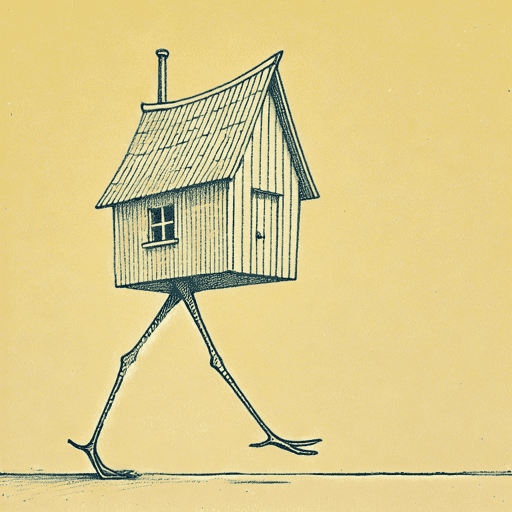
After The Gate incident, Baba sits with Marinka. She feels upset and ashamed of herself. She wants something different from her life but can’t tell Baba. Finally, she dismisses herself to her room to see Nina. Privately, she convinces the house to relocate to the ocean the next day so Nina can see it before she passes through The Gate; the house agrees, on the condition that she tell Nina she is dead and let her go. The house will also keep her secret from Baba, too.
Chapter 10 Summary: “The Beach”
While Baba sleeps, the house races to the seaside. Nina is delighted the whole ride. That evening, Baba wakes up surprised by their relocation. She suggests that she and Marinka take the night off, go skinny dipping, and sleep on the beach. Marinka protests, insisting she wants to work instead; she swears that she now wants to guide the dead. Really, Marinka wants to spend one last night with Nina before saying goodbye.
That night, Marinka and Nina take a long walk on the beach. After wandering for some time, Marinka finally tells Nina she is dead. She also tells her “about the house, The Gate, and the guiding of the dead” (91). Marinka insists that Nina must pass through The Gate before she fades away forever. Nina is okay with the revelation, but doesn’t understand why Marinka is fading, too.
Chapter 11 Summary: “Truth and Lies”
Marinka examines her hands, horrified to discover they are translucent. She reviews the events of her life and realizes she must be dead. She races back to the house and demands answers from Baba. Baba changes the topic to Nina—who is now curled up by the fire with Baba. They get into an argument about the secrets they’ve been keeping from each other.
Baba explains that Marinka died when she was a baby in the same fire that killed her parents. Baba guided them all through The Gate, but Marinka came back. Baba ended up raising her as her granddaughter in the Yaga tradition. She can feel and act like a living girl as long as she is in or near the house; the house gives her energy. Marinka realizes how trapped she is and becomes increasingly upset. Baba deflects by reminding her they have a duty to Nina. They listen to Nina tell her life story. Then Baba announces that she will have to take Nina through The Gate because she is too weak to go alone. She assures Marinka she will be fine assuming the Guardian role on her own. A desperate Marinka begs Baba not to leave as she disappears through The Gate with Nina.
Chapters 6-11 Analysis
Marinka’s adventures with Nina further the novel’s thematic explorations of the Search for Friendship and Belonging. After Marinka’s house relocates to the desert, she loses her first and only friend, Benjamin. Without Benjamin, Marinka’s loneliness intensifies. Nina’s appearance in her life offers her a second chance at friendship—this time with the dead. Only “five minutes into [their] conversation, [Marinka doesn’t] want [Nina] to leave” (53). She knows Nina is supposed to go through The Gate but procrastinates guiding her there because she is afraid of losing yet another friend. Nina’s character offers Marinka the illusion of companionship but ultimately proves as unstable a friend as Benjamin. Her disappearance through The Gate at the end of the excerpt causes Marinka to experience yet another intense loss. Whether she is befriending the living or the dead, Marinka has no certainty of community or belonging.
Baba’s surprising disappearance through The Gate in Chapter 11 intensifies Marinka’s longing for connection and safety. Marinka has relied on Baba for a sense of home and family ever since she can remember. She knows Baba may someday die and she will have to assume her role as Guardian, but this change feels far off to Marinka. She does not expect to lose her grandmother so soon. Upon departing, Baba reassures her saying, “You will be fine, Marinka. I have faith in you and the house” (104). Marinka feels helpless and alone despite Baba’s encouragement. She is only 12 years old and is unaccustomed to navigating the world or the Yaga tradition on her own. Baba’s disappearance is a plot twist that changes the stakes of Marinka’s narrative and future—particularly in the wake of her discovery that she is dead. Baba has been Marinka’s archetypal guide throughout her life. Without her, Marinka loses her sense of security and is thrust into an unfamiliar world she must navigate without direction. Marinka longs for safety and freedom but feels incapable of securing these things for herself. She wants to determine her future of her own volition, but as soon as Baba leaves her, she realizes how naive and afraid she truly is.
The revelation that Marinka is dead furthers the novel’s theme of the Relationship Between Life and Death. Marinka’s life is defined by this intersection: She resides among the living but is only allowed to commune with the dead, perpetually shepherding them between realms. Marinka feels trapped by this life because she believes she is a living girl who the dead are keeping from a life of liberty and adventure. When she discovers the truth, her entrapment becomes even more acute: “I feel dizzy and sick. How can I live here forever? If I’m dead, if I can only exist here, in this house, then all hope is lost. […] now I realize I am stuck” (98). Marinka struggles to reconcile the relationship between life and death. She wants to be a living girl with living friends and a living family. Because she is dead, her dreams of “somehow escaping [her] destiny” (98) as a Guardian immediately fade away. She is trapped between polar extremes, frustrated by the life she has been forced to live and the life she longs to live. What Marinka has yet to discover is that life and death are inextricably linked—whether she is alive or dead. Neither can exist without the other, just as Marinka and her house cannot survive without each other.

Unlock all 46 pages of this Study Guide
Get in-depth, chapter-by-chapter summaries and analysis from our literary experts.
- Grasp challenging concepts with clear, comprehensive explanations
- Revisit key plot points and ideas without rereading the book
- Share impressive insights in classes and book clubs