46 pages • 1-hour read
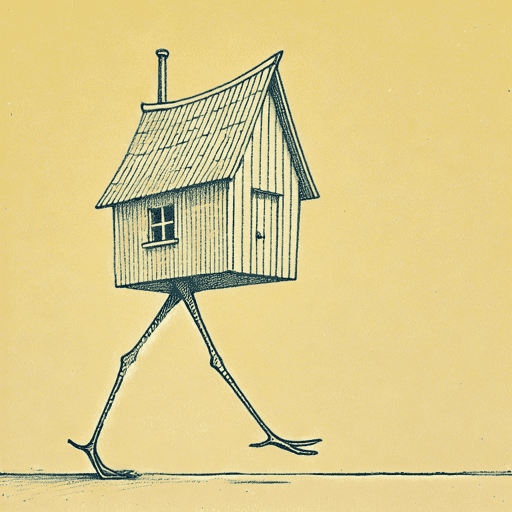
The House with Chicken Legs
A modern alternative to SparkNotes and CliffsNotes, SuperSummary offers high-quality Study Guides with detailed chapter summaries and analysis of major themes, characters, and more.
Character Analysis
Content Warning: This section of the guide includes discussion of violence, bullying, and death.
Marinka
Marinka is the main character and first-person narrator of the novel. She is 12 years old in the narrative present and lives with her grandmother Baba in a house with chicken legs. Much of Marinka’s past is a mystery to her throughout the novel, but her narrative gradually reveals details of her secret personal history. Baba has raised Marinka to believe that her parents (Baba’s children) died in a house fire, which only Marinka survived. They too were Yagas, making the life of a Guardian Marinka’s destiny. Marinka later learns that not all of this is true. Marinka’s parents did die in a house fire, but the tragedy also killed Marinka when she was just a baby. Before they passed through The Gate, they told Baba the story of their lives and conveyed their deep love for Marinka. Baba “felt all their emotions as if they were [her] own” (101) and thus found it easy to raise Marinka as her kin when she came back through The Gate. Marinka is horrified to discover that she is in fact dead and Baba has been lying to her; this revelation augments her loneliness and entrapment and complicates her self-discovery journey.
Marinka is an adventurous character who seeks freedom and discovery throughout the novel. She embodies the dichotomies of the traditional Baba Yaga fairytale character—in that she values life and death, exploration and stability. Although Marinka loves Baba, she does not want to follow in Baba’s footsteps. She appreciates the rituals of transition they perform for the dead but also resents the dead for limiting her life. Instead of devoting herself to guiding the dead, Marinka wants to live an unbridled, unplanned life. She longs for the freedom to live where she wants, to settle where she chooses, and to make friends on her own terms. Her life in the magical chicken-leg house becomes increasingly stifling the older she gets. It only worsens when Baba passes through The Gate sooner than Marinka expected. Her wild feminine energy tells her she needs more to survive.
Without Baba, Marinka must confront who she is and what she wants. At first, Marinka refuses to believe that Baba is really gone. She convinces herself that if she passes through The Gate herself she can bring Baba home; this delusion offers Marinka hope. If Baba returns, then things can go back to normal, Baba can resume her Guardian position, and Marinka might have a chance to start a new life beyond the Yaga house. Without Baba, Marinka feels ensnared by the house and powerless not to help the dead.
Marinka is a dynamic character who changes as a result of her relationships and experiences. Her connection with the Old Yaga is particularly influential, as Tatyana assumes the guide position Baba once fulfilled for Marinka. She offers Marinka advice, guidance, and comfort. Even after Marinka lies to and deceives the Old Yaga, she does not forsake Marinka. She teaches Marinka that the Yaga lifestyle can be joyful and exciting even if it is not the life she imagined for herself. The experiences she shares with Benjamin, Nina, Salma, and Lamya also grant her perspective on herself. With Benjamin and Nina she learns that even the sweetest friendships don’t last forever. With Salma and Lamya she learns that if people try to change her they are not her true friends.
Marinka learns to accept her grandmother’s absence and her new Guardian role by the novel’s end. With the help of the Old Yaga and her house, she strikes a balance between the worlds of the living and the dead. She continues guiding the dead but does not move as often. She remains a Yaga in her Yaga house, but forms and sustains friendships with the living, too.
Baba
Baba is Marinka’s grandmother. She is a primary, static character. Her static—or unchanging—qualities are a sign of her constancy rather than her resistance to growth. She has been a fixture in Marinka’s life for as long as she can remember. Until she is 12 years old, Marinka grows up believing that Baba is her biological grandmother and that she has taken care of her ever since her parents died in a house fire which she alone survived. She later discovers that she is in fact dead and traveled back through The Gate repeatedly, met by Baba each time. Too tired and old to shepherd Marinka back into the afterlife once more, Baba decided to raise Marinka as her own. She loves her “as much as [her parents] did” (101) because her late parents’ stories of love moved and changed Baba before she shepherded the couple through The Gate.
Baba plays the role of the archetypal guide. She takes care of Marinka, teaches her everything she knows, keeps her safe, and prepares her for the next phase of her life. Marinka does not realize how much she needs and relies upon Baba until she passes through The Gate never to return again. Baba leaves Marinka because she must guide Nina to the other side. She assures Marinka that she will make a great Yaga despite her trepidations. After she is gone, Marinka grieves Baba for the rest of the narrative.
Marinka remains a key figure in the novel even in her absence. Marinka is devoted to bringing her back despite everyone’s insistence that she is gone. She believes that if she can pass through The Gate and retrieve Baba, their lives can return to normal. Before Baba left, Marinka resented her for predetermining her fate. After she leaves, Marinka is guilty and ashamed for taking advantage of Baba. She is desperate for her to return because she is desperate for a guide and maternal figure. Baba ultimately does not return—as the Old Yaga predicted—and Marinka must find her own way.
Although her character is loosely inspired by the folktale Baba Yaga, Baba subverts the fairytale renditions of her character. She is not a bloodthirsty witch, does not eat children, and is more kindly than cruel. She embodies the traditionally positive aspects of the folktale witch.
The Old Yaga
The Old Yaga is another primary character and archetypal guide figure. Her given name is Tatyana, but Marinka most often refers to her as the Old Yaga. Marinka seeks out the Old Yaga in the wake of Baba’s disappearance through The Gate. She needs help bringing Baba back and thinks the Old Yaga might help her find and pass through The Gate—although she does not reveal this plan to the Old Yaga. The Old Yaga takes Marinka at face value and agrees to help her bond with her house and assume the role of the next Guide. She believes in and values the Yaga tradition and thus doesn’t suspect that Marinka is duping her; at the same time, the Old Yaga always leaves room for Marinka to change her mind about the Ceremony of Bonding. She understands that Marinka is young and is on the verge of a life-changing decision. She also appreciates Marinka’s youthful desire for friendship, adventure, and predictability.
The Old Yaga assumes a more maternal role in Marinka’s life the more time they spend together. Even though Marinka is afraid to tell her the truth, she repeatedly goes to the Yaga for advice and help. The Old Yaga helps her throw the Ceremony of Bonding and rescues her when she tries to pass through The Gate. She also forgives Marinka for lying to her, risking her life, and refusing to listen to her counsel. Instead of holding these mistakes against Marinka, the Old Yaga uses them to teach Marinka more about being a Yaga and enjoying the life she has.
The Old Yaga becomes Marinka’s lifelong companion and friend by the novel’s end. She and Marinka merge their Yaga houses and live half on the road and half in the Lake District. The Old Yaga continues to offer Marinka assistance, while giving her the freedom to discover the world on her own terms.
Benjamin
Benjamin is a secondary character. He is Marinka’s only true living friend. Marinka meets him the first time she goes to the Lake District. She is thrilled to make his acquaintance because he is alive and because they share so many interests. Like Marinka, Benjamin often feels like an outsider. He also has an artistic bent and a thirst for exploration. Marinka values their unprecedented connection and is devastated when the house abruptly relocates her and Baba before she can say goodbye to her new friend.
Benjamin teaches Marinka the possibilities of making connections with the living. Unlike Salma and Lamya, for example, Benjamin does not judge Marinka for her Yaga lifestyle. He only shows care and concern, curiosity and interest in her traditions. He remains Marinka’s close friend throughout the novel. He is Marinka’s primary draw to the Lake District. He offers her the semblance of friendship and belonging she has been seeking throughout the novel.
Salma and Lamya
Salma and Lamya are minor characters. They are the two living girls Marinka meets while staying near the market in North Africa. Her first encounter with them is negative: The girls jeer at Marinka for wearing her grandmother’s headscarf, accusing her of being a witch. Marinka is so ashamed by their bullying that she deposits the scarf in the mud and does not retrieve it. The next time she meets the girls, they apologize and feign kindness to her. They bring her to the market, urge her to buy new dresses and scarves, and include her in their pastimes. Marinka does not like how they behave toward others and cannot understand why they are suddenly being nice to her, but she accepts their friendship for what it is. She is eager to gain their acceptance because she is desperate for friendship and belonging. Later, when she hears them scorn the Old Yaga’s house and when they burn down her house, Marinka ends her acquaintanceship with the girls, deciding they aren’t a positive influence in her life.

Unlock analysis of every major character
Get a detailed breakdown of each character’s role, motivations, and development.
- Explore in-depth profiles for every important character
- Trace character arcs, turning points, and relationships
- Connect characters to key themes and plot points