46 pages • 1-hour read
The House with Chicken Legs
A modern alternative to SparkNotes and CliffsNotes, SuperSummary offers high-quality Study Guides with detailed chapter summaries and analysis of major themes, characters, and more.
Prologue-Chapter 5Chapter Summaries & Analyses
Content Warning: This section of the guide includes discussion of death.
Prologue Summary
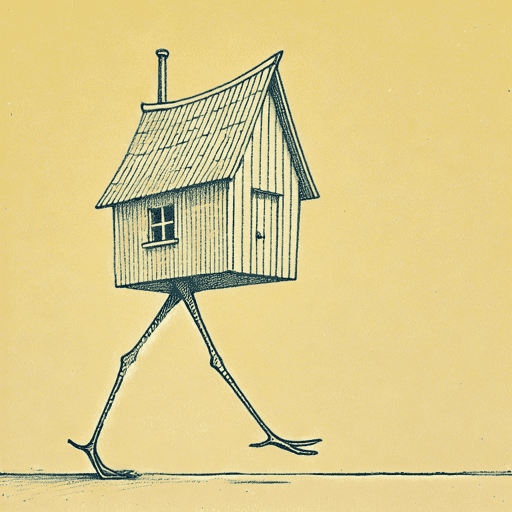
Twelve-year-old Marinka lives with her grandmother Baba in a house with chicken legs. A few times each year the house stands up and walks to a new location. Marinka and Baba never know where the house will go next. Baba is a Yaga; it’s her job to guide the dead through The Gate and to the other side. The house moves where the dead need them as their guides.
Each time they relocate, it is Marinka’s job to build a fence of skulls around the house to keep the living away. Marinka’s friend Jack, a jackdaw bird, often keeps her company while she’s working. Even still, Marinka is often lonely. She wishes her house wouldn’t move so much so she could make living friends. She fears her wishes will never come true.
Chapter 1 Summary: “Guiding the Dead”
One night, Marinka prepares the skull fence and lights candles for her and Baba’s ceremony. She used to be more curious about the dead she and Baba would meet. Now, she is bored and wishes she could fly away with Jack. She isn’t interested in becoming the next Guardian—endlessly transitioning the dead between life and death—but doesn’t know how to tell Baba.
Baba starts the ceremony, preparing food and pouring kvass, a yeasty drink. Baba wants Marinka to get “to know the dead,” but it “seems so pointless” (7) to Marinka. During each ceremony, Baba listens to the dead remember the good parts of their lives before guiding them to a peaceful afterlife. Marinka’s mind wanders, unable to understand the language of the dead and uninterested in their stories. Baba seems happy being Guardian, so Marinka doesn’t understand why she has to learn, too.
After talking to tonight’s dead, The Gate appears. Baba sings along with the dead, feeds them treats, and sends them through The Gate. Afterwards, she pours cocoa for Marinka and tells her a story about her late parents. Baba tells her how they fell in love and how much they loved Marinka before they died. Marinka feels happy hearing the story. It gives her hope that she can have adventures and take risks, too.
Chapter 2 Summary: “Benjamin”
Outside the house the next day, Marinka encounters a living boy named Benjamin. They introduce themselves, and Benjamin tells Marinka about the lamb in his company. He’s already been suspended from school and fears his father will be even more upset with him if he comes home with a lamb. Marinka agrees to watch the lamb for the night so Benjamin has time to tell his father about it. They chat about their lives, too. Marinka is surprised to hear Benjamin say he is lonely; she didn’t think normal living children ever felt alone.
After Benjamin leaves, Marinka worries about the lamb and seeing Benjamin again. She hopes the house doesn’t move in the night. She wants to meet up with Benjamin in the morning and make good on her promise to return his new pet.
Chapter 3 Summary: “A Too-Heavy Blanket”
Baba is delighted by the lamb and exclaims at what a good soup he’ll make. Marinka protests, inventing a story about how she found the lamb. Then the magical house builds the lamb a bed. Marinka is pleased the lamb is comfortable but still feels distracted. Unable to relax, she sneaks out of the house while Baba is sleeping. Jack joins her. A while later, Benjamin appears. He asks her to watch the lamb a while longer and invites her on a walk. A nervous and excited Marinka accepts.
Chapter 4 Summary: “Beyond the Fence”
Marinka and Benjamin walk to his father’s bothy, or a “shelter for walkers” (34) that they need to restock. On the way, Marinka is overwhelmed by the view. They arrive at the bothy and build a fire. They chat more about Benjamin’s school and his love for drawing. He shows Marinka some of his impressive sketches. They chat about the future and their imagined destinies. Then Benjamin sketches Marinka; she’s moved by this image of herself. Before parting ways, Marinka promises to meet Benjamin again the next day. Back home in bed, Marinka is so excited about her new friend that she squeals into her pillow.
Marinka wakes to the sound of bones rattling. Horrified, she realizes the house is on the move again. Marinka begs Baba to make the house stop; she is desperate to stay because of Benjamin. In tears, she screams at Baba about how much she hates the house, her life, and Baba. She hides in her room and cries.
Chapter 5 Summary: “The Desert”
Marinka wakes up with the house in a new place. She looks out and discovers they’re now in the desert. Baba calls Marinka. She reassures her and reminds her of their responsibility to the dead. Marinka protests, insisting she doesn’t understand what the point is. She doesn’t want to be a Guardian and wishes her parents were alive. Baba reminds her of how much she loves her and urges her to be happy with the life they have.
In her room alone again, Marinka hangs out with the lamb. She names him Benji after Benjamin. Baba finds her later and gives her a flower, expressing her love again. Marinka pushes her away.
That night, Marinka and Baba guide more of the dead through The Gate. Marinka feels sorry watching them leave. After the ceremony, Marinka goes outside and encounters a little dead girl who didn’t go through The Gate. Marinka is worried about the girl’s fate, but the girl says she doesn’t want to go anywhere. Marinka understands.
Prologue-Chapter 5 Analysis
The opening chapters of The House with Chicken Legs introduce the central conflicts, stakes, and themes of the protagonist Marinka’s story. Because Marinka is the first-person narrator, the entirety of the narrative is filtered through her lens. The way she sees the world and herself dictates the narrative mood. At 12 years old, Marinka is tired of her life with Baba in the house with chicken legs. Her circumstances are magical and enchanting, but Marinka is more focused on the life she doesn’t have than the life she does. She wishes her “house was a normal house” and her “family was a normal family” (4) because she longs for stability and predictability. She often looks longingly at the villages of the living far beyond the reaches of her home, because they represent life, possibility, and the future. Marinka’s life is defined by death, loneliness, and making peace with the past. Because she is still an adolescent, Marinka has little interest in the mournful histories of the dead. She wants to live the life she has ahead of her, but feels trapped because her whole life has been predetermined for her.
Marinka’s internal conflict launches the novel’s theme of the Tension Between Tradition and Self-Determination. A feisty, adventurous young girl, Marinka finds herself at odds with her limiting circumstances and prescribed destiny. Baba is raising her to be the next Guardian despite her uninterest in accepting this future. It is “‘a serious responsibility’ and [she] have to ‘focus’ and ‘learn the ways’ so [she] can do it on [her] own one day” (6). Marinka has no interest in accepting or fulfilling the plans Baba has made for her. She instead wants a life of adventure and excitement. In short, she wants freedom: “I love the idea that one day, completely out of the blue, someone or something could come hurtling down from the sky and change my life, forever” (15). According to Yaga tradition, Marinka must stay with her house for as long as she is Guardian. She must move when the house moves. She must forsake relationships with the living to protect the dead, and must meanwhile spend all of her days guiding the dead into the afterlife. To Marinka, this life is defined by unpredictability, loss, and sorrow. None of her circumstances are within her control. The bounds of tradition are so strict they limit Marinka’s ability to create her own path and live her life on her own terms.
Marinka’s relationship with Benjamin introduces the novel’s theme of the Search for Friendship and Belonging. Because Marinka is perpetually uprooted by her magical house, she is never able to make friends. She loves Baba, but Baba is old and consumed by her role as Guardian. Marinka longs for a companion her own age with whom she can share her ideas, longings, and dreams. Benjamin offers this to her in the brief time they’re together. He is a symbol of friendship, offering Marinka hope. The way she imagines their time together underscores the importance of this connection to Marinka’s sense of belonging:
Benjamin is sitting on a large rock overlooking the valley, […] in a moment I will be sitting next to a real, live, living person. Maybe we’ll talk and become friends. Maybe he’ll visit me again, and we’ll go for walks and play games, like other children do—or at least, I think they do. My heart feels like it might burst at the thought and the mugs tremble in my hands (20).
The passage uses the future conditional tense. Marinka is imagining the possibilities of befriending a living boy like Jack. She only imagines them doing simple things—like talking, walking, and playing—but these familiar pastimes are dreams to Marinka. She is so thrilled by these possibilities that her heart swells and her hands tremble. The idea of forming friendships outside the context of her home and family grants her a hopeful excitement. Through friendship she might establish her individuality and autonomy beyond her familiar, entrapping circumstances.

Unlock all 46 pages of this Study Guide
Get in-depth, chapter-by-chapter summaries and analysis from our literary experts.
- Grasp challenging concepts with clear, comprehensive explanations
- Revisit key plot points and ideas without rereading the book
- Share impressive insights in classes and book clubs