46 pages • 1-hour read
The House with Chicken Legs
A modern alternative to SparkNotes and CliffsNotes, SuperSummary offers high-quality Study Guides with detailed chapter summaries and analysis of major themes, characters, and more.
Symbols & Motifs
Content Warning: This section of the guide includes discussion of violence, bullying, and death.
House
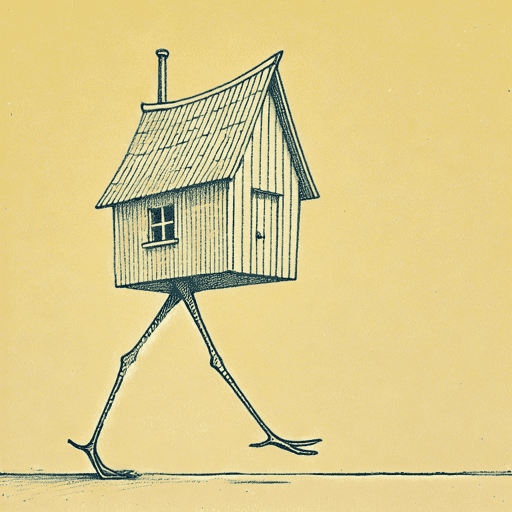
Marinka’s house is a symbol of home and belonging. Throughout the majority of the novel, Marinka struggles to see the house in this way. She feels perpetually angry at the house for “stand[ing] up in the middle of the night and walk[ing] away from where [they’d] been living” (1) without any warning. The house is magical and is outfitted with chicken legs, which it uses to relocate Marinka and Baba wherever the dead need them next. Marinka resents the house for its peripatetic habits because all she wants is to be settled in one definite place where she can make friends with living people. Because she is destined to be the next Guardian (or Yaga) after Baba dies, Marinka is not allowed to leave the house; she later learns that she is dead, and if she strays from the house, her body will fade away entirely. She often feels trapped by the house for these reasons, and is desperate to escape. She cannot accept that the house loves and wants to protect her.
Marinka reestablishes her connection with the house after the house fire. Marinka realizes that bonding with the house is the best way to live harmoniously together. Once she opens up to the house about her feelings, hopes, disappointments, and dreams, the house comforts her. The two find belonging in and with each other. The house also looks out for Marinka, brings her on adventures, and offers her a place to live at every stage of her life. Marinka has been searching for belonging beyond the confines of the house, but later discovers that the house has offered her this security for her entire life.
The Gate
The Gate is a symbol of the Relationship Between Life and Death. The Gate is an opening between the world of the living and the world of the dead. The Yaga houses are the only ones that can make The Gate appear during the Yagas’ guiding ceremonies. Then the Yagas usher the dead through The Gate and over the threshold to the beyond, or the afterlife. For a long time, Marinka avoids The Gate; she wants nothing to do with the dead or learning to guide them. Once Baba passes through The Gate with Nina, Marinka’s regard for the portal changes. She does everything in her power to traverse this threshold, desperate to get Baba back. Her ever-shifting relationship with The Gate captures Marinka’s struggle to reconcile with death. She is afraid of losing more people she loves and is afraid of dying, too. She wants to resurrect those she has lost and to bring herself back to life. The Gate straddles both worlds and conveys how inextricable life and death are; one cannot exist without the other.
Scarf
Baba Yaga’s scarf symbolizes the Tension Between Tradition and Self-Determination. After Baba passes through The Gate, Marinka sits in the house alone clutching the scarf. “It smells of her: lavender water, bread dough, borsch, and kvass” (109). Holding the scarf helps Marinka to reconnect with her absent grandmother. She can feel her presence just by clutching the garment she left behind. When she dons the scarf later on, Marinka is maintaining her connection with Baba—and the Yaga tradition by extension. However, she rips off the scarf and throws it into a puddle as soon as she is bullied for wearing it. (Salma tells her she looks “like the ugly witch who lives in that rotten old house” when she sees her in the scarf [129].) Salma’s insult makes Marinka realize the headscarf overtly publicizes her ties to the Yaga tradition, which she is eager to cast off. This is why she eagerly accepts Salma’s new scarf gift the next day. The scarf gift offers her the illusion of autonomy and independence. Because she no longer looks like her grandmother in the new scarf, it’s easier for her to believe she has escaped her influence on her life and identity.
Dresses
Repeated allusions to Marinka’s dresses convey her Search for Friendship and Belonging. Marinka typically wears a series of drab wool dresses, which suit her peripatetic Yaga life perfectly. They are plain and practical, especially for traveling, working, cleaning, cooking, and building. When she relocates to the North African market, her new friends Salma and Lamya insist that she buy a new green dress. The green color imagery represents new life and possibility. However, the dress gets torn shortly thereafter—implying that this new, romantic life with the living girls is not what Marinka expected; it will not offer her the security and acceptance she hoped for. She soon trades out the new dress for “one of [her] old wool dresses” (165) and instantly feels more like herself. The dress imagery captures Marinka’s struggles to accept herself while searching for acceptance from others.

Unlock the meaning behind every key symbol & motif
See how recurring imagery, objects, and ideas shape the narrative.
- Explore how the author builds meaning through symbolism
- Understand what symbols & motifs represent in the text
- Connect recurring ideas to themes, characters, and events