The Housemaid's Wedding
32 pages • 1-hour read
Freida McFaddenThe Housemaid's Wedding
A modern alternative to SparkNotes and CliffsNotes, SuperSummary offers high-quality Study Guides with detailed chapter summaries and analysis of major themes, characters, and more.
Important Quotes
Content Warning: This section of the guide includes discussion of graphic violence, physical abuse, emotional abuse, and cursing.
“They say rain on your wedding day is good luck. Death threats on your wedding day? Probably not so much. Still, I know exactly how to deal with this asshole.”
(Page 4)
Millie’s engagement with the first threatening call she receives characterizes her as someone who is courageous yet overly confident. Additionally, it foreshadows potential danger for her. The fact that she is so certain that nothing will happen creates the expectation for the reader that she will be wrong. The dry, sardonic tone here sets up Millie’s emotional defense mechanism: humor. Her bravado is undercut by irony, pointing to the chasm between what she says and what the reader anticipates. This contrast contributes to the theme of Expectations and Desires Versus Reality, as her confident tone masks escalating danger.
“I refuse to let that call get to me. I have a tendency to do things that piss people off, and occasional death threats are to be expected, but they have never proven to be more than empty words. It’s something I’ve grown used to.”
(Page 4)
Millie’s rationale for ignoring the calls lends insight into her troubled past and how it impacts her character. She has led a dangerous life because she risks her life to help others. As a result, violence and danger are normalized for her, offering an explanation as to why she is choosing to ignore the calls.
“When he says those words, I feel—dare I say it?—lucky. I never felt lucky in my whole life—it’s not a word I’d ever have used to describe myself. But at this moment, I feel like the luckiest woman in the world.”
(Page 7)
The idea of being “lucky” is a recurring motif throughout the story. Specifically, Millie repeatedly notes how she has never been lucky, with one exception: her marriage to Enzo. This idea emphasizes the theme of The Enduring Power of Love, as this “luck” conveys the important role that Enzo and his love play in her life. The repetition of “lucky” acts as a motif, showing how Millie’s idea of fortune is not abstract but grounded in survival and love. The hyperbolic phrase “luckiest woman in the world” contrasts with her earlier life, suggesting that Enzo’s love has redefined her worldview.
“Do you know what it feels like for your parents to call you a poisoned apple? It doesn’t feel great. Yet, no matter how much they pushed me away, I still craved their support. I loved them, and more than anything, I wanted them to see I had changed from the girl I used to be.”
(Page 10)
As Millie struggles with the internal conflict of her parents’ absence from her life, these thoughts lend insight into why she is so desperate to have them at her wedding. Her life has been defined by the lack of love that they have shown her, leaving her to grow up entirely alone. As a result, central to her character is her desire to prove them wrong, and she believes that the perfect wedding day will achieve this. The metaphor “poisoned apple” echoes fairy-tale imagery and suggests that Millie has internalized her mother’s rejection as moral rot or danger. Her longing for their approval despite years of estrangement embodies the emotional weight behind the theme of expectations and desires versus reality.
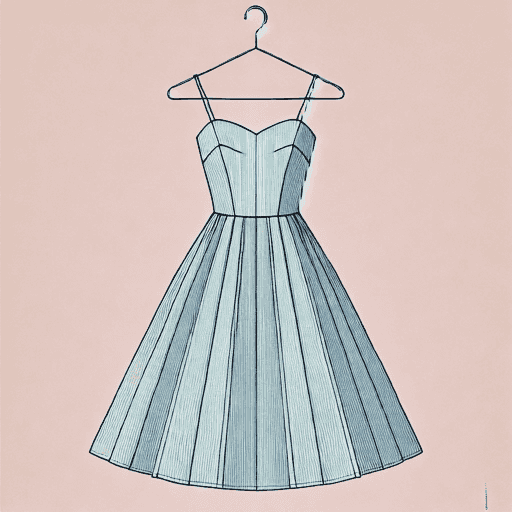
“First of all, it’s not white. I hate that color, and not only that, it seems wildly inappropriate given my…situation. So a few weeks ago, I went to Macy’s and purchased an A-line silhouette powder-blue dress with lace sleeves.”
(Page 13)
Millie’s dress, which strays away from the traditional white color, symbolizes the unique quality of her life. She has gotten pregnant before getting married—referred to here as her “situation” —and has a life where violence and danger are normalized. As a result, she desires a traditional wedding in many ways, except for the uniqueness of her dress.
“The necklace is an heirloom passed down from her mother, and her mother before her. Honestly, I never thought she would ever pass that necklace on to me. And it means so much more that I’ll be receiving it on my wedding day.”
(Page 13)
Just like Antonia’s pin, the necklace that Millie expects to get from her mother will serve as her “something old” in the wedding, with both symbolizing parts of her past. When she does not get the necklace, instead replacing it with the pin, it symbolizes the shift in Millie’s life. She no longer cares about her history with her parents, instead choosing to focus her life on Enzo and their life together moving forward.
“‘Have you checked your coat closet since your boyfriend left this morning?’ My stomach flips as my gaze lifts to the small closet across the room from me, which contains our coats and boots. The door to the closet is closed.”
(Page 20)
Millie’s point of view as she interacts with the caller provides insight into her feelings of fear and danger. The first time she becomes truly concerned is when the man implies that he is in her closet. As a result, the fact that Millie’s “stomach flips” and her eyes travel to the door creates a mood of foreboding. McFadden’s use of visceral imagery paired with a closed door, a classic symbol of the unknown, ratchets up suspense.
“The Bronx has some absolutely gorgeous suburban areas, but we live on what is possibly the most dangerous block in the whole borough. It’s the kind of neighborhood where you don’t venture out after dark. And it’s the kind of neighborhood where you get a damn good lock.”
(Page 21)
The Bronx, specifically the location of Millie and Enzo’s apartment, is an important component of the setting. Just like their lives, they are surrounded by danger, deepening the fear and anxiety surrounding the unknown caller. Millie and Enzo have built their life within this location, normalizing its danger.
“[Enzo] reaches for my hands, and when I give them to him, he laces his fingers into mine. ‘I can’t wait for you to be my wife.’ It’s the first thing he has said that has calmed me down entirely. I squeeze his hands back, and once again, I think to myself, I am lucky.”
(Pages 32-33)
This moment, which occurs when Millie and Enzo wait at the café for her dress, emphasizes the enduring power of love within Millie while hinting toward her change in the text. This moment subtly mirrors the earlier declaration in Quote 3, reinforcing the motif of luck as emotional clarity rather than coincidence. The shift from internal panic to physical calmness when Enzo takes her hands speaks to the theme of The Value of Support in Confronting Trauma. His presence regulates her fear, underscoring the healing role of intimate connection.
“The man staring at us through the window of the café is wearing a trench coat which is damp from the snow, his hands shoved deep into his pockets. He is older than I expected him to be—possibly in his sixties—with hollowed eyes, which bore straight into me. His lips twist into a sneer that turns my blood to ice.”
(Page 34)
At several points in the text, McFadden builds false expectations for the reader, largely through the influence of Millie’s point of view. As she becomes more afraid of the man who is stalking her, she becomes convinced that the man watching her—who turns out to be Enzo’s tailor—is the one who is calling her. She misinterprets his smile as a “sneer” and his staring as something dangerous, building tension and foreboding for the reader.
“Is this a sign that Enzo and I are not meant to be? Or maybe it’s just that this morning, I dared to think of myself as lucky. How could I have been so stupid? I’m not lucky—I’m never lucky! I am the unluckiest person in the entire world.”
(Page 48)
The motif of luck in the story is intertwined with the idea of superstition. Here, she has just been told that her mother will not be coming to the wedding. Instead of blaming her mother or recognizing that she is not a good person, Millie instead considers it “luck” that caused her mother not to come. This internal outburst signals a regression in Millie’s emotional state, emphasized through repetition and exclamatory tone. It reveals how deeply Millie ties her self-worth to external validation, particularly from her mother. Her superstition—blaming herself for thinking positively—underscores the theme of expectations and desires versus reality, highlighting how past trauma shapes her sense of cause and effect.
“I feel that fluttering again, but Enzo just shakes his head. He can’t feel her yet. For now, her kicks are just for me.”
(Page 54)
The moment when Millie feels her baby kick is the moment of change for her character. Their child, which symbolizes their new life, provides Millie with a physical reminder of the true reason for their wedding day. While she has fixated on her clothing, the weather, who is attending, and more, the baby reminds her of the new life that she is about to begin.
“The thin man zips up his fly and washes his hands at the sink. I allow him a moment to finish rinsing off the soap before I come up behind him, grabbing him by the collar with my left fist. I then slam him against the bathroom wall so hard that his head makes a resounding clunk. The man’s brown eyes widen with surprise and fear. He tries to claw at my hand holding his collar, but it is a sad attempt.”
(Page 59)
Throughout the story, the man stalking Millie has repeatedly filled her, and the reader, with feelings of danger and fear, as he threatens her violently. However, ironically, when he finally appears in the text, Enzo quickly and easily handles him. Words like “thin,” “fear,” and “sad” are used to describe him, conveying his true weakness but also Enzo’s strength. Additionally, this passage conveys the metaphor of this man as a representation of all the men whom Enzo and Millie stop from abusing their spouses: He attempts to prey on Millie’s weakness through empty threats and violence but is actually weak himself when truly confronted.
“It has already been a difficult day for [Millie] without knowing a man has been following us all morning. I have taken care of it. I will not let this ruin our wedding day. I will protect her. As long as I live and breathe, nobody will ever hurt her or our children.”
(Page 62)
As the narration shifts to Enzo’s point of view, he has the same thoughts as Millie: He wants to handle the caller himself to preserve their wedding day. This is an example of dramatic irony, as the reader knows something that Enzo does not: Millie already knows of the man and tried to deal with him. This moment also emphasizes the theme of the value of support in confronting trauma, as Enzo is determined the protect and help Millie, ultimately solving the conflict that the caller posed throughout the story. The future-tense promises and parallel phrasing reflect Enzo’s emotional grounding. His certainty acts as a stabilizing force in contrast to Millie’s anxious inner monologue.
“And then I go home with my wife and unborn child, leaving the man who threatened us in a puddle of his own blood on the men’s room floor.”
(Page 64)
The story’s final lines are an example of juxtaposition, as McFadden takes two very different ideas—an unborn child and an incapacitated man lying in his blood—and puts them together. This juxtaposition emphasizes the fact that Millie’s and Enzo’s lives will always be entrenched in violence due to their desire to help women in danger. Despite this, they are happy with it, finding love with each other and building a new life with their new baby. In this way, it provides hope that they will continue to survive their difficulties and do so together.

Unlock every key quote and its meaning
Get 15 quotes with page numbers and clear analysis to help you reference, write, and discuss with confidence.
- Cite quotes accurately with exact page numbers
- Understand what each quote really means
- Strengthen your analysis in essays or discussions