48 pages • 1-hour read
The Hundred Secret Senses
A modern alternative to SparkNotes and CliffsNotes, SuperSummary offers high-quality Study Guides with detailed chapter summaries and analysis of major themes, characters, and more.
Part 3, Chapters 10-18Chapter Summaries & Analyses
Content Warning: This section of the guide includes discussion of death, mental illness, and graphic violence.
Part 3, Chapter 10 Summary: “Kwan’s Kitchen”
Olivia arrives at Kwan’s flat for dinner, annoyed that the meal is late. Kwan’s husband, George, announces a promotion. Kwan insists that a yin person told her Olivia must stay with Simon because of yinyuan, or fated love. Olivia challenges the claim and presses Kwan to stop meddling. Kwan counters by correcting a family story about their dog, Captain, revealing that he was killed by a car.
Kwan then shifts into the past-life story of Nunumu, explaining more about General Cape, the American mercenary, and Yiban Johnson, his half-Chinese translator who struggles with divided loyalties. In her telling, Yiban shares how his father’s abandonment and being sold into servitude shaped the skills that tie him to Cape.
Part 3, Chapter 11 Summary: “Name Change”
Olivia learns the source of the noises in her co-op when her neighbor, Paul Dawson, is arrested for making threatening phone calls to local women, in which he played a recording of a woman screaming. Soon after, an acceptance letter arrives for the photo-essay proposal she and Simon wrote. Kwan finds it and insists they all must go to China. Olivia, who still uses her married name, decides to change her last name and calls her brother, Kevin, to discuss it. Kevin reveals that their stepfather’s surname, Laguni, is not connected to any family lineage in Italy: Instead, it was a name bestowed on orphaned children to signify their orphan status.
As Kwan, Kevin, and Olivia have lunch together, Kwan reveals that their father took the identity of a man named Jack Yee to immigrate to the US. She says they must travel to China to uncover their father’s true name. Kwan presses for a plan for the three of them to go to China to find answers.
Part 3, Chapter 12 Summary: “The Best Time to Eat Duck Eggs”
Kwan maneuvers travel arrangements so that she is in need of two travel companions for her trip to China. Olivia invites Simon to join the trip with her and Kwan. On the plane, Kwan resumes her past-life story. During the Taiping Rebellion, the mission at Changmian faced starvation after General Cape betrayed them and abandoned Miss Banner, who begins a new romance with Yiban Johnson. Nunumu and the injured boatman, Lao Lu, feed everyone with preserved duck eggs they have hidden.
Part 3, Chapter 13 Summary: “Young Girl’s Wish”
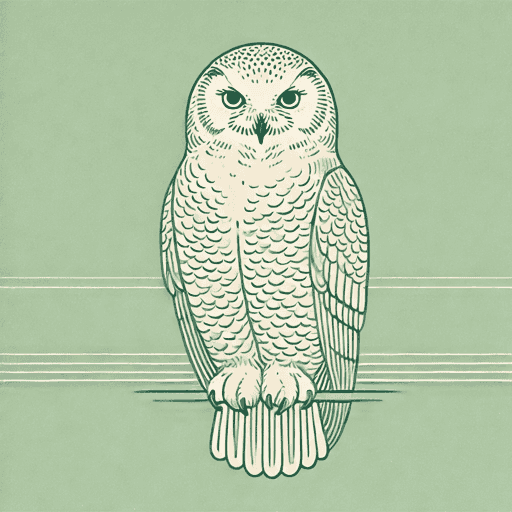
In the present, Olivia, Kwan, and Simon land in Guilin and explore the markets. At a bird market, Kwan buys a live owl to save it from being butchered, saying she will free it at a nearby mountain called Young Girl’s Wish. On the way, Kwan explains she made three wishes there as a child: a sister to love, a return to China with her, and an apology from her aunt, Big Ma.
Kwan says two wishes came true. She releases the owl, stating she will let go of her sadness over the apology that never came. Afterward, they hire a local driver, Rocky, to take them toward Changmian.
Part 3, Chapter 14 Summary: “Hello Good-bye”
With Rocky driving, they pass the aftermath of a fatal bus crash. Kwan grows somber, feeling the presence of many yin people at the site. They reach Changmian, where schoolchildren run alongside their car chanting “Hello good-bye.” Kwan meets her old friend Du Lili, who tells her that Big Ma has gone to Guilin.
Kwan pauses at a wall, begins to cry, and says Big Ma has died. An official arrives and confirms that Big Ma, formally Li Bin-bin, perished in the crash they passed. Before they return to Guilin to claim the body, Kwan says Big Ma’s ghost has just given her the apology she always wanted.
Part 3, Chapter 15 Summary: “The Seventh Day”
Back at their Guilin hotel, Kwan mourns and communicates with Big Ma’s spirit through heart-talk, her term for silent speech with the dead. She then finishes her past-life account. In her story, Zeng, a peddler who loves Nunumu, warns of an impending massacre and offers for them to run away together. She agrees if she can bring her friends; and a hesitant Zeng says he will be back for them later that night. Before he can return, however, General Cape arrives at the mission with Manchu soldiers, who seize control and murder Lao Lu.
Miss Banner devises a plan to save others. She pretends to still love Cape and willingly takes him to her room, while instructing Nunumu to flee with Yiban. Zeng, who was also murdered by the soldiers, appears as a ghost and leads them to a hidden, glowing cave, warning that it will protect them if they listen. After leading them to safety, his spirit departs for good.
Part 3, Chapter 16 Summary: “Big Ma’s Portrait”
Kwan, Olivia, and Simon bring Big Ma’s body back to Changmian, where Du Lili welcomes them to her house. They learn that they must all share one marriage bed in the main room. Villagers prepare the body for the afterlife, asking Olivia to take a posthumous portrait for the funeral.
Olivia takes a Polaroid of Du Lili, who is shocked by her own aged appearance. Kwan quietly explains that years earlier, after Du Lili’s adopted daughter died, she had a mental health crises and began to think she was her daughter. Olivia looks at the images she has made and struggles to distinguish truth from story.
Part 3, Chapter 17 Summary: “The Year of No Flood”
Olivia asks how Du Lili’s daughter died, and Kwan answers with her own origin story. As children, she and her best friend Buncake, who could not speak, were inseparable. One day, both girls drowned in a flood. Villagers placed their bodies in coffins for the customary waiting period. Three days later, Kwan’s spirit reanimated Buncake’s body. A blind ghost-talker, Third Auntie, declared that a spirit had taken over. The village, including Buncake’s grieving mother, Du Yun—who later took the name Du Lili—chose to pretend nothing had happened. Kwan says she returned because she had promised to wait for Olivia to be born and to find her.
Part 3, Chapter 18 Summary: “Six-Roll Spring Chicken”
Olivia and Simon argue about Kwan’s claims. Olivia photographs Du Lili as Du Lili slaughters and prepares a chicken for dinner. At the meal, they drink homemade pickle-mouse wine—a traditional health tonic made by drowning baby mice in wine, leaving their bodies to ferment in the drink. Kwan tells the local tale of two mountain peaks resembling dragons that guard Changmian.
She adds that a cursed cave system between the peaks serves as a doorway to the World of Yin and conceals an ancient village. Simon, an archaeologist, is excited by the possibility and vows to find the cave, but Olivia wants to avoid it. Later, lying awake in the shared bed, she reflects on the distance in their marriage.
Part 3, Chapters 10-18 Analysis
Part 3 marks a significant turning point in the novel, both structurally and emotionally. Chapters 10 through 18 move the narrative from San Francisco to China, marking a significant tonal shift. This geographical change signals a corresponding internal shift for the characters. In China, the boundaries between past and present, myth and memory, and the living and the dead grow increasingly permeable.
The owl serves as a symbolic guide, marking the moment when the boundaries between the physical and spiritual worlds grow thin. When Kwan rescues the snowy owl and later releases it, the bird becomes a living emblem of freedom, intuition, and the emotional release Kwan hopes to achieve. Its presence signals that the characters are nearing a turning point, one in which old sorrows and unresolved histories must either be carried forward or let go.
The physical return to China intensifies the theme of The Continuity of Past and Present, as the land itself becomes a conduit through which Kwan’s alleged past lives and ancestral memories resurface with renewed force. As the characters move into rural Guangxi and eventually toward Changmian, Olivia begins to observe that Kwan’s stories—once easy to dismiss as fantastical—suddenly appear grounded in lived texture and specificity. As she walks around these villages, Olivia sees Kwan’s stories come to life and feels as though she has been there before. The bus crash they pass, the villagers who immediately recognize something unusual about Kwan, and the shifting energy of the landscape all support the possibility that time is not linear in the world Kwan inhabits.
Tan’s structuring of this section mirrors this blurring: chapters alternate between Olivia’s first-person perspective and Kwan’s detailed, historically inflected accounts of her life as Nunumu during the Taiping Rebellion. These embedded narratives no longer feel distant or metaphorical. Instead, they begin to function as parallel realities that illuminate and shape the unfolding story in the present. The two women’s arrival in China marks the first moment in the novel in which Olivia acknowledges, even if reluctantly, that the past Kwan describes may be something more than story. When Kwan predicts Big Ma’s death before they receive confirmation, the event destabilizes Olivia’s rational framework.
A central moment that captures the continuity of past and present occurs when Kwan stops before a wall in the village and begins to cry. Olivia narrates: “Kwan was staring at the wall as if seeing something in it that I could not” (214). This line is pivotal: The wall functions as a metaphorical threshold through which past reality presses into the present moment. For Kwan, the wall is a screen on which historical memory and present consciousness converge. For Olivia, the moment marks her first genuine openness to the possibility that time is layered rather than sequential.
Part 3 also deepens the novel’s engagement with Cultural Identity as Storytelling, particularly as Olivia confronts a homeland that feels both familiar and alien. Throughout these chapters, Tan contrasts Olivia’s fragmented sense of identity with Kwan’s seamless integration of the cultural, historical, and spiritual threads that define her sense of belonging. Olivia is an outsider in China—linguistically, emotionally, and socially. She recognizes words and gestures from her childhood but cannot inhabit them with the confidence or intimacy Kwan possesses. This gap highlights the distance between inherited cultural identity and lived cultural belonging.
Kwan’s belonging is marked by an embodied ease: Villagers greet her as one who has returned rather than one who arrives anew. Her connection to the land, the people, and the customs contrasts sharply with Olivia’s discomfort. Kwan and the villagers share jokes about Olivia’s use of Mandarin Chinese—not the language of this village—and her American ways. Scenes in the village hall, the bustle of Big Ma’s mourning rituals, and the shared meals all reinforce that cultural identity is a system of meaning, recognition, and relationship. Olivia observes Kwan slipping into fluent dialects and old kinship ties, destabilizing Olivia’s long-held assumption that Kwan’s cultural knowledge was eccentric rather than authentic.
This dynamic makes clear to Olivia that cultural inheritance is not the same as active participation. Olivia has inherited fragments of Chinese heritage, but she lacks the lived memory to situate herself fully within its worldview. This tension becomes especially clear in her interactions with villagers who interpret her behavior through communal expectations rather than individual preference. Instances in which she bristles at ritual or the meals she is served, questions spiritual explanations, or hesitates during communal gatherings further enhance this divide.
At the same time, China also reveals Olivia’s desire for connection. Kwan’s stories begin to resonate with her not because she suddenly believes them but because they offer a framework through which she can imagine herself as part of something larger than her own isolated narrative. This marks the beginning of Olivia’s transformation: Her recognition that belonging may require relinquishing the boundaries she has constructed between belief and disbelief, self and family, present and past.
The theme of The Emotional Inheritance of Trauma gains depth and urgency in this section, particularly as Kwan’s past-life narrative reaches its climax. Nunumu’s tale shifts from adventure to tragedy, revealing the violence, betrayal, and loss she endured in the final days of the Taiping Rebellion. The emotional weight of these memories does not remain confined to the historical narrative; instead, it floods into the present as Kwan grapples with the unspoken trauma of separation from loved ones across lifetimes.
Kwan’s emotional patterns—her protectiveness, her fierce loyalty, her fear of abandonment—become legible as inherited traits, carried from Nunumu to her present incarnation. Her devotion to Olivia and Simon is rooted in a long-standing desire to rectify past losses and betrayals. She continually reiterates that she must bring Olivia and Simon together, not merely for their happiness but to restore what was broken before. This compulsion reflects Tan’s broader exploration of how trauma circulates across generations, imposing emotional obligations on individuals who may not fully understand their origins.
Olivia, too, carries inherited trauma into the present. Her relationship with Simon has long been shaped by the shadow of Elza—a woman who remains emotionally present despite her physical absence. Simon’s grief gives rise to Olivia’s insecurity; his unresolved past shapes her emotional present. In China, Olivia confronts the extent to which she has internalized not only her own childhood guilt but also Simon’s unarticulated mourning. When she confesses the truth about the séance, the moment is not merely confession but release: an acknowledgment that the emotional burdens she carries must be exposed before they can be shed.

Unlock all 48 pages of this Study Guide
Get in-depth, chapter-by-chapter summaries and analysis from our literary experts.
- Grasp challenging concepts with clear, comprehensive explanations
- Revisit key plot points and ideas without rereading the book
- Share impressive insights in classes and book clubs