The Hundred Secret Senses
48 pages • 1-hour read
Amy TanThe Hundred Secret Senses
A modern alternative to SparkNotes and CliffsNotes, SuperSummary offers high-quality Study Guides with detailed chapter summaries and analysis of major themes, characters, and more.
Symbols & Motifs
Content Warning: This section of the guide includes discussion of death and mental illness.
Yin Eyes
The symbol of “yin eyes” represents a spiritual and intuitive way of knowing that stands in direct opposition to Olivia’s rationalist worldview, creating the novel’s central thematic conflict. Introduced on the first page, this ability to see the dead is a symbol for a deeper form of perception that transcends the five physical senses. Olivia initially dismisses Kwan’s sight as a fantasy, a product of her eccentricity. This skepticism reflects a Western, rationalist mindset that rejects any truth not supported by empirical evidence. Olivia’s inability to comprehend the yin eyes symbolizes her broader struggle to connect with her Chinese heritage and the parts of her own history that defy simple explanation.
The conflict between these two ways of seeing has profound consequences, most notably when Olivia’s childhood betrayal leads to Kwan’s electroshock treatments. This event illustrates the violence of forcing an intuitive, spiritual belief system into a rigid, clinical framework. However, Olivia’s perspective evolves from fear and rejection to a grudging acceptance of Kwan’s abilities. This journey parallels her personal growth as she learns that a purely rational approach to life is insufficient for true understanding. The yin eyes are ultimately part of what Kwan calls the “hundred secret senses” (102), a holistic perception that connects people, memory, and emotion across time. Olivia’s final acceptance of this spiritual reality allows her to find peace, demonstrating that wholeness requires embracing truths that are felt rather than proven.
Ghosts (Yin People)
The recurring symbol of “yin people,” or ghosts, embodies the inescapable presence of the past and the endurance of emotional connections beyond death. In the novel, these are not frightening apparitions but familiar, comforting presences. When Kwan reveals her ability to see ghosts, she reassures a terrified young Olivia that they are not a threat. This characterization establishes the yin people as symbols of the continuity of time, representing memories and relationships that remain active forces in the lives of the living.
The Owl
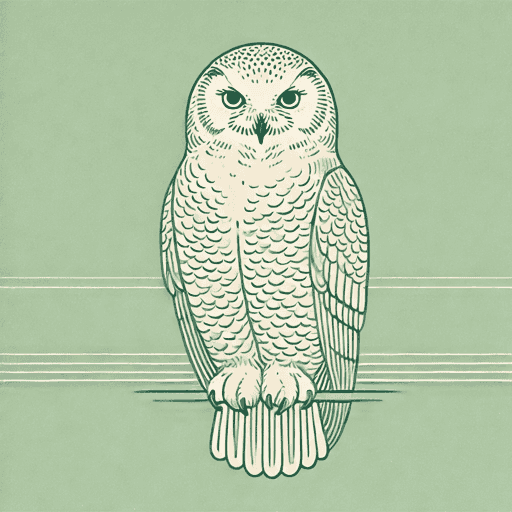
The owl in Tan’s novel appears at a pivotal moment in the story and quickly becomes one of the novel’s most important symbols. When Kwan rescues the snowy owl from the market in China, the bird becomes a physical embodiment of the connection between the living world and the spiritual one Kwan inhabits. The owl’s presence signals that the boundaries between these worlds are beginning to thin, especially as the characters draw closer to the emotional and supernatural heart of the novel.
Owls often symbolize wisdom, intuition, and guidance, and the snowy owl Kwan carries fits all these layers. It functions as a companion on the journey, but also as a messenger—a reminder that certain truths cannot be reached through reason alone. For Kwan, the owl represents release and transformation; when she releases the owl, she is able to let go to the parts of her past that she has continued to let hurt her over the years. This gesture suggests that the cycles of trauma can be broken.
The Cave
The cave is one of the novel’s most complex symbols. It represents a crossing point between worlds: past and present, the known and the unknown, the living and the dead. When Kwan enters the cave believing Simon is inside, the moment signals a profound shift in the narrative. The cave becomes a space where the boundaries Olivia has relied upon—between fact and imagination, fear and certainty—begin to dissolve.
Throughout literature, caves often symbolize the subconscious, hidden truths, or the depths of memory. Tan develops the cave as a physical manifestation of all the stories Kwan has carried throughout the novel. What existed previously only in Kwan’s accounts suddenly becomes real when the rescue team discovers evidence of an entire hidden civilization beneath the mountains. This confirmation challenges Olivia’s long-held assumptions and forces her to confront the possibility that Kwan’s knowledge has roots deeper than imagination.
The cave also symbolizes Olivia’s internal transformation. Her descent into fear, uncertainty, and grief mirrors a journey into her own unexamined emotional terrain. Only by entering this symbolic darkness—accepting the loss of Kwan, acknowledging her own guilt, and allowing the past to shape her understanding—can Olivia emerge changed. The cave functions as a point of no return, the place where Olivia’s skepticism finally gives way to openness.

Unlock the meaning behind every key symbol & motif
See how recurring imagery, objects, and ideas shape the narrative.
- Explore how the author builds meaning through symbolism
- Understand what symbols & motifs represent in the text
- Connect recurring ideas to themes, characters, and events