The Intruder
49 pages • 1-hour read
Freida McFaddenThe Intruder
A modern alternative to SparkNotes and CliffsNotes, SuperSummary offers high-quality Study Guides with detailed chapter summaries and analysis of major themes, characters, and more.
Important Quotes
Content Warning: This section of the guide includes discussion of child abuse, graphic violence, mental illness, and death.
“I’ll be happy when the tree is gone. I’ve been worried about it for the last month, and now that a storm is coming, I’m really worried. I look up at the roof of my house. It will probably hold. And the tree probably won’t fall down. I probably won’t die tonight. And if I do, the good news is that nobody will miss me.”
(Chapter 1, Page 4)
Casey’s forested environs incite narrative tension at the novel’s start. The Intruder is set in an isolated locale, a trope of the psychological thriller genre. The “cabin in the woods” trope affects an ominous mood. The references to the unstable tree, the impending storm, and the tenuous roof add to this unsettled atmosphere and foreshadow danger. Additionally, Casey’s emotional isolation is flatly conveyed here through her assumption that nobody would care if she died.
“Nothing. I stay by the window, searching the trees in the distance. The woods look so foreboding at night—I don’t wander out there after dark, even though it’s most likely safe. After all, aside from a single neighbor about five minutes away, I’m the only one who lives out here. It’s far off the beaten path. So who was staring into my window?”
(Chapter 5, Page 19)
The face that appears in Casey’s cabin window ignites her fear and anxiety, adding to the narrative’s suspenseful mood. Casey’s description of her circumstances intensifies the underlying sense of foreboding. Details including the trees, woods, darkness, and her remote neighbor capture the intensity of Casey’s solitude. If something were to happen, Casey has no one to rely on and nowhere to go.
“But then I started to think about it. Why did a normal-looking guy in his thirties suddenly decide to move to a cabin in the middle of nowhere? When I asked him about it, he brushed me off, mumbling something about wanting to get closer to nature. It was a blatant lie—I could see it all over his face.”
(Chapter 6, Pages 24-25)
Casey’s musings on her neighbor Lee Traynor introduce the novel’s theme of The Relationship Between Fear and Trust. On the surface, Lee seems harmless because he looks “normal.” However, Casey has a habit of distrusting others. Her private interrogation of Lee’s behaviors and motives conveys how suspicious she is of people, no matter who they are and how they behave. Being friendly and respectful, Lee should make her feel safer or more connected to others. However, because she can’t trust anyone, she lives in a near-constant state of fear.
“I grit my teeth. My mother wasn’t thinking about me when she bought that fish tank. She never is. She sees something she likes, and then she buys it. And when she gets home and there’s nowhere to put it, all of a sudden, my desk is storage space, and it is a ‘present’ for me that I never wanted.”
(Chapter 7, Page 33)
The appearance of the fish tank on Ella’s desk offers insight into her fraught relationship with her mother Desiree. Ella is analyzing her mom’s behavior and reflecting on her disregard for her well-being. She is offering background details to Desiree’s mental illness and neglect. However, Ella doesn’t emotionally comment on Desiree’s abuse—implying that she is still Navigating the Psychological Effects of Trauma.
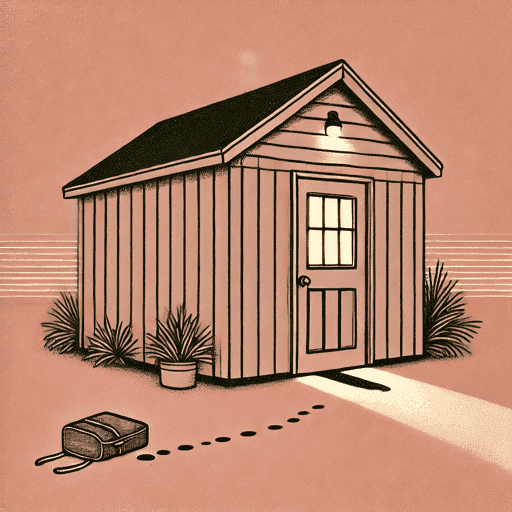
“For all I know, they are completely harmless. Maybe it’s just a drifter looking for a place to camp out during the storm. Maybe it’s…Well, I already decided it can’t be a rabbit or deer because of the light and all that. But my point is it doesn’t have to be an axe murderer. I’ve made a decision. I’m going to go out to the toolshed and see what’s inside.”
(Chapter 9, Page 41)
Casey’s decision to brave the toolshed aligns with tropes of the psychological thriller genre. Instead of avoiding the place that poses a threat to her, she enters it, determined to “see what’s inside.” Chapter 41 closes with this passage and thus ends with a cliffhanger, which sustains the narrative tension between chapters. The allusion to “an axe murderer” augments the narrative’s suspenseful mood.
“It’s my mother. Oh no. I didn’t even realize she was home. She is coming down the stairs as quickly as she can in her high heels, considering the path down the stairs is so narrow. For a moment, she slips on one of the papers, and I secretly wish that she would fall the rest of the way down the stairs and break her neck. If that happened, I could throw these trash bags away without getting yelled at. I could throw anything I want away.”
(Chapter 14, Page 59)
Ella’s internal monologue contributes to the novel’s theme of Navigating the Psychological Effects of Trauma. Ella has been abused by her mother throughout her life; unable to process, reconcile with, or escape her tumultuous circumstances, the only way for her to liberate herself is to imagine Desiree’s death. This momentary fantasy foreshadows Ella’s decision to light the house on fire with her mother inside, and it underscores the intensity of Ella’s suffering. She longs for her mother to disappear so she will be free.
“This is a child. I can’t allow her to leave here on her own without adult supervision. As a teacher, I was a mandated reporter of signs of abuse, but even though I’m no longer in that role, I still feel that same tug of responsibility. The next random adult she comes across might not be so nice, and she is a target for predators with no way to earn money. This girl needs help.”
(Chapter 17, Page 73)
Casey experiences an emotional response to seeing Eleanor’s bruises and scars because she identifies with Eleanor’s experience. Eleanor is an atypical intruder because she is a child. Although wary of Eleanor, Casey can’t help sympathizing with her. The moment offers insight into Casey’s past and complicates her characterization. She may be a loner living in the woods, but she also has a heart and wants to help Eleanor. The passage foreshadows the later revelation that Casey and Ella are the same character.
“She came here intentionally, looking for something or someone. And she’s not willing to tell me a thing. But of course she won’t. This is a girl who has been burned—literally—by adults. She doesn’t trust me because I’m one of them. And I can’t even blame her. Kids are so vulnerable, and when the most important adult in your life betrays you, it’s hard to ever come back from that.”
(Chapter 18, Page 79)
Casey’s internal monologue develops the novel’s theme of The Relationship Between Fear and Trust. Casey is afraid of Eleanor because she appeared at her forested cabin covered in blood; at the same time, she wants Eleanor to trust her because she is a helpless, vulnerable child. Casey’s astute reflections on Eleanor’s circumstances imply that they resonate with Casey’s own secret past. Because Casey couldn’t trust the adults in her life either, she was rendered as helpless as Eleanor when she was a kid, too.
“The whole time, I can’t shake the awful feeling in my stomach. What is he going to say when he sees my house? It’s bad enough that he already tells everyone at school that I smell. What is he going to say to the other kids when he sees what the inside of my house looks like? Everyone will know.”
(Chapter 21, Page 89)
Ella’s fears of inviting Anton Peterson into her house contribute to the novel’s theme of The False Allure of Solitude. Ella is so embarrassed of her home life that she has isolated herself from others. She is reluctant to let Anton see her house because she doesn’t want him to expose the truth to her classmates. Although her alienation traps her, it also grants her the illusion of escape from shame.
“My gaze darts down to the knife, then back up to her face. I’m not sure if I believe she would really hurt me, but then again, why was she covered in blood? This girl may be capable of more than I think. Although by the looks of her arms, whoever she did this to likely deserved it. ‘You don’t need to defend yourself against me. I won’t hurt you.’”
(Chapter 23, Page 100)
Casey’s inability to read Eleanor furthers the novel’s theme of The Relationship Between Fear and Trust and augments the narrative tension. Casey wants Eleanor to trust her so she won’t hurt her and so she can help Eleanor. At the same time, Eleanor’s appearance and behaviors suggest that she could be dangerous. Her anxious gaze, bloody clothes, and knife are signifiers of violence and danger; they complicate Casey’s ability to trust Eleanor and render her fearful.
“Anton just locked his brother in the closet. I jump out of my chair, panic rising in my chest. I imagine the poor kid hunched in the dark, grasping for a pull string to turn on the bulb, finding only air. A cold sweat breaks out on my forehead.”
(Chapter 28, Page 119)
Ella’s use of descriptive language in this passage conveys the intensity of her trauma response and furthers the novel’s theme of Navigating the Psychological Effects of Trauma. Ella “jumps out of her chair,” “panic rising in her chest” as a “cold sweat breaks out on her forehead.” Seeing Brad locked in the closet reminds her of being locked in the closet by her mother. Her body responds as if she is in danger—illustrating that Ella has yet to confront and overcome the abuse she’s suffered.
“And she has made a star at the top of the map, at what appears to be her final destination. This house. Eleanor is carrying a map leading right to me. She didn’t just randomly wander here from the road. She followed the directions on the map until she arrived in my yard, dripping with blood and clutching a knife in her right hand. Except…why?”
(Chapter 30, Page 125)
Eleanor’s map and knife augment Casey’s fear and complicate the narrative stakes. Thus far, Casey has regarded Eleanor as a helpless, scared teenager who she can help. The map implies that Eleanor has come to the woods with the intention of hurting Casey. Suddenly her knife and her bloody clothes and backpack appear more ominous.
“I forget all about the ticking clock. I forget all about the pumpkin stinking up the whole hallway. I forget all of that. Because I know who my father is. I know his name now. John Carter. Not only that, but he must know that I exist. You can’t just put somebody on a birth certificate without their permission, right?”
(Chapter 33, Page 139)
Ella has a shocked response to discovering her birth certificate because the document offers insight into her identity and past. Ella is so surprised when she finds the certificate that she doesn’t hear “the ticking clock” or smell “the pumpkin stinking up the hallway.” Her environment seems to disappear around her in light of her discovery. This phenomenon underscores how important this discovery is to Ella and foreshadows her relationship with her father after Desiree’s death.
“‘What’s good about that story,’ she patiently explains, ‘is that what’s happening in the story is similar to what’s happening here—right now. And it makes you worried that maybe those things could happen to you. Do you understand?’”
(Chapter 34, Page 149)
Eleanor tells the scary bedtime story to Casey to gain power over her. The story closely resembles Eleanor and Casey’s circumstances in the woods but ends with graphic violence. The tale intensifies Casey’s fear of Eleanor and makes Eleanor feel in control of her circumstances with Casey.
“But then a terrible thought hits me. And I realize how stupid I have been. When I went out to the toolshed, I brought my gun with me. And then when I came back, I put the gun back where I found it. At the bottom of my dresser drawer. In the bedroom. Where Eleanor is sleeping.”
(Chapter 37, Page 161)
Casey’s gun is a narrative device used to incite danger and tension. Casey regards the gun as self-protection but it becomes an object of fear as soon as Eleanor seizes it. The fragmented syntax Casey uses in this passage enacts her fear and panic. She is trying to make sense of her situation while reconciling with her failure to protect herself.
“It takes me only fifteen minutes to walk to Brittany’s house. It’s two stories—white with a blue trim—and a lot bigger than my house or the apartment where Anton lives. It’s not a mansion or anything, but it’s nice. There’s even a white picket fence surrounding the property, although it doesn’t lock or anything.”
(Chapter 39, Page 166)
The image of Brittany Carter’s house is a symbol of peace, perfection, and stability. The house is large, quiet, and has an open picket fence. The fence is a trope of idyllic domestic circumstances; because the fence is open, it creates an inviting mood. Ella sees the place as “nice” because it represents everything she does not have in her own life.
“Ever since I found that notebook filled with drawings of my own demise, I have been sorry that I allowed this girl into my house. But right now, I’m not sorry. She would have died in that toolshed. Whatever happens to me next, I don’t regret keeping that from happening. She was a kid who needed help, and I helped.”
(Chapter 42, Page 178)
Casey’s internal monologue complicates her characterization. Casey has appeared fearful, anxious, and suspicious throughout the novel. When she realizes she inadvertently saved Eleanor’s life, Casey is overwhelmed by emotion. She can identify with Eleanor and can rationalize her own fate because she was able to help a little girl like her. This moment humanizes Casey and foreshadows the revelation that she and Ella are the same character.
“I want to ask him why he doesn’t want to have anything to do with me. I can understand not wanting to have anything to do with my mother. I mean, I don’t want to have anything to do with her sometimes. But I didn’t do anything to him. Would it be so awful if he had to admit that I was his daughter?”
(Chapter 44, Page 184)
Ella’s internal monologue about John Carter affects a tone of longing. She is desperate for love, acceptance, and belonging. She has associated her elusive father figure with hope and safety. When she meets John, however, he disappoints these desires. This moment conveys how intensely Desiree’s abuse has impacted Ella’s psyche and her need for acceptance and safety.
“And when he says that, he reaches across the bench and takes my hand. It’s not the first time Anton has taken my hand. He’s done it a few times when leading me somewhere or helping me off the swings. But this is the first time he just randomly reached out and grabbed my hand. And I don’t dislike it. It’s kind of nice, actually.”
(Chapter 47, Page 199)
The image of Anton reaching for Ella’s hand creates a tender mood. Ella is experiencing acceptance and belonging for the first time in her life. She likes being close to Anton because he offers her affection she has never experienced before. The scene conveys how important this friendship is to Ella and foreshadows how difficult it will be for her when Anton disappears from her life.
“I have to go in there and get Eleanor to see the light. I have to keep her from doing anything terrible—something she may someday regret. Something that might ruin her life. And there is absolutely nobody in this world in a better position to convince her of that than me. Because I have been there, just like she has.”
(Chapter 51, Page 219)
Casey’s desperation to keep Eleanor from killing Lee conveys her intense connection with the young girl. She wants to stop Eleanor because she does not want her to make the same mistake she did. Being with and helping Eleanor offers Casey the opportunity to confront her own trauma. By helping Eleanor, she is able to acknowledge her guilt, regret, and pain.
“The good news is Nell surrenders my gun. The bad news is we can’t get her to stop crying. She buries her face in her hands, her small body shaking with sobs. Lee looks at me helplessly, and I crouch down beside her. I put my arms around her, remembering the way that nice paramedic hugged me after my other died.”
(Chapter 54, Page 229)
Eleanor’s sadness and distress mirrors Casey’s and compels her to reflect on her own traumatic past. The image of Casey and Lee comforting Eleanor affects an intimate mood. The adults are offering Eleanor acceptance and care she has never had before. Casey experienced the same thing when the paramedic hugged her.
“Eventually, I open up to him about all the terrible things that happened in my mother’s house. At first, I just tell him a few details. The rotten food in the refrigerator. All the millions of papers in every corner of the house. Being locked in the closet for hours on end. But over the years, as I grow to trust him more, I reveal more details about my life.”
(Chapter 55, Page 238)
Ella’s evolving relationship with her biological father contributes to the novel’s theme of Navigating the Psychological Effects of Trauma. After leaving her mother’s house, Ella is free to confront and process her suffering. She starts to open up to him about her abuse—which gradually leads her toward healing and renewal.
“My father would have been upset with me for what I did with that baseball bat, making a scene, because those are the kinds of things that get you in trouble. That’s what sent him to prison. But he believed in doling out justice. He never once judged me for what I did to my mother. He understood that it was what she deserved.”
(Chapter 56, Page 242)
Casey’s relationship with her father informs her views on violence and justice. Because her father has died, Casey has lost her archetypal guide. However, she recalls his voice and counsel throughout the novel. Her reflections on their relationship in this passage foreshadow her decision to kill Jolene Kettering to avenge Eleanor.
“Lee stepped up as Nell’s legal guardian. She’s been living here with him ever since the fateful night of the storm, and as far as I can tell, she’s been flourishing—she’s even gained fifteen pounds and no longer looks so skeletal. She’s finally found an adult that she can trust, and although there’s still a lot of healing left to do, she’s well on her way.”
(Epilogue, Page 263)
The Epilogue section furthers the novel’s theme of Navigating the Psychological Effects of Trauma. Over the course of the six months that have passed “since the fateful night of the storm,” Eleanor/Nell has begun to confront her trauma and embrace healing. Her new life with Casey and Lee has offered her the space to process the abuse and loss she suffered. The novel suggests that both time and familial support can help the individual overcome her traumatic experiences.
“I’m in love with Casey. I think about her all the time. I’ve never met anyone like her, and the urge to grab her and press my lips against hers is almost more than I can bear sometimes. I never really thought about settling down before, but when I look at Casey, I see my entire future with her.”
(Epilogue, Page 269)
The Epilogue incorporates a formal shift, offering access to Lee’s first-person point of view. His perspective grants insight into his life and relationships in the six months since the storm. This passage of internal monologue offers the possibility of a happy ending for him and Casey. Because he can “see his entire future” with Casey there is hope for Casey to have a contented, stable life going forward.

Unlock every key quote and its meaning
Get 25 quotes with page numbers and clear analysis to help you reference, write, and discuss with confidence.
- Cite quotes accurately with exact page numbers
- Understand what each quote really means
- Strengthen your analysis in essays or discussions