The Intruder
49 pages • 1-hour read
Freida McFaddenThe Intruder
A modern alternative to SparkNotes and CliffsNotes, SuperSummary offers high-quality Study Guides with detailed chapter summaries and analysis of major themes, characters, and more.
Symbols & Motifs
Content Warning: This section of the guide includes discussion of child abuse, graphic violence, mental illness, and death.
The Cabin
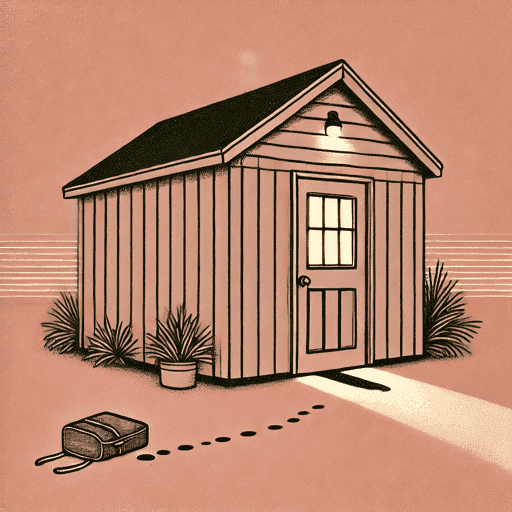
Casey’s cabin in the woods is a symbol of isolation. It is located in rural New Hampshire. Casey only has one neighbor, Lee Traynor, who lives roughly five minutes away. She is surrounded by forest with no ready access to the town beyond. The cabin itself is in disrepair—its roof promising to “collapse and kill [Casey]” (1) at any moment. She sees the tenuous roof as “an apt metaphor for the rest of my life” (1).
The cabin symbolizes Casey’s profound alienation. Ever since she was a young girl, she has been on her own. She didn’t know her father for the first 13 years of her life and lived with her abusive mother, who had a mental illness. Casey’s home life was defined by fear and violence, causing her to self-isolate from her peers. She feared that reaching out to others would expose the dire nature of her circumstances. Although decades have passed since she killed Desiree in a fire, Casey remains entirely alone. She does not have friends, her father is dead, and she is out of a job. Her “off the grid” life in the cabin represents how removed she is from society and any form of community. The tenuous state of the structure implies that Casey’s isolation threatens her well-being, too.
The Gun
Casey’s gun represents danger. When the gun first appears on the page, it is meant as a symbol of self-protection; Casey is glad she has the gun should Rudy return and make another sexual advance. Casey is also thankful for the gun when she discovers “there’s an intruder on my property” (40). She feels safe with the gun on her person—convinced she can protect herself should she face an attack.
However, the gun soon becomes a threat to Casey when Eleanor takes it from her, points it at her, and later wields it at Lee Traynor. Images of the gun pervade the novel, promising to go off at any moment and effectively augmenting the narrative tension. The gun represents the constant fear of danger that Casey has lived with since she was a child, as well as how easily that fear and inclination toward violence can be turned against her. It is also a narrative device used to intensify the novel’s underlying suspense.
Peaches and Pumpkins
The rotting peaches and pumpkins in Ella’s house are symbols of trauma. In Chapter 15, Ella is locked in the closet when she smells “a garbage smell” that’s “also sort of sweet” (66). She then discovers bags of rotten peaches that have rotted and turned almost liquid, “little worms squirming in a puddle of fetid juice” (66). The peaches were once soft, juicy, and edible; they have turned to a disgusting mess in Ella’s closet. Their decomposition represents the devolution of Ella’s psychological health over time. The more abuse she suffers, the less stable she feels.
The same is true of the pumpkins, which Ella finds rotting in her mom’s room. Desiree also hoarded this produce when she bought an excessive amount on sale; over time, the once beautiful pumpkins have turned to a pile of rotting compost. The same phenomenon is happening metaphorically to Ella’s psyche. She was once an innocent young girl, but left alone without care or attention, she is metaphorically rotting. The peaches and pumpkins are thus symbols of how Ella’s trauma is impacting her psyche.
Ella’s House
Ella’s house is a symbol of entrapment. The place is filled with garbage, papers, bottles, rotting food, and an endless collection of useless paraphernalia. Whenever Ella comes home, she has to navigate this maze, perpetually in fear of tripping and injuring herself. The space is so cluttered that Ella can’t find anything proper to eat or wear either. These environmental details capture how immobilized Ella is by her daily life. Although she is desperate for freedom, she feels incapable of asking for help—lest anyone discover the truth of how she is living. Her suffering ensnares her in an endless loop of unpredictability, chaos, and abuse. She frees herself when she burns down the house.
Eleanor’s Backpack
Eleanor’s backpack is a symbol of secrecy. When she first arrives at Casey’s cabin, Casey is unnerved to see the backpack dripping blood. The backpack is a fixture throughout the novel, haunting Casey and plaguing her with questions about who Eleanor is, where she came from, and what she’s done. She later looks inside the backpack and discovers a bloody cloth, a notebook of sinister drawings, and a suspicious map leading to Casey’s house. The bag provides clues to Eleanor’s identity and intentions but does not offer Casey immediate answers. It thus resembles the complex web of secrets that define Eleanor’s character and render Casey anxious and fearful.

Unlock the meaning behind every key symbol & motif
See how recurring imagery, objects, and ideas shape the narrative.
- Explore how the author builds meaning through symbolism
- Understand what symbols & motifs represent in the text
- Connect recurring ideas to themes, characters, and events