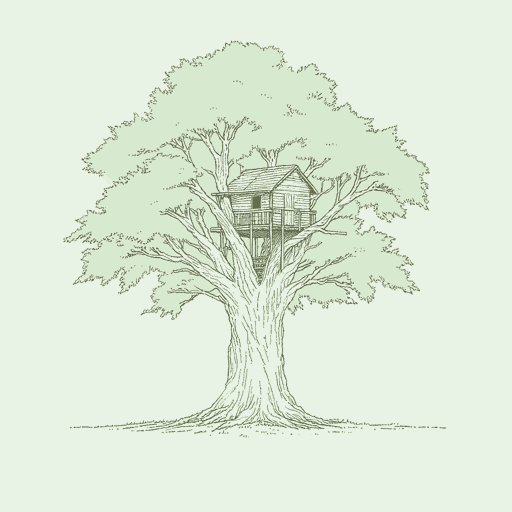
The Last House on the Street
The Last House on the Street
A modern alternative to SparkNotes and CliffsNotes, SuperSummary offers high-quality Study Guides with detailed chapter summaries and analysis of major themes, characters, and more.
Summaries & Analyses
Quizzes
NEWReading Tools
Symbols & Motifs
Hockley House and Kayla’s House
Content Warning: This section of the guide discusses racism and racist violence.
Chamberlain uses houses as symbols of the two epochs that she describes in the story. Her descriptions of the houses elucidate the distinction between these two periods. The Hockley house, a grand two-story structure with a rocking chair front porch, embodies the gentility of the South as it existed between the Civil War and the onset of the civil rights movement. Kayla remarks that the porch appears to be a constant invitation to sit and enjoy sweet tea. Ellie, when she comes home after leaving the SCOPE team, remembers that the house smells pleasantly of citrus and mildew. Most descriptions of the Hockley house, in both timelines, include people arguing over their personal ideals, emphasizing the house’s symbolism of older ideals that clash with new ones. In the 2010 timeline, Kayla notes that—as attractive as she finds the house—it is not a style that she would ever design. The new residents of the Shadow Ridge development, she notes, will consider it an abomination. The Hockley house embodies the 1965 narrative and has become out of step in the 2010 narrative.
In contrast, Kayla’s house is modern in its designs and conceits. Once completed, however, the two-level, open design concept feels forbidding and lonely to Kayla, who is afraid to occupy it. Unlike the Hockley house, there is seldom anyone present: Kayla works 30 miles away, and Rainie spends her days at preschool and with her grandfather, Reed. Those elements of the house intended to make it delightful and unique—the 50 windows, the elevated deck—become problematic. Kayla’s house embodies 2010: Meant to express ideals, it is new, stark, and uncertain.
Much as the ideals of one of the two epochs must win out, so one of the two houses must prevail. When Ellie demolishes the Hockley house, she symbolically closes the door on 1965. This does not imply a happy ending for that storyline but instead that an ultimate decision has been made. That epoch with its conceits is over and it is time to move on. For Kayla’s house, as she says, she is learning to love it. She invests herself in it, exploring its possibilities as she endeavors to remember the intentions behind its design and construction. She also reworks the problematic circular meeting site in the woods. Symbolically, Chamberlain is suggesting that the ideals of 2010 are becoming more wonderful than those of the past.
Children
The happiest passages in The Last House on the Street are those that describe the spontaneous behavior of children. In the 1965 timeline, these are the sections that depict Ellie interacting with Black children as she and Win walk through the countryside. The children approach her unhindered, holding her hand, asking her questions, and singing with her. When she sits in their homes, they touch her, sit on her lap, and braid her hair. Similarly, in the 2010 narrative, Rainie provides the joy as Kayla watches her play with Reed, walks with her in the wooded circle behind their house, and climbs up into the treehouse—a fearsome experience for Kayla but a delightful one for Rainie. In describing the children in two eras, Chamberlain portrays them as symbols of love and acceptance: What is new, unique, and completely unknown for these children is a source of wonder and learning rather than fear.
Chamberlain makes a shift, however, when she moves from describing children as spontaneous and joyful and places them in circumstances of fear, physical danger, and permanent harm. In 1965, the innocent children who welcomed Ellie find themselves subjected to terror when Klansmen burn a cross in front of their house or throw rocks and bottles at them during a protest. Three-year-old Rainie, still recovering from the death of her father, experiences such terror in the 2010 timeline when the mysterious Ann Smith leads her to the heights of Hockley treehouse and abandons her there.
In both narratives, the fear and pain inflicted upon the children are the direct result of malicious adult actions. Symbolically, Chamberlain suggests that the joy, innocence, and spontaneity of children is corrupted by the cruel behavior of adults. She proposes that that children are not born fearful and prejudiced but learn it in from the actions and pronouncements of adults.
Light and Darkness
Chamberlain also makes symbolic use of light and darkness throughout the narratives. She uses darkness as a symbol of danger, uncertainty, and despair. In the 2010 timeline, she describes Kayla standing before the vast wall of windows facing the dark woods behind the house and suddenly realizing that she must get window treatments to shut the darkness out. For Ellie, in the 1965 timeline, as she and the other volunteers run away from the crowd of pursing Klansmen, there is a moment of absolute darkness, when the electric lights are turned off prior to the burning of a giant cross and Ellie stumbles into a ditch, knocking herself out and disappearing in complete darkness. Many of the worst events recorded in the book happen in darkness: The Klan set fire to a cross in front of the Drew’s house in the dead of night; Klansmen appear below the treehouse to attack Win and Ellie in the dark; and, alone in the darkness on her deck, Kayla quavers, wondering what footsteps she hears in the dark. Darkness as a symbol extends beyond the physical absence of light. When Win and Ellie have the first of their deep discussions about their inner motivations, he tells her that she is driven by an inner darkness, sparking her to unburden herself of guilt she has carried from childhood.
Conversely, light symbolizes goodness, joy, possibility, and love. For Ellie, the joy of light appears for her when the continually serious Win first begins to smile brightly at her. In her memorabilia, Ellie finds a photo of Win smiling, filling her with joy. The contrasting power of light in the presence of darkness is shown in the 1965 timeline when Ellie, sitting in the darkness of the treehouse, looks down and sees the brightness of Win’s teeth as he smiles up at her, filling her with relief, joy, and love. In the 2010 timeline, Kayla stands alone on her darkened deck where there is abject darkness and sees a solitary light in the Hockley house. Later, in a similar circumstance, she sees a light in the treehouse. Chamberlain, in both cases, suggests that the single light is from Ellie, symbolically revealing that she will provide the truths that will lead Kayla from the dark morass of anxious uncertainty to a clear understanding of what happened on her property and who is afflicting her. A single, small light, Chamberlain implies, overpowers the darkness.
Foliage
Foliage is a motif throughout the novel in both narrative lines. North Carolina, even in the coastal plains area where the story takes place, was heavily forested before the advent of white Western European settlers and remains a region with large swathes of wooded lands. Chamberlain also describes the pervasive presence of an invasive species of ground cover, kudzu, which well-meaning planners brought to the US from Japan in the 1930s to combat soil erosion. Kudzu easily covers fully grown deciduous trees, masking them completely with dark green shapes that can be deadly to the trees. Both narratives describe the sinister forms taken by the looming kudzu. Pat, Ellie’s mother, tells her children that the kudzu are “beautiful monsters.” For Kayla, the kudzu is an ominous, impenetrable barrier that at times appears menacing.
By the beginning of the 2010 narrative, along with the kudzu, the woods behind Kayla’s house have become a matted web of overgrown trees, vines, and bushes so dense that most fencing companies are unwilling even to attempt construction. In the midst of the foreboding foliage, the circular area around the giant oak with the treehouse is spookily barren of growth, as if cursed.
At the conclusion of the narratives, Kayla decides to tame the wild area behind her house. She has not only constructed a fence but contracted a landscaper to transform the barren circle into a place of peaceful meditation. She mentions the various types of domesticated vegetation that will turn a frightening, stark zone into a welcoming oasis of respite. The motif of foliage represent the secrets of the murder mystery that at first threaten and frighten the characters and are eventually brought to light.

Unlock the meaning behind every key symbol & motif
See how recurring imagery, objects, and ideas shape the narrative.
- Explore how the author builds meaning through symbolism
- Understand what symbols & motifs represent in the text
- Connect recurring ideas to themes, characters, and events