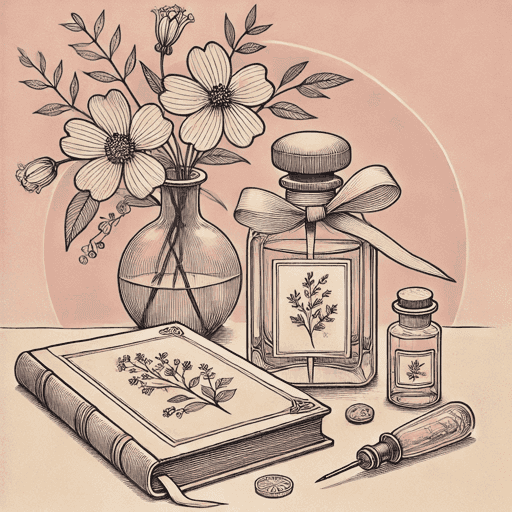
The Last of the Moon Girls
61 pages • 2-hour read
Barbara DavisThe Last of the Moon Girls
A modern alternative to SparkNotes and CliffsNotes, SuperSummary offers high-quality Study Guides with detailed chapter summaries and analysis of major themes, characters, and more.
Background
Literary Context: Magical Women
The Last of the Moon Girls follows in the tradition of speculative fiction about generations of magical women. One of Barbara Davis’s predecessors in this subgenre is Anne Rice. Rice’s novel The Witching Hour, published in 1990, traces 13 generations of Mayfair witches. Many of these witches leave journals for the 13th witch, Rowan, to read. Rowan and the other Mayfair witches also appear in Rice’s sequels, Lasher and Taltos. They can be compared to the nine generations of Moon women in The Last of the Moon Girls—Lizzy, like Rowan, reads from journals that her ancestors wrote—though Rice’s novels about the Mayfairs are much darker than Davis’s novel about the Moon women. Rice’s work has been adapted into an AMC series.
A highly influential book that focuses on generations of magical women is Practical Magic by Alice Hoffman. It was published in 1995 and adapted into a film in 1998. There are many similarities between Hoffman’s book and The Last of the Moon Girls. Like Lizzy, Sally Owens longs to be “normal.” Due to a curse placed on the Owens women by their ancestor, all the men they love die. Similarly, Lizzy’s ancestor in The Last of the Moon Girls, Sabine, forbade Moon women to marry. In Practical Magic, Sally and her sister, Gillian, are raised by their aunts, which can be compared to how Lizzy is raised by her grandmother. There are several other television series about generations of magical women based on novels. For instance, the Lifetime series The Witches of East End is based on a series of books by Melissa de la Cruz. The British TV series A Discovery of Witches is based on a book series by Deborah Harkness. Despite their differences, these stories are bound together by their exploration of the generational and sometimes forbidden knowledge that grants women agency in a patriarchal world.
Cultural Context: The Path
The spirituality of the Moon family is similar to Wicca and Witchcraft, varieties of modern Paganism. However, the Moon family rejects these terms, which are used pejoratively by the Christians around them: “[T]hose on the Path [are] often dubbed pagans by the uninitiated” (54). Initiates within the family call their spiritual practice the Path. Both the Path and Paganism are nature-based religions that believe all living creatures have a spirit; this is sometimes referred to as animism. Because of this belief, it is against the Moons’ religion to eat meat or harm people. “Harm none” is a fundamental tenet of Wicca. Blessings used in the Moon family contain the phrase “So mote it be” (235), which comes from Freemasonry but is widely used by Pagans. A Moon blessing is “a few brief lines, written in verse form, meant to be spoken aloud, as an enhancement to the remedy’s natural healing properties. To those on the Path, the blessing [i]s considered the most potent ingredient in any preparation” (234). The words are more important than the herbs.
Throughout the novel, Davis uses an alternate spelling of magic: “magick.” For instance, she writes, “Theirs was a subtle form of magick—quiet magick […] healing work recorded for posterity” (17). The “k” distinguishes the spiritual practice of the Path (and Paganism) from stage magic, such as card tricks. The Moon women follow recipes and rituals. However, much of their magick is inherent; each Moon woman is born with psychic powers. These range from seeing the dead to being able to revive plants to being able to smell emotions. This is where The Last of the Moon Women comes close to the style of magic found in Harry Potter or The Magicians. In these series, unlike in modern Pagan faiths, people either are born with magical gifts or aren’t. They can choose to develop only the gifts they were born with. In modern Paganism, magick is something that is taught and learned; anyone can practice and develop psychic skills, such as divination through tarot.

Unlock all 61 pages of this Study Guide
Get in-depth, chapter-by-chapter summaries and analysis from our literary experts.
- Grasp challenging concepts with clear, comprehensive explanations
- Revisit key plot points and ideas without rereading the book
- Share impressive insights in classes and book clubs