The Library at Mount Char
54 pages • 1-hour read
Scott HawkinsThe Library at Mount Char
A modern alternative to SparkNotes and CliffsNotes, SuperSummary offers high-quality Study Guides with detailed chapter summaries and analysis of major themes, characters, and more.
Symbols & Motifs
Resurrection
Content Warning: This section of the guide includes discussion of death, child abuse, child death, and graphic violence.
Resurrections occur throughout The Library at Mount Char, beginning with Margaret’s in Chapter 1. Part of the process by which Jennifer brings Margaret back includes applying lotion to her skin in patterns that translate to the words “ambition,” “perception,” and “regret” (14). The words of the resurrection ritual also represent Carolyn’s entire arc and transformation. Ambition leads her to create chaos in the quest for power. Insights shared by Steve, Jennifer, Margaret, and Father help her perceive things differently, which in turn helps her perceive what she’s lost and the harm she’s caused. Finally, regret opens the door to transformation. In this way and others, resurrections create a motif that exemplifies The Human Capacity for Cruelty, Compassion, and Change.
After seizing power and securing her authority, Carolyn resurrects Steve multiple times. Because Steve’s character is strongly affiliated with the trait of compassion, Carolyn’s actions can be seen as a symbolic effort to restore her compassion, an important part of her redemption. Steve’s resurrections are meaningful in his character arc as well. He’s consumed by guilt and the related belief that he’s irredeemable. Resurrection of the body represents new life in both literal and figurative ways. It expresses the idea that both characters can overcome their past traumas and mistakes and change for the better.
The Bull
Father’s bronze bull grill, in which he burns David alive, was inspired by a torture and execution device in ancient Greece, connecting to the novel’s exploration of The Succession Conflict and Parallels to Greek Mythology. Known as the brazen bull and the Sicilian bull, among other monikers, it was shaped like a bull and made of bronze. Victims were locked inside alive, then a fire beneath the bull led to a slow and excruciating death. A special acoustic device converted the victims’ screams into sounds that mimicked the bellows of a bull, while steam from their burning flesh exited through the bull’s nostrils.
In early drafts of the novel, Scott Hawkins portrayed Father as the architect behind many of history’s noteworthy events and structures, including Genghis Khan’s conquest, pyramids around the world, and the bronze bull. Though Hawkins eventually cut this explanation of the bull from the story, Father’s use of it conveys the same horror as the original legend. Symbolically, the bull represents cruelty and trauma. Carolyn often describes emotions like joy and regret as being “planes” in physical space. She says the bull “had a presence on several planes other than the physical” (60). This emphasizes its symbolic connection to the emotional aspect of torture and the cruelty Father demonstrates through his use of the bull. David’s response to the bull nearly 25 years later—“Even now, he doesn’t like looking at it” (18)—shows that the bull also symbolizes the lasting trauma that stems from such abuse, further developing thematic ideas about human cruelty, compassion, and capacity for change.
Lions
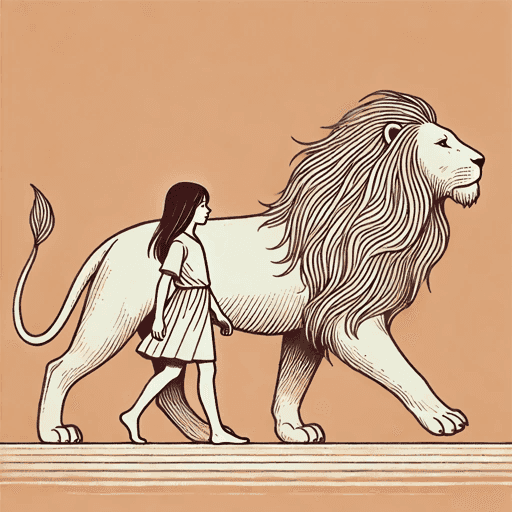
Lions are important to the action and plot of the novel, but they also have a symbolic meaning. Dresden and Naga embody the archetype of the friendly beast—an animal companion who helps the protagonist, showing that nature is on the hero’s side. The lions do help Carolyn, but she’s not a clear-cut hero, and, in a similar vein, the lions’ role is more complex. Readers are privy to Dresden’s thoughts, which depict him worshiping the Forest God, praying for Naga’s freedom, and choosing to sacrifice his life for hers. Portraying him with such personification aligns with one of the Buddhist tenets Steve strives to follow: “[R]espect for all life” (216).
Naga reminds Steve of Jack, the source of his consuming guilt, and saving Naga becomes a way for him to atone for Jack’s death. His discussion with Carolyn depicts a stark contrast in how they view the lions. She says, “[T]he lion isn’t important,” and he replies, “[S]he’s important to me” (189). This contrast emphasizes Steve’s compassion and reinforces his dedication to another Buddhist ideal, the alleviation of suffering.
Later, Steve sees something leonine in Carolyn. The way she moves when preparing to kill David “put him in mind of Dresden, turning to face the pack of dogs, how every muscle of the lion’s anatomy stood out in taut relief, the mute vehicles of his titanic and furious will” (265). Carolyn—strong, determined, powerful—shares many of the traits often associated with lions. In this way, lions symbolize Carolyn. Her life, knowledge, and godlike abilities have separated her from the normal cares and experiences of human life. Like animals, she lives apart from society and “at a different scale” than the rest of humanity (331), but Dresden and Naga are proof that this doesn’t preclude compassion and noble deeds.

Unlock the meaning behind every key symbol & motif
See how recurring imagery, objects, and ideas shape the narrative.
- Explore how the author builds meaning through symbolism
- Understand what symbols & motifs represent in the text
- Connect recurring ideas to themes, characters, and events