The Life Changing Magic of Tidying Up: The Japanese Art of Decluttering and Organizing
34 pages • 1-hour read
Marie Kondō, Transl. Cathy HiranoThe Life Changing Magic of Tidying Up: The Japanese Art of Decluttering and Organizing
A modern alternative to SparkNotes and CliffsNotes, SuperSummary offers high-quality Study Guides with detailed chapter summaries and analysis of major themes, characters, and more.
Chapter 3Chapter Summaries & Analyses
Chapter 3 Summary & Analysis: “How to Tidy by Category”
Kondō begins this chapter with straightforward, actionable advice, stating that, when tidying clothing, the following sequence is most effective:
- Tops
- Bottoms
- Clothes that should be hung in the wardrobe
- Socks
- Underwear
- Bags
- Accessories
- Special event clothes (uniforms, swimsuits, etc.)
- Shoes
All the clothes in each category must be gathered and spread across the floor. Next, each item should be handled to decide if it sparks joy. This selection process typically reduces items to one-third or one-quarter of their former volume. Kondō reassures readers not to fear discarding too much. After selecting only what sparks joy, individuals are invariably left with precisely the right amount of clothing. The author advises against relegating items to loungewear, insisting that clothing affects self-image and that even when alone, one should only wear items that spark joy.
Kondō recounts visiting a client who claimed that she did not have sufficient storage space for her clothes, despite owning two large wardrobes. It emerged that the client hung all her clothes in wardrobes due to the belief that this would optimize their condition and prevent wrinkles. Once her clothing was folded, the client realized that she had plenty of storage space.
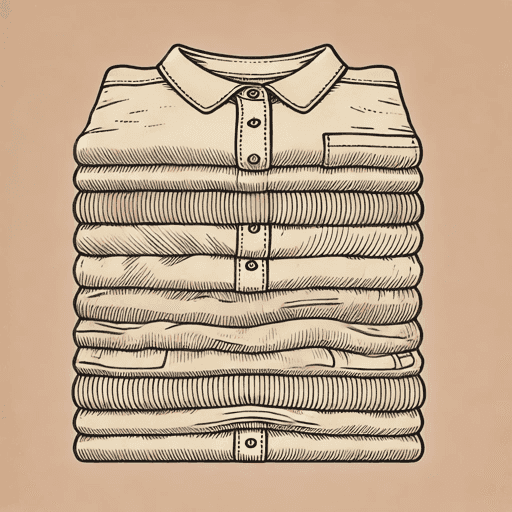
Kondō argues that wrinkles are created not by folding but by the pressure created when items are piled on top of each other. By folding as many clothing items as possible, one can save space. Furthermore, the act of folding is an expression of care and gratitude that transmits positive energy to clothing. The author recommends storing items vertically so that every item in a drawer is visible at a glance. Her instructions on the most effective way to fold are as follows:
- Fold each side of the garment into the center to make a rectangle.
- Fold the rectangle in half.
- Continue to fold in halves or thirds until the garment can stand up vertically in a drawer.
The author asserts that each garment has a folded “sweet spot.” Soft, light fabrics require tighter folding while thick materials need fewer folds.
Clothes that require hanging, such as coats, suits, and other more tailored items, should be carefully organized within a wardrobe. The longest, heaviest, and darkest clothing should hang on the left, progressing to the shortest and lightest items on the right. Kondō explains that this rise to the right is aesthetically pleasing.
Kondō provides precise instructions on how to effectively store socks and tights. To fold tights, align the legs on top of each other, fold them in half, and then fold them in thirds. Next, roll the bottom edge toward the waistband to create a sushi-like structure. Store the final product in a shoebox with the swirl facing upward. Socks should similarly be aligned on top of each other and folded into a rectangle. The author recalls a client who rolled over the tops of socks to store them in tight-paired balls and tied her stockings in the middle. The author claims this storage method stretches tights and socks out of shape and is also disrespectful. As these items of clothing work hard when being worn, they deserve to rest while being stored. For some, Kondō’s focus on ritualistic care deepens their appreciation for possessions, while others may find it overly animistic.
Kondō argues that books remain dormant while stored on bookshelves and that clients can only decide if they spark joy by handling them. Consequently, books, like clothing, must be spread on the floor before the discarding process begins. Many of Kondō’s clients want to keep books that they have not yet read or believe they may reread in the future. The author counters this argument, observing that the percentage of people who reread books is small. Furthermore, if a book is not read as soon as it is acquired, the moment for enjoying it has passed. This advice helps readers move beyond unhelpful rationalizations.
Moving on to papers, Kondō instructs readers to discard almost everything, including old study materials, credit card statements, instruction manuals, and used checkbooks. The only exceptions are documents that must be saved, such as insurance policies and guarantees, or papers requiring action. Kondō’s admission that paperwork cannot spark joy highlights that her key criterion is not applicable to all household items. Possessions such as documentation and household equipment are purely functional yet necessary to everyday life.
Kondō explains that komono is the Japanese term for miscellaneous items that tend to accumulate in drawers. She provides a clear structure for this potentially overwhelming category, recommending tidying objects in the following order:
- CDs and DVDs
- Skincare products
- Cosmetics
- Accessories
- Valuables (credit cards, passports, etc.)
- Electrical equipment and cords
- Household equipment (stationery, sewing kits, etc.)
- Household Supplies (medicine, tissues, detergent, etc.)
- Kitchen goods/food supplies
- Other (items related to hobbies, etc.)
Packaging, unidentified electrical cords, free novelty gifts, unused cosmetic samples, and spare buttons should all be discarded. Meanwhile, small change should be placed in one’s wallet or deposited at the bank. Kondō acknowledges that unused fitness accessories can be hard to part with due to their original cost. However, they must be discarded to allow one to focus on the present. The same is true of gifts that do not spark joy. Although gifts represent the thoughtfulness of the sender, their purpose is served once they have been gratefully received.
Sentimental belongings, such as photographs and gifts made by one’s children, are the most challenging to discard due to their emotional resonance. However, Kondō argues that cherished memories remain after keepsakes are discarded. Furthermore, an excess of such items creates an emotional burden, binding individuals to the past rather than reflecting the person they have become. The author advises automatically discarding items like old school reports and love letters and retaining only the keepsakes that genuinely spark joy in the present. Although Kondō’s claim that memories remain without keepsakes may not be universally experienced, her emphasis on present-oriented living aligns broadly with 21st-century research on contentment.
Kondō provides examples of clients who were prone to stockpiling and only realized how much they owned when they began the tidying process. One client had 60 spare toothbrushes, while another possessed 30 boxes of clingfilm. While these are extreme cases, the author claims that most people have more possessions than they need to live comfortably. When undertaking the process of reduction, readers will reach a “click-point” where they realize that they have just the right amount. Discarding creates a more meaningful relationship with things we choose to keep.
Chapter Lessons
- Spreading categories of belongings across the floor reveals their true volume and aids decisive choices.
- Proper folding saves space, prevents wrinkles, and reinforces appreciation for clothing.
- Storing clothes vertically makes each item visible at a glance and easily accessible.
- Sentimental items should be approached with present focus, as memories endure without keepsakes.
Reflection Questions
- What criteria do you currently use to decide which clothes to keep—practicality, sentiment, cost, or something else? How might the “spark joy” test change that process?
- Which sentimental belongings are most difficult for you to part with? Do they represent the past more than the person you are now?

Unlock all 34 pages of this Study Guide
Get in-depth, chapter-by-chapter summaries and analysis from our literary experts.
- Grasp challenging concepts with clear, comprehensive explanations
- Revisit key plot points and ideas without rereading the book
- Share impressive insights in classes and book clubs