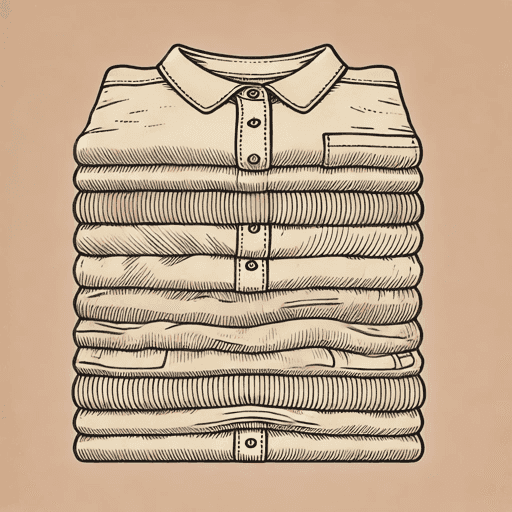
The Life Changing Magic of Tidying Up: The Japanese Art of Decluttering and Organizing
34 pages • 1-hour read
Marie Kondō, Transl. Cathy HiranoThe Life Changing Magic of Tidying Up: The Japanese Art of Decluttering and Organizing
A modern alternative to SparkNotes and CliffsNotes, SuperSummary offers high-quality Study Guides with detailed chapter summaries and analysis of major themes, characters, and more.
Important Quotes
“When you put your house in order, you put your affairs and your past in order, too. As a result, you can see quite clearly what you need in life and what you don’t, and what you should and shouldn’t do.”
(Preface, Page 4)
This quotation encapsulates the key takeaway to Use Tidying as a Path to Self-Knowledge and Intentional Living. Kondō asserts that imposing order on one’s domestic space and discarding items that are no longer required reveals one’s true values and priorities.
“The KonMari Method I describe in this book is not a mere set of rules on how to sort, or organise and put things away. It is a guide to acquiring the right mindset for creating order and becoming a tidy person.”
(Preface, Page 5)
Kondō distinguishes her approach from conventional tidying advice, framing tidying as a mindset shift. The author presents the KonMari method as a life-long skill rather than a temporary fix: Instead of repeatedly battling clutter, readers can become tidy people by realigning their habits. This gestures toward the key takeaway to Bring Ritual, Respect, and Mindfulness into Daily Domestic Practices.
“I’m sure most of us have been scolded for not tidying up our rooms, but how many of our parents consciously taught us how to tidy as part of our upbringing?”
(Chapter 1, Page 11)
This observation reinforces Kondō’s central argument that tidying is not an innate ability but a learned practice. By framing tidying as a skill that requires guidance, she shifts responsibility away from personal failings and toward the need for assistance. The quotation highlights the usefulness of her method, presenting it as the education that most people lack.
“Tidying in the end is just a physical act. The work involved can be broadly divided into two kinds: deciding whether or not to dispose of something and deciding where to put it. If you can do these two things, you can achieve perfection […] It is not hard to tidy up perfectly and completely in one fell swoop. In fact, anyone can do it. And if you want to avoid rebound, this is the only way to do it.”
(Chapter 1, Page 22)
This quotation distills Kondō’s tidying method to two basic decisions: what to keep and where to put it. The quotation also highlights the transformative nature of her approach with the claim that tidiness is achieved “in one fell swoop.” The author rejects incremental efforts as ineffective, claiming that they lead to a futile cycle where mess soon reasserts itself.
“Putting things away creates the illusion that the clutter problem has been solved. But sooner or later, all the storage units are full, the room once again overflows with things, and some new and ‘easy’ storage method becomes necessary, creating a negative spiral. This is why tidying must start with discarding. We need to exercise self-control and resist storing our belongings until we have finished identifying what we really want and need to keep.”
(Chapter 1, Page 26)
Kondō argues that storage solutions provide only a temporary fix for an untidy home. They create the illusion of order while the root cause (excess possessions) is overlooked. Her insistence that the tidying process must begin with discarding shifts the emphasis from illusory to true order and hints at the need to Confront the Psychology of Clutter and Release Unhealthy Attachments.
“When we disperse storage of a particular item throughout the house and tidy one place at a time, we can never grasp the overall volume and therefore can never finish. To escape this negative spiral, tidy by category, not by place.”
(Chapter 1, Page 29)
Kondō argues that tidying by location is ineffective because people tend to disperse similar items throughout their entire home. Clearing one room or cupboard at a time prevents people from grasping the true extent of their possessions. By contrast, tidying by category—for instance, gathering all clothes in one space—creates a greater impact by making excess undeniable.
“Effective tidying involves only two essential actions: discarding and deciding where to store things. Of the two, discarding must come first.”
(Chapter 1, Page 31)
By reducing tidying to two steps—discarding and storing—Kondō makes the prospect of lasting order feel achievable rather than overwhelming. Her insistence that “discarding must come first” emphasizes her philosophy that tidiness begins with deciding which items deserve space in one’s home. For instance, allocating storage space for a set of weights one never uses merely encourages an unproductive attachment.
“Tidying is a special event. Don’t do it every day.”
(Chapter 1, Page 32)
Instead of treating tidying as an endless daily chore, Kondō reframes it as a one-time, transformative reset. By performing the task thoroughly and decisively, individuals can reduce the need for constant maintenance. The author presents “special event” tidying as an intentional and exciting act marking a fresh start. Readers might even choose to treat the date itself as a special occasion—for instance, by preparing a favorite meal—to underscore its significance.
“What was it that motivated you to tidy in the first place? What do you hope to gain through tidying? Before you start getting rid of things, take the time to think this through carefully. This means visualizing the ideal lifestyle you dream of.”
(Chapter 2, Page 41)
Kondō asks readers to visualize the end result of their tidying as a motivational tool. The exercise emphasizes that the end goal is an ideal lifestyle, not just a clean and uncluttered home, converting an abstract ambition into a tangible outcome. This relates to the key takeaway to Prioritize Active Ownership Over Mass Disposal; the point is not simply to throw things away but rather to make space for what truly serves one.
“The best way to choose what to keep and what to throw away is to take each item in one’s hand and ask: ‘Does this spark joy?’ If it does, keep it. If not, throw it out. This is not only the simplest but also the most accurate yardstick by which to judge.”
(Chapter 2, Page 47)
This quotation encapsulates the KonMari Method and its departure from conventional tidying advice. Instead of evaluating possessions on their practicality, Kondō reduces decision-making to a single intuitive criterion: “Does this spark joy?” The technique illustrates the importance of ritual and spirituality in the author’s philosophy.
“We should be choosing what we want to keep, not what we want to get rid of.”
(Chapter 2, Page 47)
This quotation underscores the key takeaway to prioritize active ownership over mass disposal. While discarding possessions is central to the KonMari method, Kondō emphasizes the importance of choosing what to keep rather than focusing on the act of disposal. This approach reframes discarding as a celebratory rather than punitive process.
“The best sequence is this: clothes first, then books, papers, miscellaneous items (komono), and lastly, sentimental items and keepsakes.”
(Chapter 2, Page 53)
This quotation reflects Kondō’s belief that the order of tidying is crucial to success. By prescribing a sequence of categories, she structures the process to build decision-making skill gradually. Clothes, which are often plentiful and relatively low in emotional significance, provide the easiest entry point, while more challenging categories with sentimental associations are saved for last.
“When you come across something that you cannot throw away, think carefully about its true purpose in your life. You’ll be surprised at how many of the things you possess have already fulfilled their role. By acknowledging their contribution and letting them go with gratitude, you will be able to truly put the things you own, and your life, in order. In the end, all that will remain are the things that you really treasure.”
(Chapter 2, Page 70)
This quotation encapsulates Kondō’s blend of practicality and spirituality in approaching possessions. While acknowledging that many people struggle to part with their belongings, she reframes possessions as companions who are happy to move on once they have fulfilled their role. The practice of thanking objects adds a dimension of ritual and mindfulness, transforming discarding into an act of closure and respect. For example, someone whose taste in books has changed over the years might reflect on the pleasure a former favorite once brought them but then choose to let it go.
“To get rid of what you no longer need is neither wasteful nor shameful. Can you truthfully say that you treasure something buried so deeply in a closet or drawer that you have forgotten its existence? If things had feelings, they would certainly not be happy. Free them from the prison to which you have relegated them. Help them leave that deserted isle to which you have exiled them. Let them go, with gratitude. Not only you, but your things as well, will feel clear and refreshed when you are done tidying.”
(Chapter 2, Page 72)
Kondō challenges the common belief that discarding usable items is inherently wasteful. By personifying possessions and portraying them as “unhappy” or “exiled,” she encourages readers to view hoarding as a form of neglect. This shift alleviates the guilt that often accompanies discarding and relates to the advice to Embrace Minimalism as Both an Aesthetic and Ethical Choice.
“The act of folding is far more than making clothes compact for storage. It is an act of caring, an expression of love and appreciation for the way these clothes support your lifestyle. Therefore, when we fold, we should put our heart into it, thanking our clothes for protecting our bodies.”
(Chapter 3, Page 86)
This quotation highlights how Kondō elevates folding from a mundane household chore into a ritual of mindfulness and gratitude. She argues that folding not only saves space but also cultivates respect for one’s clothing. By encouraging people to fold with care and intention, the author transforms a domestic task into an act of stewardship that reinforces the emotional bond between people and their possessions—a form of active ownership.
“The goal is to fold each piece of clothing into a simple, smooth rectangle. First, fold each lengthwise side of the garment toward the center (such as the left-hand, then right-hand, sides of a shirt) and tuck the sleeves in to make a long rectangular shape. It doesn’t matter how you fold the sleeves. Next, pick up one short end of the rectangle and fold it toward the other short end. Then fold again, in the same manner, in halves or in thirds. The number of folds should be adjusted so that the folded clothing when standing on edge fits the height of the drawer.”
(Chapter 3, Page 89)
Breaking down the folding process step by step, Kondō explains how every garment is reduced to a neat rectangle designed to “stand on edge” and fit the drawer. This system minimizes creasing, allows every item to be visible at a glance, and prevents items from becoming buried and neglected, reflecting her broader philosophy of approaching one’s belongings mindfully and respectfully.
“Have you ever had the experience where you thought what you were doing was a good thing but later learned that it had hurt someone? At the time, you were totally unconcerned, oblivious to the other person’s feelings. This is somewhat similar to the way many of us treat our socks.”
(Chapter 3, Page 94)
Kondō compares the common habit of storing pairs of socks in tight balls to unintentionally hurting another person. The analogy presents this storage method as both an act of disrespect to one’s clothing and inadvisable on a practical level (the socks’ tops are stretched out of shape). The quotation highlights the book’s blend of Shinto-influenced spirituality and pragmatic advice.
“If you missed your chance to read a particular book, even if it was recommended to you or is one you have been intending to read for ages, this is your chance to let it go. You may have wanted to read it when you bought it, but if you haven’t read it by now, the book’s purpose was to teach you that you didn’t need it. There is no need to finish reading books that you only got halfway through. Their purpose was to be read halfway. So get rid of all those unread books. It will be far better for you to read the book that really grabs you right now than one that you left to gather dust for years.”
(Chapter 3, Page 106)
Kondō suggests that if books are not read as soon as they are acquired, they will likely never be returned to. Consequently, unread or unfinished books have already fulfilled their role and should be discarded. This perspective frees individuals from perceiving their unread books as symbols of failure or obligation, allowing them to let them go without guilt.
“Presents are not ‘things’ but a means for conveying someone’s feelings. When viewed from this perspective, you don’t need to feel guilty for throwing a gift away. Just thank it for the joy it gave you when you first received it.”
(Chapter 3, Page 127)
This quotation encapsulates Kondō’s approach to overcoming one of the most significant obstacles to decluttering: the guilt associated with discarding gifts. By reframing presents as expressions of feelings, she shifts their value from the physical object to the emotional moment of exchange. Once that purpose has been fulfilled, the gift no longer needs to be kept to retain its meaning. Thus, a person might choose to keep a gifted item of clothing that they wear frequently but discard one that they do not, while recognizing the thoughtfulness behind the gesture.
“It is not our memories but the person we have become because of those past experiences that we should treasure. This is the lesson these keepsakes teach us when we sort them. The space in which we live should be for the person we are becoming now, not for the person we were in the past.”
(Chapter 3, Page 141)
Kondō addresses the challenge of discarding keepsakes when they are perceived as vessels of precious memories. The author shifts this focus, suggesting that individuals should cherish the growth and transformation that they have undergone as a result of their accumulated experiences, rather than objects that represent the past. The statement reinforces Kondō’s philosophy that a home should support the present self. For example, a person might choose to part with their old yearbooks while recognizing how their time in school has shaped them.
“The point in deciding specific places to keep things is to designate a spot for everything.”
(Chapter 4, Page 153)
This quotation reflects one of Kondō’s central practical principles: Order is sustainable only when every possession has a predetermined home. The rule simplifies daily maintenance, as once a place is chosen, tidying becomes a matter of returning items rather than rethinking their location.
“During the selection process, if you come across something that does not spark joy but that you just can’t bring yourself to throw away, stop a moment and ask yourself, ‘Am I having trouble getting rid of this because of an attachment to the past or because of a fear for the future?’ […] As you do so, you’ll begin to see a pattern in your ownership of things, a pattern that falls into one of three categories: attachment to the past, desire for stability in the future, or a combination of both. It’s important to understand your ownership pattern because it is an expression of the values that guide your life.”
(Chapter 5, Page 210)
This quotation illustrates how Kondō encourages readers to confront the psychology of clutter and release unhealthy attachments. By pausing to ask why they are reluctant to discard an item, individuals can uncover the underlying values and fears shaping their relationship to possessions. For example, an accumulation of old letters might reveal nostalgia for a past identity, while hoarding unused items might signal a fear of future scarcity.
“The things we own are real. They exist here and now as a result of choices made in the past by no one other than ourselves. It is dangerous to ignore them or to discard them indiscriminately as if denying the choices we made. This is why I am against both letting things pile up and dumping things indiscriminately. It is only when we face the things we own one by one and experience the emotions they evoke that we can truly appreciate our relationship with them.”
(Chapter 5, Page 212)
This quotation underscores Kondō’s conviction that intentional living is central to the process of tidying. Her rejection of both hoarding and indiscriminate discarding transforms tidying into a reflective practice. Rather than treating possessions as burdens to avoid or trash to eliminate, she insists that they be individually confronted to acknowledge the values, impulses, or circumstances that led to their acquisition.
“One of the reasons clutter eats away at us is because we have to search for something just to find out whether it’s even there, and many times, no matter how much we search, we cannot seem to find what we are looking for. When we have reduced the amount we own and store our documents all in the same place, we can tell at a glance whether we have it or not. If it’s gone, we can shift gears immediately and start thinking about what to do.”
(Chapter 5, Page 216)
In this quotation, Kondō presents clutter as a burden that undermines efficiency and peace of mind. She draws attention to the stress and frustration caused by excessive paperwork, as individuals struggle to find what they need or may even be uncertain whether a document exists at all. The author argues that minimizing paperwork and storing it in one place reduces unnecessary anxiety: If something is missing, one’s energy shifts from searching to problem-solving.
“We amass material things for the same reason that we eat—to satisfy a craving. Buying on impulse and eating and drinking to excess are attempts to alleviate stress. From observing my clients, I have noticed that when they discard excess clothing, their tummies tend to slim down, when they discard books and documents, their minds become clearer, when they reduce the number of cosmetics and tidy up the area around the sink and bath, their complexion tends to become clear and their skin smooth.”
(Chapter 5, Page 226)
By comparing the accumulation of excess possessions to overindulgence in food or drink, Kondō underscores the psychological cause of clutter. All these behaviors are driven by an attempt to soothe stress or fill an inner void. Meanwhile, her description of the physical transformation of her clients dramatizes the holistic benefits of tidying.

Unlock every key quote and its meaning
Get 25 quotes with page numbers and clear analysis to help you reference, write, and discuss with confidence.
- Cite quotes accurately with exact page numbers
- Understand what each quote really means
- Strengthen your analysis in essays or discussions