The Lioness
53 pages • 1-hour read
Chris BohjalianThe Lioness
A modern alternative to SparkNotes and CliffsNotes, SuperSummary offers high-quality Study Guides with detailed chapter summaries and analysis of major themes, characters, and more.
Symbols & Motifs
Content Warning: This section of the guide includes discussion of child abuse, physical abuse, death, and graphic violence.
The Closet (Oubliette)
The closet in which Glenda Stepanov locked Billy when he was a child first features as an image encapsulating her abuse—abuse that has shaped his adult fears and vulnerabilities and that manifests in his fear of flying and a sense of claustrophobia. The closet returns as Billy recalls this childhood terror when his Russian kidnappers lock him in a Maasai hut. As a trigger for the experience of spiritual distress that Billy thinks of as the dark night of the soul—recalling the 16th-century poem composed by the Catholic mystic known as St. John of the Cross—his closet becomes a symbol for how characters in the book confront their wounds, obstacles, vulnerabilities, and fears. In the Epilogue, Billy’s bestselling book, The Soul in the Dark, symbolizes how he has confronted and moved on from his trauma, in keeping with the book’s theme of survival.
Billy’s use of the word oubliette, a cramped dungeon whose name derives from the French “oublier,” or “to forget,” also turns the closet into a symbol of truths the characters would like to ignore. Terrance, for example, would like to forget the treatment of his family when they lived in Tennessee. The closet that haunts David without his even knowing it is his father’s work with the CIA, for which his Russian captors punish him when they imprison him in his own hut.
The closet also supports the theme of The Fragility of Intimate Relationships by representing the secrets that couples do not share. Carmen, for instance, tries to hide from her husband how she feels about his posturing and self-aggrandizement—or, for that matter, about the quality of his work. David has more devastating secrets that he keeps from Katie, including his sense of shame that she earns more money than he does and his guilt that he has not been sexually faithful to her.
Wild Animals
The animals that attack the characters, like the leopard that kills Peter and the hyenas that attack Reggie, represent the physical dangers of the landscape, which the characters are not prepared to confront. That these animals pose a threat to kidnappers and kidnapped alike (one of the Russians dies of a snake bite) underscores the indiscriminate nature of the threat: In the natural world, money and fame offer no security or protection.
There is an irony to this portrayal, however. Money and fame may not protect the characters from the Serengeti’s wildlife, but they also do not endanger them further. On the other hand, as the Russians kidnap the wealthy group in part to extort ransom money. The motif of wild animals thus develops the novel’s interest in Motives for Human Violence and Cruelty. Several characters note that animals attack because it is their nature or their instinct. Human predators, it is repeated often, are more dangerous because they are willfully cruel. Thus, the novel contrasts animal predation with (among other things) the world of Hollywood, where, as Carmen acknowledges, people sometimes feel they are fighting for survival.
Indeed, the fact that animals stand outside human norms and laws exposes human brutality more than it does animal brutality. Katie remarks, for example, that “Wildebeest don’t respect national boundaries. They don’t care about borders” (22). Her comment is meant to reassure David that they will be in no danger on their trip, but in retrospect, it merely highlights the gap between human and animal: The region’s geopolitical upheavals are largely irrelevant to its wildlife, but the kidnapping reveals that humans cannot afford to ignore them.
The Baobab Tree
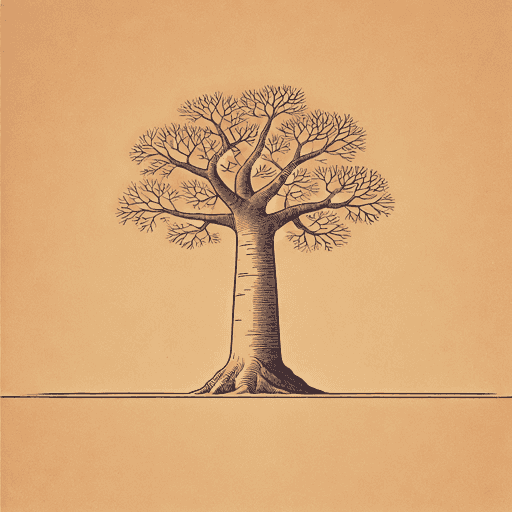
The baobab tree rescues and shields Carmen through her version of the dark night of the soul. It thus represents refuge and shelter—a place of safety amid a world of dangers—when it provides a place where Carmen can escape predators. However, Carmen’s baobab also becomes a site of transformation and a symbol of her fighting spirit and resilience. In searching for a means of survival, she uses the baobab in the only way she can think of: as a fiery beacon that might catch the notice of a passing airplane. She later reflects that the tree was likely dead to have burned as it did, making it a symbol of transformation twice over and framing Carmen’s escape as a kind of rebirth or resurrection. In the Epilogue, the baobab has taken on a fabulist quality in Carmen’s mind, and she thinks of her experience as a kind of legend or fairy tale, an experience that feels remote and laden with meanings she doesn’t completely understand. This complicates the baobab tree’s status as a tool for and testament to Carmen’s will to survive, revealing the cost of that survival in her ongoing struggle to make sense of her experiences.

Unlock the meaning behind every key symbol & motif
See how recurring imagery, objects, and ideas shape the narrative.
- Explore how the author builds meaning through symbolism
- Understand what symbols & motifs represent in the text
- Connect recurring ideas to themes, characters, and events