49 pages • 1-hour read
The Man Who Loved Clowns
A modern alternative to SparkNotes and CliffsNotes, SuperSummary offers high-quality Study Guides with detailed chapter summaries and analysis of major themes, characters, and more.
Important Quotes
Content Warning: This section of the guide includes discussion of bullying, ableism, and death.
“Punky had come rushing toward us in his eagerness to play, and the girl had taken one look at his dwarflike body and his child-man face and run screaming from the house in terror.”
(Chapter 2, Page 6)
The only time Delrita ever brought home a friend to play, she realized that some people are afraid of Punky. She finds that if they’re not afraid of him, they laugh at him. This draws a parallel between Punky and his number one obsession—clowns. Clowns symbolize Punky’s childlike nature, and, like Punky, people tend to find clowns either scary or entertaining. This scene is one of the foundations of Delrita’s bias that everyone is prejudiced against people with disabilities, a perspective that will be challenged and overturned throughout the novel.
“To chase away my fears, I’d think about the tree I’d once seen growing from a rock. Maybe I’d be like that tree, which stood proud and willowy after fighting its way to the sun.”
(Chapter 2, Page 6)
Delrita compares herself to a tree that flourishes despite growing in a difficult environment. The tree symbolizes Delrita’s journey toward growth and maturation in the face of adversity. After her parents die, Delrita struggles to make new social bonds in a town she has just recently moved to, but remembering the tree gives Delrita hope.
“‘Well—he—that fellow is different,’ she stammered pushing her long blond hair back behind her ears.
Revelation. Columbus discovering America.”
(Chapter 2, Page 8)
Delrita’s classmate explains why she was staring and laughing at Punky, and Delrita sarcastically thinks that noticing Punky is “different” is a “revelation.” The use of ironic humor here underscores Delrita’s annoyance at people treating Punky as a spectacle. At the beginning of the novel, Delrita wishes that Punky’s disability was more normalized, establishing the theme of The Relationship Between Community and Disability.
“There are sheltered workshops where the handicapped can work under supervision.”
(Chapter 4, Page 23)
This quote is an example of the language the novel uses to discuss disability. The Man Who Loved Clowns was published in 1992 when the term “handicapped” was an appropriate term to refer to someone with Down syndrome. Now this term is outdated, and it is sometimes considered offensive because it implies incapability and a lack of independence. The use of outdated terminology like “handicapped” situates the novel in the time it takes place.
“I was gouging too hard at the swan, and suddenly I broke off the neck. I felt like crying, not because of the broken hunk of wood, but because I was ashamed of my shame.”
(Chapter 5, Page 37)
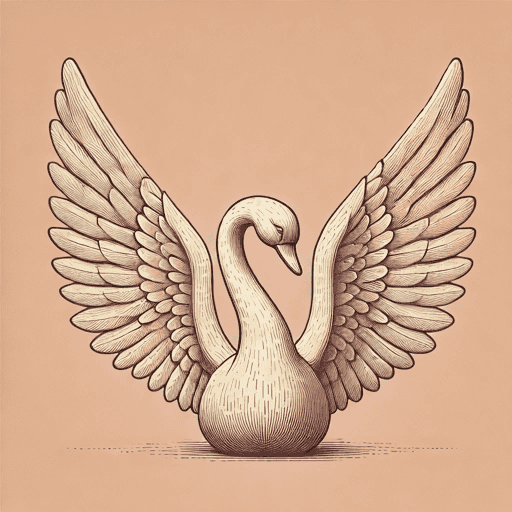
At the beginning of the novel, every time Delrita tries to carve a wooden swan, she ends up accidentally snapping its neck. The wooden swans are a key symbol in the novel, and her repeated failure to complete an intact carving represents her struggle to gain confidence and be comfortable with herself, highlighting where she is in her coming-of-age journey. Delrita eventually succeeds in carving a perfect swan, which symbolizes her personal transformation and self-acceptance.
“By the dresser was a big punching-bag clown, leering at me. I slugged him hard, wanting him to fall down and stay down, but he bounced back up on his balloon bottom and continued to leer.”
(Chapter 5, Page 37)
Clowns, Punky’s obsession, symbolize his personality. Delrita trying to punch the clown-themed punching bag represents her frustration with Punky’s behavior and her desire to try to somehow repress that side of his personality. However, in the same way that the punching bag will always pop back up, Punky’s personality is a permanent part of him.
“‘It brought twelve hundred dollars!” said Mom, sinking into a chair in the kitchen. She and Dad were both so sunburned they looked like they’d been fried in hot oil.”
(Chapter 6, Page 42)
The simile comparing Delrita’s parents’ sunburn to being fried in oil creates striking visual imagery. It also helps characterize them as honest, hard workers. The vivid imagery of their sunburn and the harshness of the idea of being fried in oil communicates the strenuous and grueling nature of their manual labor.
“An owl looking for a Tree.”
(Chapter 8, Page 61)
Delrita turns her head around like an owl when she’s searching for her love interest, Tree, at school. The metaphor likens the character Tree to an actual tree, which links him to one of the novel’s key symbols—the tree Delrita sees growing through a rock. Tree embodies this symbol in that, like the tree that grows through a rock, he is resilient in the face of adversity. He is bold and successful, refusing to let his family’s poverty keep him from pursuing an active social life and football career.
“I decided to tell the truth and hope she wouldn’t laugh like a hyena right here in the cafeteria.”
(Chapter 8, Page 62)
The simile “laugh like a hyena” evokes imagery of vicious public mockery, which is Delrita’s biggest fear. Despite this fear, she chooses to be vulnerable by telling Avanelle about her family history. The risk pays off, and this conversation brings Delrita and Avanelle closer together. This is one small step in Delrita’s journey toward learning the importance of being open and honest to form valuable social connections.
“Some of the costumes were downright ridiculous, and it was a relief to go home, where everything was normal, where we hid shampoo and had horn bones behind the TV.”
(Chapter 8, Page 66)
The irony of Delrita describing these aspects of her home life as “normal” highlights her intense judgment and fear of the public. At this point in the story, her identity exists solely within her immediate family. To most people, hiding shampoo and keeping chicken bones behind the TV are not “normal” practices, but Delrita cannot yet imagine a comfortable life or identity outside of her home. This belief, which she holds at the beginning of the novel, will be overturned as she expands her world beyond the family home, developing the theme of The Role of Family Identity in Coming of Age.
“Tossing the pencil to me, he said, ‘Come on, give this little fellow a chance. Let him spread his wings and fly.’”
(Chapter 9, Page 72)
Shortly before Delrita’s dad is tragically killed in an accident, he encourages her to try carving a flying swan, even though Delrita doubts that she has the skills to do it. The swan with outstretched wings symbolizes Delrita’s growth and maturation. Due to her family’s encouragement, Delrita is eventually able to “spread [her] wings and fly” figuratively, and she also does overcome her doubts regarding her whittling skills and succeeds in carving the flying swan.
“The words were a lightning bolt, surging through my body.”
(Chapter 11, Page 89)
The author uses a vivid metaphor to describe how Delrita feels upon learning of her parents’ unexpected deaths in a car accident. Lightning is sudden and disruptive, like the loss Delrita endures, but though a lightning bolt is destructive, it is also a source of power and energy. In the same vein, going through the process of grieving her parents gives Delrita the strength to change and grow, supporting the theme of Loss as a Catalyst for Personal Growth.
“The realization was like having a knife twisted in my chest.”
(Chapter 11, Page 92)
When Uncle Bert drives Punky and Delrita back to Tangle Nook after Delrita’s parents’ accident, she realizes that she will never again live in the house she used to think of as home. The simile comparing this thought to a knife highlights the intensity and abruptness of Delrita’s pain. It also implies a sort of personal attack, as though Delrita is being betrayed, and she does feel like Aunt Queenie and Uncle Bert betray her by forcing her to adapt to a new lifestyle after her parents’ deaths.
“It’ll be the first thing I see every morning, and the last thing I see every night—a reminder that God is always watching over us.”
(Chapter 11, Page 96)
Delrita has a flashback to being in second grade, when her mom hung up the “God’s eye” she had made from yarn in school. Remembering this moment brings Delrita peace after her parents die, as it gives her hope that her parents and God are watching over her. In Punky’s last moments of life, he has a vision of Delrita’s parents, confirming her belief and bringing her reassurance that her parents are watching from the afterlife.
“I was a robot, doing what he asked while he got Punky up and dressed.”
(Chapter 11, Page 97)
Delrita uses the metaphor of feeling like a robot when Uncle Bert finds her and Punky and insists they come back to live with him and Aunt Queenie. Comparing Delrita to a robot communicates the utter numbness and disconnection from humanity that she feels in this moment. Not only does Delrita feel like a robot, but she is simply “doing what he asked,” as though she no longer has any agency or control over her life.
“For the first time, I wanted to be invisible. But the relatives wouldn’t let me. So I became a blank wall instead.”
(Chapter 12, Page 99)
Delrita says repeatedly that she feels invisible at school because the other kids barely seem to see her, let alone talk to her. The situation is reversed now, at her parents’ funeral, where everyone is talking to her, but she wishes they wouldn’t. The reversal of Delrita’s feelings on feeling invisible, combined with the metaphor comparing her to a “blank wall,” speaks to the idea that Delrita is starting a new chapter in her life. She is starting over from scratch and will have to reinvent her identity in her parents’ absence.
“All around me were trees in glorious shades of red, yellow, and orange, but I concentrated on the dead and dying leaves that dropped like tears before me, cluttering the sidewalk.”
(Chapter 13, Page 107)
The vivid, colorful imagery of the leaves is juxtaposed with a gloomy description of death and decay, illustrating how Delrita’s tragic life circumstances influence her perspective. She can only see the bleakness of autumn, even though there is beauty as well. The description of fall also speaks to the never-ending cycle of life: Leaves die and fall, but soon they will regrow, and life will start again. Similarly, the deaths of Delrita’s parents are the end of Delrita’s life as she knows it, but this ending is also the catalyst for starting a new chapter of her life.
“Life is like an untouched block of wood. We can carve out a beautiful niche for ourselves, or we can leave it unused and unproductive on a shelf.”
(Chapter 13, Page 109)
Whittlin’ Walt uses an extended metaphor to compare life to a block of wood, ready to be carved. Through this metaphor, Walt sends Delrita the message that she is full of unfulfilled potential, and there are many possibilities for her if she chooses to pursue them. The uncarved block of wood as a symbol of potential parallels the symbol of the completed swan that Delrita carves, which represents Delrita finally finding the courage and strength to fulfill her potential, both as a woodcarver and in her social life.
“That week I lapped up Avanelle’s friendship like a thirsty tree soaking up water.”
(Chapter 15, Page 122)
Delrita is like the tree that she once saw growing out of a rock, in that she also overcomes challenges and continues to grow. To progress, Delrita realizes, she needs to utilize the support of those around her, just like the tree needs as much water as it can get. Accepting the friendship and love of those around her is the first step toward building up her courage and confidence.
“I caught myself doing the unforgivable—staring, just like the strangers who had stared at Punky a thousand times.”
(Chapter 17, Page 145)
When Delrita accompanies Punky on his first day of work at the sheltered workshop, she realizes that her family situation with Punky is not as unique as she once thought. There are many more people in Tangle Nook with disabilities. The fact that she stares at them helps Delrita begin to understand that not everyone who stares at Punky is malicious—they are simply curious.
“Your swan reminds me of Punky. They both started out with the basic ingredients, but it took a special touch for them to spread their wings and fly.”
(Chapter 20, Page 177)
Aunt Queenie is proud of Delrita when she finally succeeds in carving a flying swan. Delrita’s dad encouraged her to try carving the swan, and Aunt Queenie uses the same phrasing—“spread their wings and fly”—that Delrita’s dad used. The flying swan is a symbol of Delrita’s personal growth. She finally gains the confidence to be open and honest with others, allowing her to form meaningful relationships outside her family.
“Almost at Ronald’s feet, Punky stared spellbound, clapping harder and laughing louder than anybody else except Rudy. Few people noticed him, though, because everyone’s attention was centered on Ronald.”
(Chapter 22, Page 191)
Delrita has always been terrified of Punky going out in public because she expects that everyone who sees him will laugh at and mock him. Now, though, she realizes that she has been underestimating her community. No one is laughing at Punky or drawing negative attention to him at all. This realization helps Delrita learn to trust people around her, ultimately helping her gain confidence and make friends.
“Not even Mom could have cared for Punky better than Aunt Queenie.”
(Chapter 24, Page 207)
Aunt Queenie is exceptionally loving and meticulously caring when Punky is in his last few days of life. Delrita’s perception of her aunt at this point starkly contrasts with her perspective at the beginning of the novel, when she thought her aunt’s opinions on Punky’s care were intrusive and ignorant. Delrita now faces the truth that her prior opinion of her aunt was skewed, and Aunt Queenie really does have her and Punky’s best interests in mind.
“I felt empty and lost and unattached, as if I were floating in the blackness of space, where the lack of gravity would keep me bobbing uselessly forever.”
(Chapter 25, Page 211)
The diction the novel employs to describe Delrita’s feelings after Punky’s death is similar to how she describes feeling after her parents’ deaths. She feels “empty” and “blank” both times, suggesting that a part of her identity is being erased. A key aspect of Delrita’s trajectory throughout the novel is the reinvention of her self-identity, which slowly transforms from being grounded in her family to becoming tied to her friends and community. After her parents and Punky die, Delrita is forced to detach from her prior identity, and she forms new social connections that aid in her personal reinvention.
“Punky had shown me how to make friends, how to be free, and I was going to spread my wings and fly.”
(Chapter 25, Page 216)
The final line of the novel harkens back to the words Delrita’s dad uses to encourage her to branch out and trust herself. Aunt Queenie uses the same words, praising Delrita for “spreading her wings and flying,” and now, Delrita herself finally understands the significance of this metaphor. Just like the wooden swan with outstretched wings, Delrita is free, no longer weighed down by fear.

Unlock every key quote and its meaning
Get 25 quotes with page numbers and clear analysis to help you reference, write, and discuss with confidence.
- Cite quotes accurately with exact page numbers
- Understand what each quote really means
- Strengthen your analysis in essays or discussions