49 pages • 1-hour read
The Man Who Loved Clowns
A modern alternative to SparkNotes and CliffsNotes, SuperSummary offers high-quality Study Guides with detailed chapter summaries and analysis of major themes, characters, and more.
Symbols & Motifs
Clowns
Content Warning: This section of the guide includes discussion of bullying, ableism, and death.
Clowns are a symbol of Punky’s innocent, childlike, and fun-loving nature. Punky is obsessed with clowns, from Ronald McDonald to Jellybean, a clown on his favorite children’s television show. His bedroom is decorated with clowns, and Delrita even makes several woodcarvings of clowns, without which Punky refuses to leave the house. Some aspects of Punky’s personality parallel those of a clown’s performance—he is playful, full of joy, and gets along with children better than he does adults. The novel also highlights that the way people react to clowns also reflects the way the public tends to view Punky. Clowns are entertaining, but they can also make people scared or uncomfortable. Punky usually makes people laugh, but sometimes his unexpected ways of socializing scare people off.
At one point, Delrita enters Punky’s room to let off steam, frustrated by how his childish behavior gets him in trouble. She hits Punky’s toy punching bag clown, “wanting him to fall down and stay down, but he bounced back up on his balloon bottom and continued to leer” (37). This symbolizes Delrita’s wish for Punky’s behavior to stop getting him and the family in trouble. She feels ashamed of him but feels guilty for being ashamed. The fact that the punching bag always comes back up reflects the fact that Delrita will simply have to accept Punky’s differences, as well as the fact that Punky is resilient—nothing will keep him down for long.
The Wooden Swans
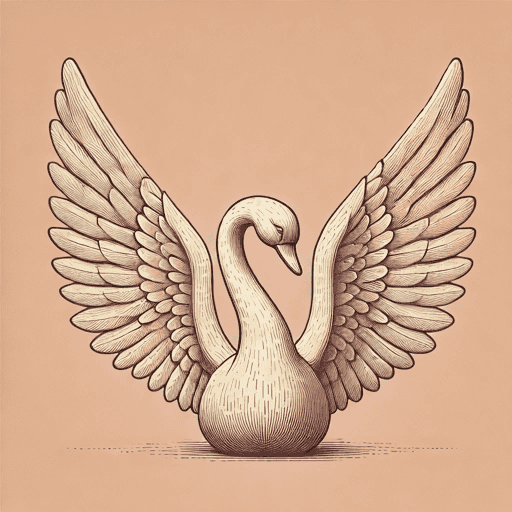
Delrita’s main hobby is woodcarving, and throughout the novel, she works on different carvings of swans. The swans symbolize Delrita’s transformation and maturation. Early in the novel, Delrita tries unsuccessfully to whittle a few swans, but she always accidentally cracks the swans’ necks, the most slender and delicate part of the carving. At this point in the narrative, Delrita is stuck—not just in her craft, but socially and emotionally. She is consumed with shame about Punky, guilt about being ashamed, and an inability to form meaningful relationships outside her family.
Later in the novel, when Delrita sketches an outline for a new swan, her dad suggests that she try carving one with outstretched wings. He encourages her to “Let him spread his wings and fly” (72), a line that different characters repeat throughout the narrative. Delrita doesn’t think she is skillful enough to carve one with outstretched wings—each one she has tried so far has its wings folded by its side. Her dad’s suggestion represents his desire for Delrita to branch out in her social life. As the novel continues, her whittling eventually improves, paralleling her personal growth and maturity. Finally, she succeeds in carving a bird with outstretched wings. The accomplishment illustrates her personal growth as she finally embraces the freedom to express herself and connect with the world around her—just like the swan, she is finally able to spread her wings and fly.
The Tree Growing from a Rock
When Delrita first moves to Tangle Nook, she quells her fears by remembering a tree she once saw growing out of a rock: The tree flourished despite unlikely and difficult circumstances, symbolizing Delrita’s hope to grow even though she’s in an unfamiliar and intimidating place. At first, she thinks she fails at being like the tree; she doesn’t make friends in Tangle Nook or flourish in any way.
Delrita thinks of this tree again after her parents die, when Avanelle reaches out with love and support. She realizes that she hasn’t made enough effort to gain the support that she needs to flourish. Up until this point, Delrita has rejected anyone who has tried to get close to her. Now, however, Delrita knows that she needs Avanelle’s friendship, just as the tree needs water and sunlight, connecting to the theme of Loss as a Catalyst for Personal Growth.
This symbol also ties into Delrita’s new friend and love interest, Tree. Tree is the opposite of Delrita, in that he takes every opportunity he can to progress despite his own rocky circumstances. He is also, unlike Delrita and Avanelle, open about his family and willing to make new friends. Although he is also new to Tangle Nook, he quickly becomes popular and joins the football team, showing Delrita a different way to interact with the world around her. Through her connections with Avanelle and Tree, Delrita learns that growth doesn’t happen magically, but it requires the strength to reach out to care and support, just as the tree “fight[s] its way to the sun” (6).

Unlock the meaning behind every key symbol & motif
See how recurring imagery, objects, and ideas shape the narrative.
- Explore how the author builds meaning through symbolism
- Understand what symbols & motifs represent in the text
- Connect recurring ideas to themes, characters, and events