The Medicine Woman of Galveston
59 pages • 1-hour read
Amanda SkenandoreThe Medicine Woman of Galveston
A modern alternative to SparkNotes and CliffsNotes, SuperSummary offers high-quality Study Guides with detailed chapter summaries and analysis of major themes, characters, and more.
Background
Historical Context: Medicine Shows in the US
In The Medicine Woman of Galveston, Dr. Tucia Hatherley is forced to join a medicine show to provide for herself and her young son. The context of the medicine show is essential to the story, with Skenandore using it to both propel the narrative and draw out important themes. Medicine shows were a real historical phenomenon that Skenandore draws upon to create the context and setting in her book.
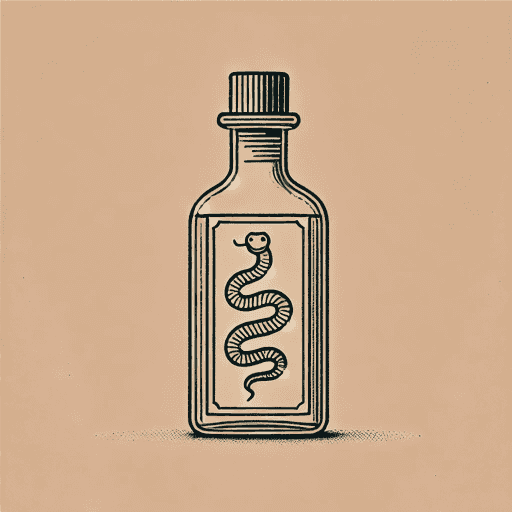
Medicine shows were traveling troupes that existed in the US in the late 1800s. As “The Amazing Adolphus Show” does in the book, these troupes would travel across the country, offering entertainment to attract customers to whom they would sell “patent medicines” (Grafe, Melissa. “Patent Medicines, Medicine Shows, and the Secret Life of Blackface.” Harvey Cushing/John Hay Whitney Medical Library, 2023). The “patent medicine” sold in medicine shows is represented by the rattlesnake oil and the “revitalizing crystals” that Huey peddles in the book.
While the sale of these types of medicines was the purpose of such medicine shows, Skenandore draws on yet another historical element: The story of the original “snake oil salesman.” The term is popularly used to describe a person attempting to deceive a customer into buying a fraudulent product, and can be traced back to Clark Stanley, “the self-proclaimed ‘Rattlesnake King’” (“How Snake Oil Became a Symbol of Fraud and Deception.” Smithsonian). Clark Stanley was an “entrepreneur” who claimed to have discovered snake oil as a treatment for different ailments, including joint pain and rheumatism. Like Huey in the book, Stanley peddled “Rattlesnake Oil,” which was actually just a concoction made of mineral oil, beef fat, red pepper, and turpentine.
The assertion that rattlesnake oil carried healing properties in turn dated back to the 1800s: Chinese laborers who emigrated to the US brought with them Chinese water snake oil, which apparently did carry some anti-inflammatory properties. Skenandore references this aspect of history as well, with Huey narrating the tale of having discovered his magical cure during his time in the East (though in Siam, i.e., present-day Thailand, not China).
Stanley’s fraudulent claims were eventually exposed, though not until he had successfully deceived customers for over two decades (“How Snake Oil”). In time, medicine shows themselves died out following the advent of two things: Films and moving images, and the new regulations regarding food and pharmaceuticals in 1906. The book is set in 1900 and thus predates these regulations. Nevertheless, Tucia’s initial wariness about Huey’s show, coupled with the instances of disgust and disdain the show is met with on occasion by the medical community and regular townspeople, indicates that skepticism about such claims of “patent medicine” had been growing by this time. These attitudes, rooted in concern about health and safety, eventually led to Congress passing the Pure Food and Drug Act in 1906, which required labels on medicines to clarify some of the ingredients it carried. The regulations also prevented drug-makers from making false or misleading statements on their packaging.

Unlock all 59 pages of this Study Guide
Get in-depth, chapter-by-chapter summaries and analysis from our literary experts.
- Grasp challenging concepts with clear, comprehensive explanations
- Revisit key plot points and ideas without rereading the book
- Share impressive insights in classes and book clubs