The Memory Palace Of Matteo Ricci
The Memory Palace Of Matteo Ricci
A modern alternative to SparkNotes and CliffsNotes, SuperSummary offers high-quality Study Guides with detailed chapter summaries and analysis of major themes, characters, and more.
Summaries & Analyses
Plot Summary
Chapter Summaries & Analyses
Key Figures
Themes
Index of Terms
Important Quotes
Essay Topics
Quizzes
NEWReading Tools
Themes
The Significance of Memory Recall
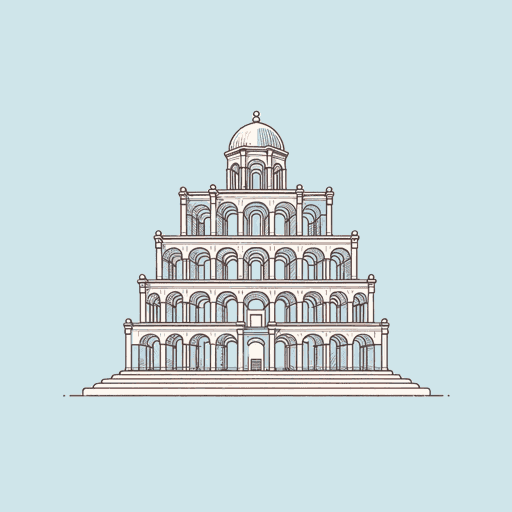
The book centers on the concept of the memory palace, a mnemonic device that dates to antiquity. The concept was quite popular in the Renaissance, especially in Counter-Reformation Catholic culture. The book is premised on Ricci’s attempt to convert people preparing for Chinese administrative examinations in the Ming Dynasty to Catholicism by teaching them an effective mnemonic device under the belief that its success would demonstrate the superiority of Catholic teachings.
The memory palace is rooted in the method of loci, which is based on the recognition that people are good at remembering locations. By associating abstract concepts or unfamiliar information with a well-known place, memory recall becomes easier. In the memory palace, the method of loci is applied to construct a place—real or entirely fictive—that can hold everything you need to remember. The place can be a city, a house, or a room. Information is stored as an image, which is placed into the space until you need to recall it. The place should be quite familiar to the individual, and the location should be detailed. Roman rhetorician and educator Marcus Fabius Quintilian described how one would store images in a place, saying,
The first thought is placed, as it were, in the forecourt; the second, let us say, in the living room: the remainder are placed in due order all round the impluvium and entrusted not merely to bedrooms and parlours, but even to the care of statues and the like. This done, as soon as the memory of the facts requires to be revived, all these places are visited in turn and the various deposits are demanded from their custodians, as the sight of each recalls the respective details (6).
For example, Ricci’s memory palace was a large reception hall, and he placed one image in each corner.
Tricks for memory recall were important in the Renaissance. They were particularly important to the Jesuits, whose missionary work brought them far away from the libraries and schools where they learned theological teachings. To be effective missionaries, familiarity with both Catholic doctrine and the Western tradition was necessary. Ignatius of Loyola, founder of the Jesuits, believed that memory techniques were important so that “his followers might live the biblical narrative in all its force” (15). Such memory recall techniques were also considered valuable, and Ricci tried to convert people in China by impressing them with Western scholarship and scientific knowledge.
The book’s title indicates that it is about memory palaces, but once Spence introduces the technique, his biography of Ricci becomes more about memory in general. Ricci was far from home, and memory was his link to his old life. The book includes references to his family, upbringing, and education as they relate to the topic at hand. Rather than adhering to a chronological or thematic structure, Spence introduces fragments and key moments in Ricci’s life as they correspond to the images and illustrations that begin each chapter. For instance, Ricci’s death is described about halfway through the book in Chapter 5, which features the Ink Garden illustration of Christ on the road to Emmaus after his resurrection from death. In this way, the biography’s structure follows the nonlinear forms of memory just as it traces the layout of Ricci’s memory palace.
Cross-Cultural Exchange and Problems of Translation
On the surface, Spence’s book is a biography of Matteo Ricci. However, Spence uses Ricci’s life story to construct a cultural history of Ming China and Counter-Reformation Europe in the 16th century. Throughout the book Spence highlights several moments where Ricci fails to understand the cultural context of Ming China, and where his Chinese audience misunderstands his theological teachings. For instance, Ricci thinks the memory palace will be an effective studying tool for Lu Wangai’s sons. However, Ricci fails to understand that the structure of the memory palace makes sense to Ricci because he was trained in that method. Wangai’s sons already knew several mnemonic devices rooted in Chinese education systems that they applied to excel in their examinations. The complexity of learning a new system for structuring memory required a considerable and impractical investment of time.
Another example cross-cultural mistranslation is the Chinese people’s belief that the Virgin Mary was the Christian God. The prominence of Marian images and the complexity of Christian theological teachings complicated Ricci’s attempts to explain the roles of Christ, Mary, and God. While Ricci was impressed with Chinese scholarship, his belief in Western superiority prevented a deeper engagement with Chinese thought, demonstrated in his arguments about Buddhism with scholars like Yu Chunxi and Zhuhong.
Given the struggles of cultural translation, it is not surprising that images play an important role in Ricci’s conversion project. In the Renaissance, images were important tools of religious instruction and humanist thought. Theological teachings were condensed into representative images to teach illiterate populations. Like Ricci, Spence builds his biography around a series of images intended to convey complex theological concepts in a way that was accessible to a Chinese audience that did not read English. The four memory palace images are taken from Ricci’s “Treatise on Mnemonic Arts” (1596), while the other four images hail from Cheng Dayue’s Ink Garden. The memory palace images are drawn from Ricci’s memory, but they cleverly break down Chinese ideograms into two parts to create a mnemonic device. The memory palace images play with language to introduce complex chains of association.
The Personal and the Global
On the surface, The Memory Palace of Matteo Ricci is a biography of Matteo Ricci. However, Spence uses Ricci’s life story to construct a cultural history of Ming China and Counter-Reformation Europe in the 16th century. Spence builds his biography around four images from Ricci’s memory palace that are read alongside four religious images that he chose to reproduce for a Chinese audience. The story jumps back and forth between Italy, Goa, and China. Ricci is an effective individual to structure a larger history of cultural exchange around, as he was one of the founders of the Jesuit mission in China and the first European to enter the Forbidden City of Beijing in 1601. He was invited on the basis of his scientific knowledge, particularly his knowledge of eclipses. Ricci’s rich life experiences allow Spence to consider larger themes like spirituality, faith, and cultural exchange alongside more material concerns like water travel, violence, and education.
The biography moves back and forth between locations, and Spence uses this shifting structure to juxtapose Ming China with Counter-Reformation Europe. Spence describes Ricci’s childhood in the walled town of Macerata, Italy, during a period of violence; his Jesuit education in Rome amid heightened religious conflict; and his extended stay in Lisbon while waiting to travel to the Asian missions in Goa, India. After Goa, Ricci spent a year in Macao preparing to go to China, where he spent 27 years. Rather than move chronologically, Spence weaves these different periods and places together, drawing connections and comparisons between them.
Spence also complements Ricci’s subjective perspective with additional historical or cultural context, to reveal Ricci’s biases and omissions and provide a more comprehensive picture of his setting and context. An example of this occurs in Chapter 6, when Spence recounts Ricci’s critical observations of prostitution and homosexuality in China while also acknowledging that the Jesuits faced “disquieting charges of sexual misconduct” themselves (221). In using Ricci to exemplify the larger beliefs and interests of his era, Spence suggests that he is a representative figure of Jesuit beliefs and the Counter-Reformation.

Unlock every key theme and why it matters
Get in-depth breakdowns of the book’s main ideas and how they connect and evolve.
- Explore how themes develop throughout the text
- Connect themes to characters, events, and symbols
- Support essays and discussions with thematic evidence