The Narrow Road Between Desires
46 pages • 1-hour read
Patrick RothfussThe Narrow Road Between Desires
A modern alternative to SparkNotes and CliffsNotes, SuperSummary offers high-quality Study Guides with detailed chapter summaries and analysis of major themes, characters, and more.
Chapters 4-6Chapter Summaries & Analyses
Content Warning: This section of the guide includes discussion of physical abuse and substance use.
Chapter 4 Summary: “Mid-Day: Birds”
Bast realizes that he is running late. He runs to a dell and washes his clothes in a pool formed by a stream called Littlecreek. Sounds like the twittering of excited birds come from the nearby bushes and trees, where some of the townspeople have come to ogle the muscular Bast as he bathes. He pretends not to notice his admiring audience, and they don’t observe that his legs look “somewhat…odd” (70).
After his bath, Bast returns to the holly tree where he left his master’s book. In its place, he finds a note from Rike asking to talk to him. Back at the lightning tree, Viette, the mayor’s youngest daughter, comes to see Bast. This is the first time that she’s made a bargain with him, so he asks her to recite the rules. The rules stipulate that he only makes deals with children shorter than the greystone near the lightning tree, that they must come alone, and that they can’t tell adults about the bargains.
Viette has a white kitten that she suspects is magical. To his surprise, Bast confirms that it is. The mayor doesn’t want to let her keep the cat, so Bast counsels her to act as though she’s too despondent to eat or get out of bed until her father changes his mind. In exchange, he asks Viette for secrets, and she tells him where her father keeps the key to his strongbox and that she once saw her mother kissing the maid. Bast asks the girl to bring him some flowers and a ribbon and reminds her not to tell anyone about their bargain.
Rike comes to see Bast. He isn’t welcome at the lightning tree anymore because he broke Bast’s rules about a year ago, so he waits in the woods and alerts Bast to his presence by whistling. Rike returns the leatherbound book to him, explaining that he had no intention of keeping it and merely wanted to ensure that Bast would see him. The two are angry at each other, but Rike argues that he’s already paid tenfold for the lies he told Bast. Rike contends that Bast’s rules are unfair and that he shouldn’t be barred from the lightning tree because of his height when there are older children who are still allowed to strike deals. Through furious tears, the boy explains that his father, Jessom, beats his mother and pleads for Bast to help him kill the man and dispose of his body. When Rike speaks Bast’s name, he unknowingly invokes the bond, and the Fae feels weak and breathless. He agrees to help Rike.
Chapter 5 Summary: “Noon: Obligation”
Rike goes off into the woods alone to compose himself before continuing their conversation. While the boy is gone, Bast reflects on how his duty to protect his master’s secrets runs counter to his natural desire for vengeance. The previous summer, Bast wanted to kill Rike for betraying him, but he restrained himself so as not to bring unwanted attention to himself and Kote.
When Rike returns, Bast asks him if he wants his father to die or simply leave town. Rike describes how one of the happiest periods of his life was the time when his father disappeared for two weeks. To help Bast resolve his inner conflict, he and Rike draw embrils from his bag. Rike draws a piece of slate etched with an iron-grey chain, and Bast draws a disk of obsidian that cuts his hand. When Bast promises that he could ensure that Jessom goes away forever, Rike agrees: “I don’t want to be that sort of man. A fellow shouldn’t ought to kill his da” (93). Rike wants to act quickly because his father’s abuse is worsening, and he remains resolute in his purpose when Bast tells him that the boy will owe him a great debt. Together, Bast and Rike climb to the lightning tree and make a deal sealed in blood. Bast’s magic is particularly strong at the tree. He rewinds time so that the moment in which he and Rike climb the hill and make their deal repeats. The third time, Bast adds the condition that any prior debt he owes the boy will be unbound.
With their bargain thrice sealed, Bast instructs Rike to send Kostrel to him and to find a river stone with a hole in it. Bast reclines in the sun-warmed grass, basking in the knowledge that the binding on him has been loosed. Although his new deal complicates his plans for Midsummer, he takes an artistic pride in resolving the challenges that his bargains present.
Chapter 6 Summary: “Afternoon: Still”
Bast idly flips through the leatherbound book that Kote gave him, which is titled Celum Tinture. Brann and Viette uphold their ends of their bargains by bringing him sweet buns and bundles of flowers. Bast brings the flowers to a stream that flows into the pool where Emberlee bathes. Using his magic, he turns the flowers blue so that they’ll match the young woman’s eyes and sends them floating down the stream. Then, he hides in a tree overlooking the pool. Emberlee undresses and begins to bathe. Gradually, the current carries the blue flowers to her, and she laughs in surprise and delight. Bast tumbles out of the tree and dazedly offers Emberlee a sweet bun and a crown he wove out of flowers. She thanks him and dons the crown with a proud smile. She smells like honeysuckle, and Bast realizes that she swiped his soap after she watched him bathe earlier that day. Laughing, Emberlee kisses him.
Later, Bast follows Kostrel’s directions to Martin’s still. The man is a poacher and distiller, and the townspeople consider him “mad.” Bast feels a little disappointed because there aren’t any traps set up around the still to deter unwanted visitors, but he marvels at the tidiness and professionalism of the still. None of the many bottles inside are labeled, and Bast helps himself to a bottle of deliciously sweet and spicy liquor. About an hour later, he returns to the lightning tree and reads about the distillation process in Celum Tinture.
Bast goes to the Waystone Inn and places the book in a cupboard in the taproom. Kote sighs when he learns that his apprentice still hasn’t brought the carrots. The exasperated innkeeper notes that Bast has been drinking and chides him for making judgments about Martin’s mental health. However, he’s pleasantly surprised when Bast reveals that he actually read part of the book that Kote assigned to him. Bast suggests that Martin could settle his tab at the Waystone Inn by giving them some of his excellent liquor, and Kote agrees to ask Martin. Bast asks his master not to mention him when proposing this plan because Martin has had violent bouts of temper toward him in the past.
Bast goes back to the lightning tree. He feels restless even though the only obligations on him are old ones “resembling wounds old soldiers ha[ve]” (126). Once more, he uses the embrils to look for signs about the future. Kostrel comes to see him, and Bast gives him a book. To Bast’s great surprise, he learns that Emberlee asked the boy to tell Bast where she bathes. Kostrel rolls his eyes and tells Bast that he and the town’s other young people aren’t nearly as sneaky with their trysts as they think they are. Kostrel is curious about embrils because his grandfather used to have a set. When Bast says that he’s having trouble understanding his latest cast, the boy tries his hand at interpreting the signs. Looking at pieces marked with a piper and a closed eye, Kostrel suggests, “He’s supposed to play for folk, make them dance to his tune. But he’s the one dancing” (136). The boy hypothesizes that an embril with an arch could represent a hole that the piper will stumble into, or it could be entirely irrelevant to the cast’s meaning. Feeling relieved, Bast tousles Kostrel’s hair, gathers up his embrils, and hurries away.
Rike brings the river stone with the hole in it to Bast. Next, Bast tells him to borrow a needle from a house where no men live. The boy sets out for the home of Old Nan, who lives on the southwest edge of town, while Bast heads northward.
Chapters 4-6 Analysis
Rike’s appearance in the novel’s second section heightens The Tension Between Freedom and Obligation. Chapter 5, in which the boy and Bast strike their bargain, is entitled “Obligation,” emphasizing the deal’s pivotal significance to the theme’s development. Rike’s request for vengeance highlights how Bast’s desires run counter to his responsibilities to his master. As much as he relishes the thought of freely indulging in his innate thirst for revenge, he knows that drawing attention to himself would mean betraying Kote’s trust: “[H]e was free to choose between desires. To take the sweet and terrible revenge that he was due…or continue to assist his master. To keep their masks intact and stay here tucked away inside the new-built inn, all hidden in this quiet little town” (90). Similarly, Rike’s desire for his father’s death clashes with the boy’s obligation to his conscience: “[L]eave him living, even though my heart wants him to die” (99). The deal that Bast and Rike form in Chapter 5 represents a major development for the plot and this theme because it gives Bast a way to free himself from the binding placed on him when he accepted the penance piece: “Any debt or obligation will be squared. Any gifting that you’ve made to me is all unbound and now instead becomes a freely given gift, offered without obligation, let, or lien” (102). Moreover, the bargain not only satisfies Bast’s debt but also reverses Bast and Rike’s current standing: “You’re mine until I say we’re square. Secrets. Favors. Anything” (94). Rike willingly places himself in Bast’s debt to protect his mother from his father, demonstrating the strength of his resolve, courage, and love for his family. Later in the story, Bast uses his leverage over Rike to liberate the boy from his self-hatred, adding further nuance to the tension between freedom and obligation.
Although Bast must hide some aspects of his identity, particularly his Fae heritage, or face serious repercussions, the protagonist moderates others’ perception of him for more lighthearted reasons as well. In Chapter 4, the narrator observes that many of the townspeople consider him “woefully nearsighted and a bit of a fool besides” (67). Although this description is less than flattering, he uses the ways that he is underestimated to his advantage. For example, he regularly bathes at the same time and place so that some of the townspeople can come and watch. He basks in the attention while he pretends not to notice his admiring audience: “[W]hen he tossed [his pants] aside there was a squawk from the willow of the sort that could have come from a larger bird. A heron perhaps. Or a crow” (69). The Influence of Perception on Identity contributes to this section’s humor, providing comic relief from heavy subjects like Rike’s difficult home life.
In these chapters, Jessom emerges as a threat to The Beauty of Childhood Innocence. His abusive behavior has destroyed his son’s sense of safety, warped his son’s self-perception, and filled Rike with a deadly rage. Bast helps the boy reclaim his innocence not only through his promise to remove his abuser but also by helping the boy protect his conscience. Initially, Rike believes that the only way to keep his family safe is to kill his father, but he accepts the non-lethal solution that Bast offers: “‘Which is it? You want him dead or gone?’ Rike stood there for a long while, jaw clenching and unclenching. ‘Gone,’ he said at last” (94). By this point in the story, the author has already established Bast as the confidante and helper of Newarre’s children, making his transformation into Rike’s champion and the defender of his innocence a natural progression.
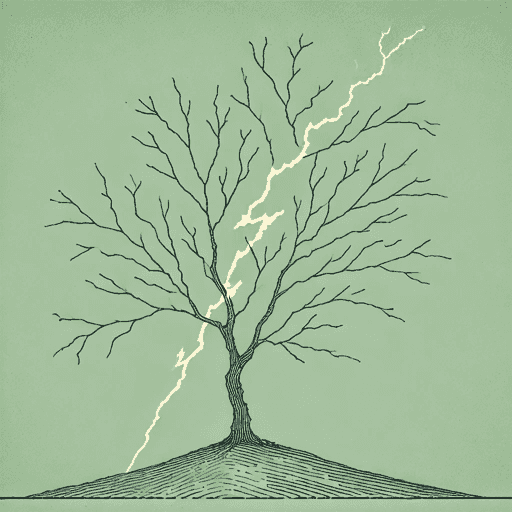
As the novella’s plot accelerates, the story’s symbols and motifs grow in significance. The lightning tree serves as the setting for Chapter 5’s bargain as Rike and Bast seal the deal by placing their bloodied hands on “the stark white trunk” (96). The tree is not only a dramatic backdrop for the action but also a symbol of desire. Bast and Rike’s bargain will satisfy both of their desires—Rike’s to protect his mother from his father and Bast’s to be free of the debt that Rike’s gift placed on him. The “teardrop of the penance piece” is mentioned briefly in Chapter 6 while Kostrel is interpreting the embrils for Bast (134), and the motif of obligation exerts a major influence on Bast’s actions in these chapters as he seeks to repay the debt it places him in.
Additionally, this section offers more insight into embrils and their meaning. In Chapter 5, Rike draws the “piece of slate etched with a chain” (93), reinforcing the boy’s fateful hold over Bast. In Chapter 6, the author uses the embril with the piper to point out that, for all his scheming and smugness, Bast is susceptible to others’ ploys: “He’s supposed to play for folk, make them dance to his tune. But he’s the one dancing” (136). This reflects how Bast accidentally becomes trapped by Rike’s gift as well as more minor instances when he is tricked, such as Emberlee’s ploy to bring him to her bathing spot. At the same time, Kostrel’s interpretation of the embrils gives Bast reassurance that he doesn’t need to overthink the embrils or focus too much on trying to anticipate his fate. This lesson encourages the protagonist to take action as the story moves into the second half.

Unlock all 46 pages of this Study Guide
Get in-depth, chapter-by-chapter summaries and analysis from our literary experts.
- Grasp challenging concepts with clear, comprehensive explanations
- Revisit key plot points and ideas without rereading the book
- Share impressive insights in classes and book clubs