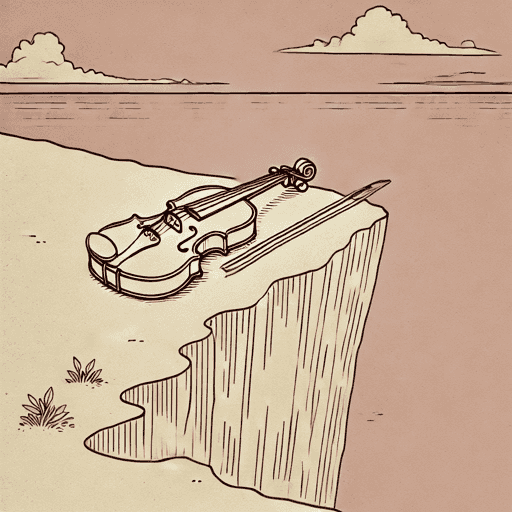
The Other Valley
62 pages • 2-hour read
Scott Alexander HowardThe Other Valley
A modern alternative to SparkNotes and CliffsNotes, SuperSummary offers high-quality Study Guides with detailed chapter summaries and analysis of major themes, characters, and more.
Background
Literary Context: Speculative Fiction
Speculative fiction is a literary genre that imagines different realities, often exploring scenarios that challenge the boundaries of possibility. Unlike realistic fiction, speculative fiction includes elements that do not exist in the real world like futuristic technology, alternate histories, supernatural occurrences, or altered laws of time and space. At the same time, speculative fiction still reflects on the human experience, examining the consequences of change, the unknown, or human choice in unfamiliar circumstances. Historically, speculative fiction has been used as a tool to reflect contemporary anxieties. Early science fiction explored industrialization and technological change, while later works incorporated political and social critique. The genre frequently blurs boundaries with fantasy, science fiction, and magical realism.
One convention of speculative fiction is the creation of worlds with altered rules, often bending time, historical fact, and the characteristics of humanity itself. For example, the novel Fatherland (1992) by Robert Harris explores a timeline where Nazi Germany won World War II. In 1964 Germany, a Berlin police detective, Xavier March, uncovers a Nazi conspiracy that hid the events of the Final Solution, shrouding the concentration camps and deaths of Jewish people in secrecy. In The Time Traveler’s Wife (2003), author Audrey Niffenegger follows the love story of Henry and Clare. Henry has the ability to travel through time though not at will, with his disjointed story exploring emotions like love, loss, and grief. While these two novels differ vastly in their plots, their speculative worlds allow the reader to see a unique perspective on time and history, exploring common human emotions in extreme circumstances.
Another component of speculative fiction is its exploration of social, political, or ethical dilemmas in extreme contexts. Dystopian fiction frequently depicts oppressive societies where characters face conflicts between personal freedom and societal demands. In George Orwell’s 1984 (1949), a totalitarian regime, led by Big Brother, controls its citizens through surveillance, mind control, and propaganda to maintain power, at the same time stripping civilians of their individual freedoms. Similarly, Brave New World (1932) by Aldous Huxley explores the World State, a society where people are factory-made and assigned to five different categories, decided by the World Controllers. Citizens lose their autonomy and freedom and instead are brain-washed into believing that their social caste is their only option. Both of these novels create a fictional world that is controlled by strict government, limiting individual freedoms and ensuring peace through compliance. While the premise is speculative, the themes of autonomy, choice, and government control are reflective of real-world issues.
In The Other Valley, speculative fiction conventions are central to the narrative. The story imagines a society governed by strict border enforcement and hierarchical oversight, which echoes historical and contemporary totalitarian systems. Time manipulation plays a key role, as Odile sees her own future and must navigate the consequences of her actions in both present and future timelines. These devices allow readers to explore complex themes like grief, moral responsibility, and personal freedom within a context that is removed from, yet deeply reflective of, real-world human experience. By using the tools of speculative fiction, the novel creates a narrative in which characters’ decisions, memories, and actions resonate across time, highlighting the genre’s ability to examine how human behavior might unfold under altered social, temporal, or ethical circumstances.

Unlock all 62 pages of this Study Guide
Get in-depth, chapter-by-chapter summaries and analysis from our literary experts.
- Grasp challenging concepts with clear, comprehensive explanations
- Revisit key plot points and ideas without rereading the book
- Share impressive insights in classes and book clubs