62 pages • 2-hour read
The Other Valley
A modern alternative to SparkNotes and CliffsNotes, SuperSummary offers high-quality Study Guides with detailed chapter summaries and analysis of major themes, characters, and more.
Part 1, Chapters 1-8Chapter Summaries & Analyses
Content Warning: This section of the guide includes discussion of alcohol dependency, bullying, child death, and death.
Part 1, Chapter 1 Summary
Sixteen-year-old Odile is in her final year at school before she takes on an apprenticeship. Her mother pressures her into applying for a position with the Conseil, the ruling council within her valley. She is quiet and uncomfortable with public speaking, yet she pursues the idea because, if she is cut from the rigorous program, she will likely get to work alongside her mother in the archives beneath the Hôtel de Ville. She asks her teacher, M. Pichegru, for a recommendation. He insists that he chooses based on merit. He asks her to write an essay response to the question, “If you had permission to travel outside the valley, which direction would you [choose]?” (6).
When Odile gets home, she takes her mother’s book of art, which depicts various scenes within the valley they live in. Her favorite is a view from the sky. It depicts their small town, nestled against a lake, with mountains surrounding the valley. On either side are two other valleys identical to their own, continuing east and west in repetition across the page. Moving west goes back in time by 20 years, while going east is 20 years in the future.
That evening, Odile tells her mother about Pichegru’s assignment. Odile’s mother insists that it is a trick question: The Conseil regulates who crosses into other valleys and they rarely let anyone go.
Working on the paper alone, Odile considers what her real answer would be. The Conseil only lets people leave for consolation related to death. If they want to see someone again, they can go backward; if they want to meet someone they would never survive long enough to see, they can go forward.
In the end, Odile writes about her father, who died when she was four. She explains that she could go see him, but that it would not mean much, as she has little grief from having lost him. She argues that if her mother can survive on memories of him to help her through her own grief, as a conseiller, she would encourage others to do the same rather than seeking answers in the past or present.
Part 1, Chapter 2 Summary
On Monday, Odile hands in her essay. During lunch, two boys, Henri and Tom, throw a ball at her while she eats lunch alone by the wall. Two others, Alain Rosso and Edme Pira, step in and chase away the bullies, leaving Odile to go to the bathroom alone and clean up.
After school, Odile waits in Pichegru’s room. He tells her that he is not going to nominate her because she didn’t answer the question. Odile is disappointed and afraid to go home to tell her mother.
Odile goes into the woods behind the school, which is near the border of the valley. She walks alone on the path until she sees a makeshift fort. She rests there, falling asleep. An hour later, voices wake her up.
Odile returns to the school and sits on the swings. As she swings upward, she notices people in the distance on the lake. She sees two people that are visiting their valley along with a member of the gendarmerie, the military. She speculates that they were the voices that she heard on the path and that they must have come from the east, the future. As she watches, one of the visitors starts to take off her mask, but the gendarme stops her. Panicked, Odile stops the swing and goes to the school, wondering who the visitors are there to see, as it must mean that one of her classmates will die.
On the way back into the school, Odile runs into Edme. She becomes convinced that the visitor who started to take off her mask was Edme’s mother and, based on his movements, the man with her was Edme’s father. Edme makes small talk with her, but Odile struggles to respond.
Edme asks to walk home with Odile. He makes small talk about their apprenticeships. He wants to be a musician, but his parents are pushing him to become a butcher. Odile forces herself to respond and to keep what she saw a secret.
Part 1, Chapter 3 Summary
That night, Odile avoids telling her mother about her essay. In her room, she thinks about the visitors. They wear large, black masks that hide their identities. There are spots on the edge of the valley that let them watch from a distance, granting them a final look at a deceased loved one. Despite everyone’s insistence that there is nothing to fear, Odile feels that they always have an ominous quality about them, as they signal death. She wonders what is wrong with Edme and how long he has to live.
Unable to focus on her homework, Odile goes to the kitchen late that night. Her mother is there doing work and drinking wine. She offers some to Odile.
When her mother goes to sleep, Odile’s thoughts return to Edme. She feels guilty for not telling him, as he is one of the only boys that has ever been nice to her at school. Realizing how much of a “burden” it has placed on her, Odile becomes even more convinced that no one should visit other valleys if given a choice, as it impacts those they visit. She writes her essay again for Pichegru, arguing even more fervently against leaving the valley.
Part 1, Chapter 4 Summary
That night, Odile dreams of swinging again. She can’t see the masks but knows they are there. When she wakes up, she has a headache and hazy memories of the night before.
At school, when she goes to hand in her homework, Odile spots the essay that she wrote angrily the night before. She covers it, embarrassed. Alain comes to her desk, referring to her as Edme’s “friend,” and asks to copy her homework. When Odile hesitates, Alain steals it, copying it quickly, then handing them both in as Pichegru arrives.
At lunch, Odile goes to the spot where she saw the masks. She realizes that there is a worn dock there that they must have been standing on. Otherwise, there is no trace of them. When she gets back to school, Edme and Alain are waiting at the edge of the playground. They ask her to show them the fort in the woods after school.
When Odile gets back to her desk after lunch, she realizes that her essay is gone. She remembers insulting Pichegru and writing about the Piras in her essay. She is panicked the entire day, wondering what her punishment will be.
After class, Odile tries to sneak out, but Pichegru calls her name. He also calls another student, Jo Verdier, forward. He tells them both that they have been chosen for the Conseil vetting program. It starts tomorrow.
Outside the classroom, Edme, Alain, and Jo’s friend, Justine, are waiting. They celebrate the news, with Odile wondering if she can change her detached, distant reputation. The boys invite Jo and Justine to see the fort. Alain has them all bring new materials to begin building it bigger, insisting that it is in the prefect vantage point in the woods. Through it all, Odile is happy to be part of the group.
That night, Odile tells her mother she got into the vetting program. For the first time in Odile’s life, she sees “pride” on her mother’s face. She celebrates with a nicer bottle of wine, which Odile notes comes from the winery that Jo’s family owns.
In bed, Odile struggles to fall asleep. She thinks of her essay and wonders what made Pichegru change his mind. She realizes that it must be the fact that she recognized the Piras.
Part 1, Chapter 5 Summary
The next day at school, Pichegru says nothing else to Odile. At lunch, she moves from her usual spot against the wall to around the corner to be alone. She hears Edme playing his violin through the window, thinking how it has a hint of “sadness” to it.
After, Odile takes the bus into the town for her first day of the vetting program. It takes place at the Grand École each day during the week. It is located in the Place du Bâtisseur alongside the Hôtel de Ville and the conservatory.
Odile is directed to a classroom on the second floor of the school. As students gather from the town school and those to the south, Odile stands alone on the other side of the room. She studies a map that depicts the valleys as her mother’s does, only in more detail. When Jo comes in, she briefly waves to Odile, then joins the other students. In total, 11 students talk together at one window while Odile stands alone at the other.
A conseillière named Mme. Ivret enters the room. She informs the students that at least three of them will be cut each week over the next three weeks; any that remain after that will become apprentices. She gives them a notebook, telling them to keep what happens in the room a secret and to return their notebooks when they are cut from the program. She then lectures for two hours, telling the students about the role of the Conseil, the gendarmerie, and visits to other valleys. She insists that their number one concern is the safety of the citizens.
At the end of class, Mme. Ivret gives the students an index card with a plea from someone who wants to leave or visit the valley. They will get one each week, study it, then make a decision about the case and give their verdict each Friday. Those with the best logic will remain in the class.
Jo approaches Odile and asks her about the case. They make plans to discuss it the next day at lunch when they go to the fort with the boys. After, Mme. Ivret calls Odile to the front of the room. She brings up Odile’s essay for Pichegru and asks if Odile told anyone else. Odile insists that she has not. Mme. Ivret orders her to keep it that way, as telling anyone could cause the Piras to try to change it. She then instructs Odile to keep an eye on Edme and report anything strange to her.
Part 1, Chapter 6 Summary
That night, Odile reads the request. It is from a man referred to as “L.M.” whose wife died years before. He requests a visit to the valley to see her to assuage his never-ending grief.
At school, Odile and her friends go to the fort and continue to build it up. Jo asks why Mme. Ivret wanted to speak to Odile, but Odile refuses to tell her. She then says that she is going to deny L.M.’s request. After, the friends carve their initials into a log in the fort. Edme refuses, insisting that they don’t have time, which makes Odile sad.
Part 1, Chapter 7 Summary
The next day at lunch, Edme goes to practice his violin instead of joining the others. When Jo makes an excuse not to go to the fort, Odile realizes that she is trying to give Justine and Alain time together alone, so she stays behind with Edme. She watches him practice. He expresses his frustration at the middle of his song, as it is too fast for him to play correctly. When another girl comes into the room to practice her clarinet, Edme gives up, asking Odile to go for a walk with him.
As they walk, Edme tells Odile that he can no longer practice at home. His parents are adamant that they don’t want him to audition for the orchestra. They go to Odile’s usual spot at the wall together, sitting and eating lunch.
As Odile waits for the bus after school, Jo offers Odile a ride. On the way, she tells Odile that she is going to give L.M. permission to visit and looks expectantly at Odile for advice. Odile points out that L.M.’s wife was sick for a long time and that they were old, meaning that he had plenty of time to say goodbye. She tells Jo that she is considering saying no, which makes Jo reconsider.
During class, Ivret has the students go to one side of the room or the other based on the decision they reached about L.M. Odile, Jo, and two others deny his request, while the rest go to the approval side. Ivret has them each give their argument as to why they made their decision. Odile feels as though she gives a clear answer but notes how she seems less sympathetic than everyone else. When everyone finishes, Ivret eliminates three students, keeping both Odile and Jo.
Part 1, Chapter 8 Summary
After class, Jo excitedly thanks Odile for her help. She then invites her over to her house where Alain, Justine, and Edme are going to hang out.
Odile and Jo eat dinner with her parents, then go to her room. When the others arrive, they spend the evening talking about school and the vetting program. At dark, they steal wine from Jo’s parents’ cellar, then sneak out by the lake to drink. As Odile and Jo toast to their success in the program, Jo praises Odile for her intelligence.
After, Odile and Edme walk home together. Edme asks about the Conseil, and Odile admits that she is mostly doing it for her mother. She notes how much her mother dislikes her job and even that she often drinks wine before work. Edme suggests that it might be related to her grief over the death of her husband. Although Odile initially dismisses the idea, she remembers a few moments where her mother let her grief show and wonders if she hides how truly upset she is.
Edme talks about how his parents have been acting differently in the last week. They always seem concerned about where he is and are overprotective, while becoming even more adamant that he won’t be allowed to continue to play the violin. It makes Odile nervous about his future. When they say goodbye at Odile’s home, she realizes that she is beginning to fall for him.
Part 1, Chapters 1-8 Analysis
The novel’s primary speculative fiction component, the existence of time travel, introduces the theme of The Burden and Moral Responsibilities of Knowledge. Odile’s essay and her accidental recognition of the Piras as future visitors gives her knowledge that she should not have, complicating both her growing friendship with Edme and her opinions of the Conseil during the vetting program. Once Odile realizes that Edme is destined to die, knowledge becomes something heavy that she must carry rather than something empowering. Her certainty isolates her from the others, forcing her into silence and guilt, particularly as Edme continues to treat her with kindness and her feelings for him grow. This burden is reinforced when Mme. Ivret orders Odile to keep her insight secret and to monitor Edme. Rather than giving Odile agency, knowledge binds her to Ivret and the Conseil’s expectations, emphasizing the way that knowing the future limits her moral freedom.
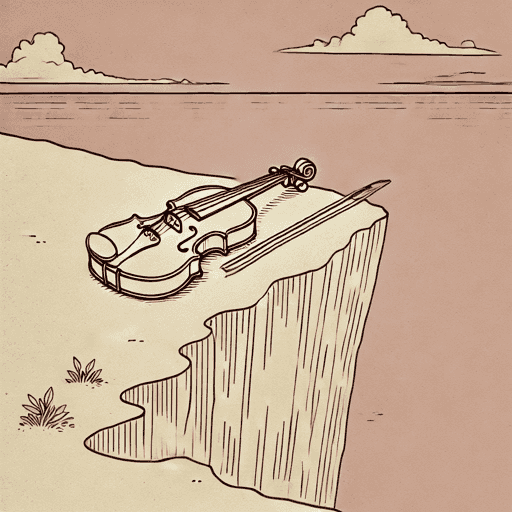
Central to this burden is the primary internal conflict that Odile faces throughout Part 1 of the text: Whether or not to tell Edme about his death. Edme’s violin serves as a symbol of his possible future, as he wishes to pursue music despite his parents’ objections. Odile often associates the violin’s music with sadness, reflecting how her knowledge colors her perception of him. As Edme’s parents increasingly restrict his playing, the violin becomes a reminder of time slipping away, intensifying Odile’s internal conflict. What should symbolize creativity and freedom instead underscores loss (for Edme, Odile, and Edme’s parents all at once) and the inevitability of his death. In this way, the novel’s element of time travel explores how foreknowledge of danger and death turns Odile’s moments of happiness into sources of quiet mourning.
Odile’s young age and immaturity are emphasized in this first section of the text, particularly with regard to the theme of The Lasting Impact of Grief. As a bildungsroman, or coming-of-age story, The Other Valley will explore Odile’s emotional growth and development. She uses her mother’s apparent lack of grief as evidence against travelling between valleys. However, after Edme points out that her mother might be feeling grief internally, Odile thinks, “I was ready to point out that my mother had never seemed very vulnerable to me, had never really mourned for my father, but then I remembered a day when I was little” (69).
She then goes on to recount a story of a day when her mother became enraged at something in the kitchen, throwing food and smashing dishes; she then notes that, “Quietly, I admitted that [Edme] might be right” (70). This interaction emphasizes both Odile’s immaturity in relation to grief as well as the way that grief continues to impact her mother in small, quiet ways. As the story progresses, Odile will continue to learn about the impact of grief and better understand what her mother has been through.
Odile’s primary source of growth and development is her discovery of friendship and personal connection. Initially, Odile admits her own insecurities, telling the reader that she prefers to be alone on “her wall” at lunch and that she fears public speaking and acknowledgement from others. However, as she grows closer with Edme and Alain at school, then Jo through the vetting program, she begins to value friendship and, in turn, come out of her shell. After a few days of being with her new friends during lunch, she notes how “the thought of being alone on the wall was newly repellant in a way that surprised me” (51). Beyond making her life more enjoyable, her friendships give her a newfound confidence in the vetting program. The first time she is forced to speak in front of the class, she is initially nervous but then does so confidently, slowly discovering her desire to actually become a part of the Conseil instead of just doing it to appease her mother.
As Odile connects with Edme, Alain, Jo, and Justine, the fort they discover becomes central to their friendship. The fort, which symbolizes an escape from the authoritarian rule of the Conseil, serves as a source of bonding for the five friends. Built beyond the strict supervision of school and the Conseil, the fort becomes a space where Odile briefly escapes her isolation and forms genuine friendships. Its impermanent, makeshift nature mirrors the temporary safety Odile feels with Edme and the others, especially given what she knows about the future.
While the Conseil values order, permanence, and surveillance, the fort represents a human desire to create meaning outside authoritarian systems, providing an early glimpse of the theme of Authoritarian Control Versus Individual Freedom. That Edme refuses to carve his initials into the wood foreshadows his absence from the future, turning the fort into a memorial even before his death.

Unlock all 62 pages of this Study Guide
Get in-depth, chapter-by-chapter summaries and analysis from our literary experts.
- Grasp challenging concepts with clear, comprehensive explanations
- Revisit key plot points and ideas without rereading the book
- Share impressive insights in classes and book clubs