The People in the Trees
58 pages • 1-hour read
Hanya YanagiharaThe People in the Trees
A modern alternative to SparkNotes and CliffsNotes, SuperSummary offers high-quality Study Guides with detailed chapter summaries and analysis of major themes, characters, and more.
Background
Authorial Context: Hanya Yanagihara
Content Warning: This section of the guide discusses child sexual abuse and colonialism.
Hanya Yanagihara is a New York Times best-selling author and the current editor of T Magazine, the New York Times fashion magazine. Although her first novel, The People in the Trees, was not an immediate commercial success when it was first published in 2013, Yanagihara’s second novel, A Little Life, was a massive hit, enjoying rave reviews and even being shortlisted for the 2015 Man Booker Prize. Her career has largely been concentrated in the editing and publishing world, and she writes fiction in her spare time. Her third novel, To Paradise, was published in 2023 and rose to number one on the New York Times bestseller list.
Each of Yanagihara’s novels contains similar dark themes that both captivate and alienate audiences. Sexual violence, especially toward children, plays an instrumental part in the plots of both The People in the Trees and A Little Life. Other themes that define her works are intense loneliness, the bonds of friendship and family, and the power of love. In all three of Yanagihara’s novels, bonds between characters can be at times uplifting but often end in sad dissolution, revealing the harsh and unexpected paths that life can take. Interestingly, virology plays an important role in the plots of both The People in the Trees and To Paradise, demonstrating Yanagihara’s repeated use of similar themes to develop the fundamentals of her novels’ plot structure. Despite the similarities between her stories, To Paradise marks a distinct shift in Yanagihara’s writing, for it is a work of speculative fiction that reaches into an alternate world with an eerily similar future.
Biographical Context: The Life and Crimes of Dr. Daniel Carleton Gajdusek
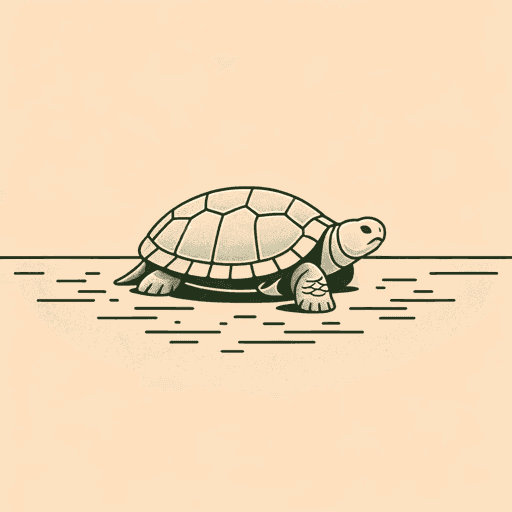
The People in the Trees is largely based on the true life and crimes of Dr. Daniel Carleton Gajdusek. Dr. Abraham Norton Perina, the protagonist of the novel, shares a similar life path to Dr. Gajdusek, including details such as winning the Nobel Prize, working for the National Institutes of Health (NIH), and even living in Bethesda, Maryland. Dr. Gajdusek was a scientist who spent his career studying diseases in Micronesia. He won the Nobel Prize for his work studying a disease called kuru, which attacks brain tissue and was found in New Guinea, where it spread through, “the local custom of people eating the brains of the dead as a sign of respect” (Molotsky, Irvin. “Nobel Scientist Pleads Guilty to Abusing Boy.” The New York Times, 1997). Even this disease shares many qualities with Selene Syndrome, the fictional disease of immortality featured in the novel. Both are slow-acting and attack the brain and are spread through the ingestion of flesh, although Selene Syndrome is spread by ingesting the flesh of a turtle rather than human brain matter.
Both the fictional novel and the historical model upon which it is based are characterized by allegations of child abuse and subsequent imprisonment. Like the fictional Norton, Dr. Gajdusek brought many Micronesian boys to live with him in Maryland, providing for them and putting them through school. Concerns began when excerpts from Dr. Gajdusek’s journals describing his time in Micronesia, and his sexual interactions with boys on the islands, were found circulating online. Later, on a recorded phone call with one of the boys he brought back, Dr. Gajdusek admitted to sexually abusing him, and this admission led to the trial and conviction that sent him to jail for a year. His fall from grace for his crimes against the child he brought from Micronesia closely reflects the fictional fall of Norton. Both served short prison terms at the end of their lives, and while Norton disappears after he is released, Dr. Gajdusek’s plea agreement allowed him to continue his research in Europe after he served his sentence.
Historical Context: Legacy of Colonialism in Micronesia
Micronesia is a region of over 2,000 islands between the Philippines and Hawaii. It includes such nations and territories as Guam, the Marshall Islands, and the Northern Mariana Islands. Micronesia has a long history of colonialism that begins with Guam, which was the first inhabited island encountered by a European power when Ferdinand Magellan passed by in 1521. Despite this early contact, no actual colonies were established until nearly 150 years later. As history relates, “The Marianas became the first European colony in Micronesia in 1668, when Spain took control of the island chain” (Fischer, John L. et al. “Micronesian Culture.” Encyclopaedia Britannica). As with many occupied areas, the Indigenous people, in this case the Chamorro people, rebelled. The Spanish won the conflict, relocating and assimilating the surviving population, and nearly destroying both the Chamorro culture and language. With the process of colonization begun in earnest, other powers such as Germany, Britain, and the United States moved in to stake their claims on various islands (Fischer).
In the 20th century, Micronesia became one of the centers of conflict between the United States and Japan during World War II. Fighting between the two powers spread throughout the region, displacing people and destroying their homes, towns, and cities. The decolonization of Micronesia began when Nauru claimed sovereignty in 1968, but many islands’ natural resources have been mined and exported. In Nauru’s case, “By the early 21st century the phosphate supply was nearing exhaustion, making the economic future of the island nation uncertain” (Fischer). Its location between Asia and North America also made it desirable to nations like the United States, which tested nuclear bombs in places such as the Marshall Islands. The nuclear fallout and radiation had long-ranging and devastating effects; as historical references relate, “Fallout spread over neighbouring islands whose inhabitants the United States had, intentionally, not relocated-and who were thus exposed to a steady snowfall of radioactive particles for several hours” (Fischer). The fallout caused many long-lasting and generational health issues for the people of these islands. The People in the Trees explores this deadly legacy of exploitation, although the author uses a fictional resource on fictional islands to provide a sharp critique on the destructive impacts of colonialism and exploitation on Indigenous people.

Unlock all 58 pages of this Study Guide
Get in-depth, chapter-by-chapter summaries and analysis from our literary experts.
- Grasp challenging concepts with clear, comprehensive explanations
- Revisit key plot points and ideas without rereading the book
- Share impressive insights in classes and book clubs