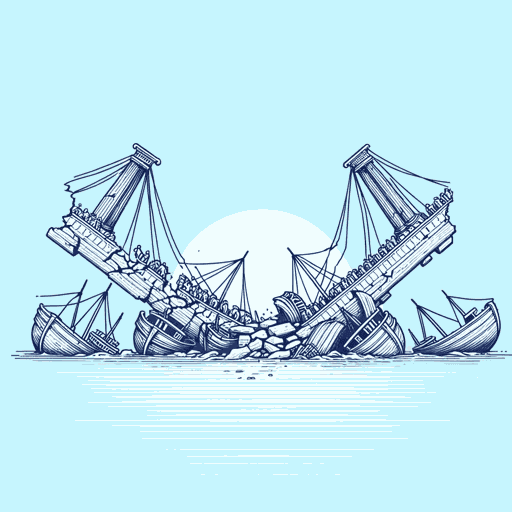
The Persians
44 pages • 1-hour read
AeschylusThe Persians
A modern alternative to SparkNotes and CliffsNotes, SuperSummary offers high-quality Study Guides with detailed chapter summaries and analysis of major themes, characters, and more. For select classroom titles, we also provide Teaching Guides with discussion and quiz questions to prompt student engagement.
Introduction
Teacher Introduction
The Persians
- Genre: Fiction; drama; historical tragedy
- Originally Published: 472 BCE
- Reading Level/Interest: Grades 11-12; college/adult
- Structure/Length: Single act (customary of Greek tragedies); approximately 44 pages; approximate running time 1 hour, 30 minutes
- Protagonist/Central Conflict: Unlike other Greek tragedies that focus on mythological subjects or the distant past, The Persians centers on the historical event of the Battle of Salamis. The play is told from the perspective of the Persian court, awaiting news from the battle. The central conflict arises from the defeat of the Persian navy by the Greeks, and the play explores hubris, the fallibility of kings, and the mourning of a nation in defeat.
- Potential Sensitivity Issues: Depicts war and defeat; mourning and death; discussions of divine will versus human agency
Aeschylus, Author
- Bio: Born c. 525/524 BCE; died c. 456/455 BCE; ancient Greek playwright; known as the father of tragedy; one of the first to have introduced dialogue into playwriting, significantly transforming the drama from its chorale origins; believed to have written about 70-90 plays, but only seven have survived in complete form; participation in the Battle of Marathon and possibly at Salamis deeply influenced his work
- Other Works: Agamemnon (458 BCE); The Libation Bearers (458 BCE); The Eumenides (458 BCE); Prometheus Bound (traditionally attributed to Aeschylus but authorship is disputed; date uncertain)
- Awards: First prize in the City Dionysia tragedy competition of 472 BCE
CENTRAL THEMES connected and noted throughout this Teaching Guide:
- Contrasting Modes of Leadership
- Athenian and Greek Nationalism
- Foreshadowing, Omens, and Prophesy
STUDY OBJECTIVES: In accomplishing the components of this Teaching Guide, students will:
- Gain an understanding of the sociocultural, literary, and mythological contexts of the play to improve comprehension of its symbols and conflicts.
- Discuss paired texts and other brief resources to make connections via the text’s themes of Contrasting Modes of Leadership, Athenian and Greek Nationalism, and Foreshadowing, Omens, and Prophesy.
- Think creatively and critically about the staging of the play by designing set or costume elements based on text details and character objectives.
- Analyze the themes, symbols, and motifs of the trilogy in structured essay responses on the role of Atossa, the significance of Darius’s ghost, and other topics.

Unlock all 44 pages of this Study Guide
Get in-depth, chapter-by-chapter summaries and analysis from our literary experts.
- Grasp challenging concepts with clear, comprehensive explanations
- Revisit key plot points and ideas without rereading the book
- Share impressive insights in classes and book clubs