The Plague
The Plague
A modern alternative to SparkNotes and CliffsNotes, SuperSummary offers high-quality Study Guides with detailed chapter summaries and analysis of major themes, characters, and more.
Summaries & Analyses
Quizzes
NEWReading Tools
Games
Symbols & Motifs
Animals
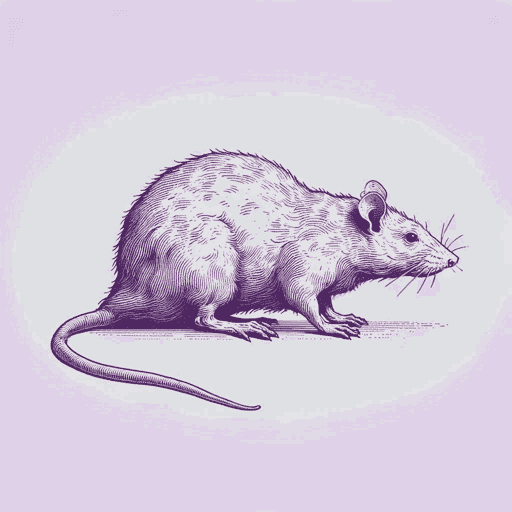
Commonplace, filthy, and numerous, rats are not the only animal to figure prominently in the novel, but they are the most significant in that their graphic deaths figure in the work’s opening pages. The widespread demise of rats in Oran portends the surge of plague deaths among the city’s residents. The rats also function as a metaphorical representation of Oran’s general populace, especially people of ill or duplicitous intent, notably Cottard. Rats furthermore serve as an allegory that points outside the novel to contemporaneous historical evildoers, namely those complicit in the Holocaust’s horrors.
Other animals appear throughout the novel. Tarrou’s neighbor relishes spitting on cats, and many characters’ comical descriptions bear animalistic references. For instance, Othon resembles an owl, his wife a mouse, and their children poodles. Gonzalez, a smuggler poised to help Rambert and whose countenance bears an equine resemblance, becomes designated by the synecdoche “horse-face.” Given the status of humanity as represented in the novel, the narrator’s parodic reduction of human beings to animal types communicates the declining value of human life during the epidemic. Ultimately, as the plague ravages Oran, its citizens are reduced to their most base instincts, which differ little from those of animals. For those who succumb to the plague, this devaluation continues. When the quantity of corpses exceeds the local cemetery’s bounds, cadavers are thrown in pits or shipped to the crematorium, like animal remains. While the humanist characters stand in contradistinction to those symbolized by animals, ultimately all living creatures bear some resemblance to each other in the novel.
Othon’s Son
The innocent young boy dies a miserable death by plague, which contorts his small, thin body into a “grotesque parody of a crucifixion” (104). Symbolizing a diminutive Christ figure, Othon’s son, like Jesus, dies in the absence of sin. Whereas Christ’s death bears meaning within its religious context, the boy’s remains senseless; with God being absent from the novel’s framework—with the exception of Paneloux, who is not spared from death—the boy’s death shines a spotlight at the absurd.
In contrast to Christ, who willingly accepted his fate, Othon’s son fights for his life, “[h]is eyes shut, his teeth clenched, his features frozen in an agonized grimace” (103). Resistant until the end, the boy’s strength and valor parallel that of the sanitary squad. When the boy’s demise becomes certain, his body ceases to be his own, as it is offered as a guinea pig for testing Castel’s first anti-plague serum. Within the novel’s allegorical context, this instance of drug testing on an innocent patient finds precedent in the brutal clinical trials performed on Jews by Nazis.
The Sea
The novel’s most powerful recurrent motif, this body of water situated behind Oran embodies a sense of innate awareness regarding the city. Just as Oran’s citizens all but ignore the omniscient sea’s anthropomorphized “murmurings,” so do they fail to believe in and react to the plague’s initial manifestations, instead waiting until the situation grows dire enough to warrant a city-wide quarantine. Given the number of times that the narrator mentions the sea—and noting that the original French mer is homonymous with mère, meaning “mother”—its significance as a geographical marker and as a source of elemental wisdom resonates in the work.
With the four primary elements—earth, air, water, and fire—playing major roles in The Plague, representations of water’s multifaceted properties are particularly abundant in the narrative. Water in the form of rainfall, which provides water necessary for human and plant growth, figures as a harbinger of torpor in the text, where excesses of violent rain occur during dramatic moments; such is the case during Paneloux’s sermons. To the contrary, the sea’s water carries elements of potential redemption for those willing to heed its messages. Prior to contracting the plague, Tarrou engages in a heart-to-heart conversation with Rieux, after which the two men go for a nighttime dip in the sea. Here, enveloped by the maternal waters tantamount to life’s very source, Tarrou and Rieux, both atheists, undergo symbolic baptism in a fleeting moment of pure friendship.
The Statue of the Republic
Created and erected in the late 19th century, the Statue of the Republic is a Parisian monument allegorizing the tenets of the French Republic, founded after France’s bloody revolution of 1789. The largest element of the statue is the bronze figure of Marianne, an iconic mythical female warrior symbolizing the country’s rejection of its tyrannical monarchy that had held power since the end of medieval times. Other parts of the statue include the olive branch—symbolizing peace—Marianne holds in one hand and a tablet bearing the inscription “Human Rights” in the other. Three smaller statues at her feet allegorize the elements of France’s national motto: “Liberty, Equality, Fraternity.” Replicas of Marianne adorn public squares in all French cities.
In the novel the narrator evokes Oran’s Statue of the Republic twice, both times as Rieux passes by and gazes at it. In the first instance the statue is surrounded by dusty, gray, drooping palm and fig trees—species indigenous to North Africa, but not to the Parisian region where the original statue stands. The second time Rieux notes the statue’s presence, he simultaneously senses changes occurring within himself. Exhausted from treating plague victims nonstop, the doctor grows increasingly desensitized to the daily horrors caused by the disease, to the point where indifference sets in. He realizes that his tendency to live in abstraction brings monotony, as does plague.
Rieux’s nascent apathy parallels that of the French Republic, Oran’s symbol of which is at least twice removed from its original, given its status as a replica of an allegory. Geographically far removed from the Department of Algeria, France’s capital city, aware of the crisis in Oran, does little to assist in combatting the plague, save sending an ineffectual serum across the Mediterranean. Although Rieux never gives up the fight, he nevertheless experiences reverberations of France’s apathetic approach to dealing with this faraway problem, and this indifference also reflected up above in the vast, silent sky. Ultimately, the centerpieces of French republican values, all components of the Statue of the Republic, matter very little in Oran, where plague and quarantine efface the republic’s claims of ensuring liberty, equality, fraternity, and human rights.

Unlock the meaning behind every key symbol & motif
See how recurring imagery, objects, and ideas shape the narrative.
- Explore how the author builds meaning through symbolism
- Understand what symbols & motifs represent in the text
- Connect recurring ideas to themes, characters, and events